About this artwork
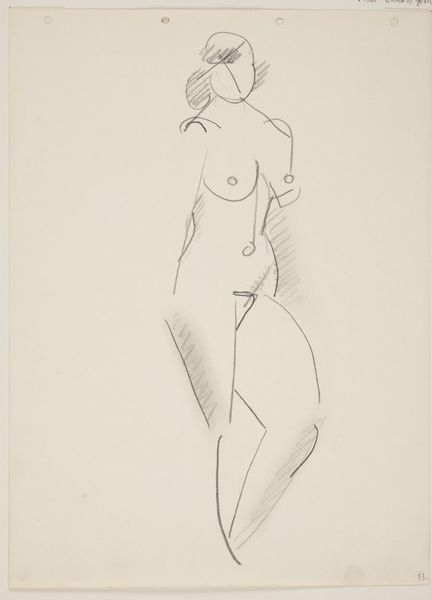
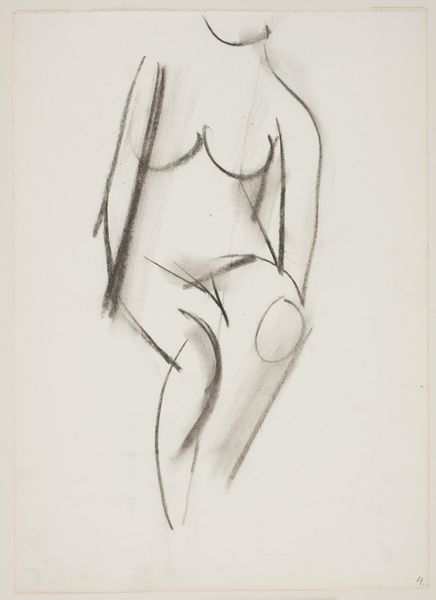
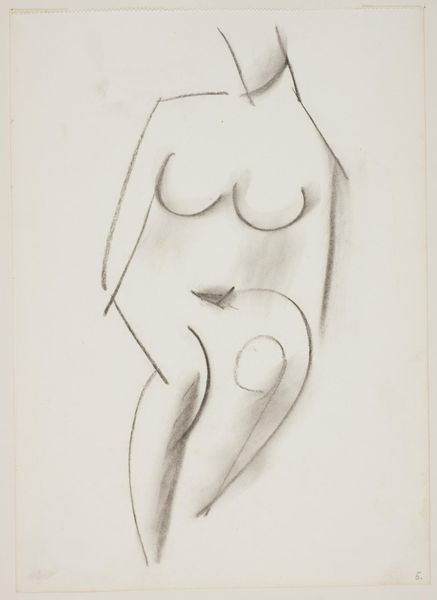
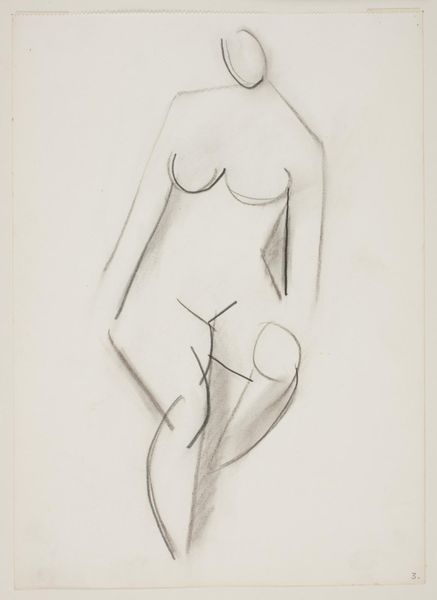
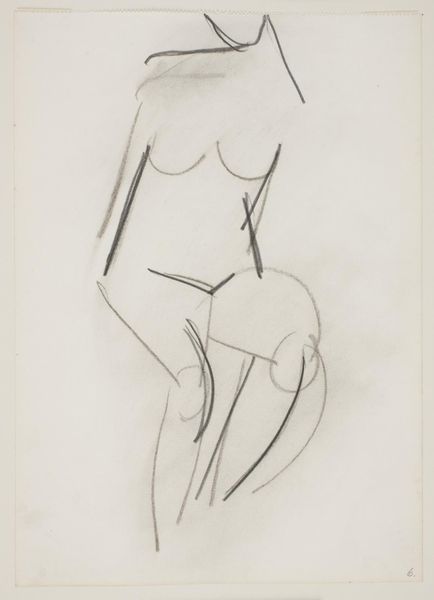
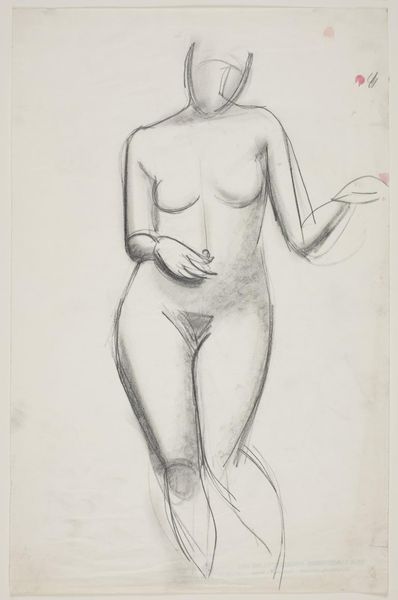
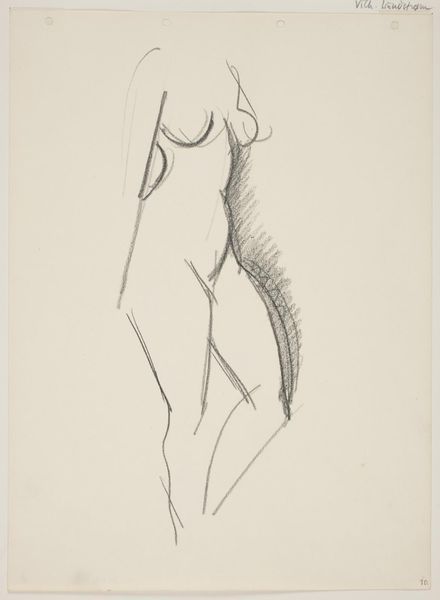
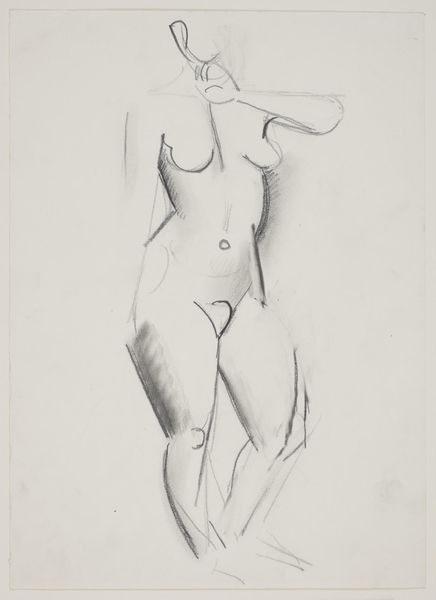
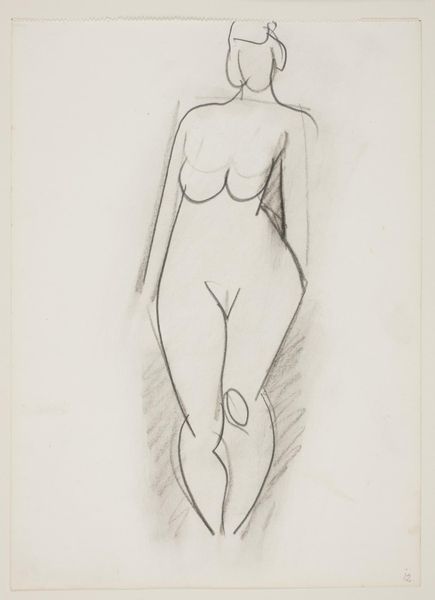
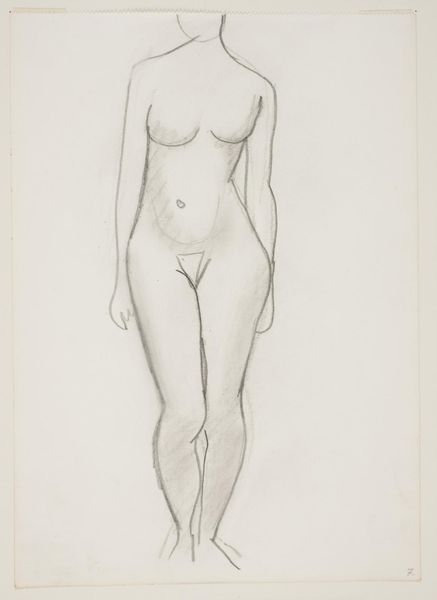
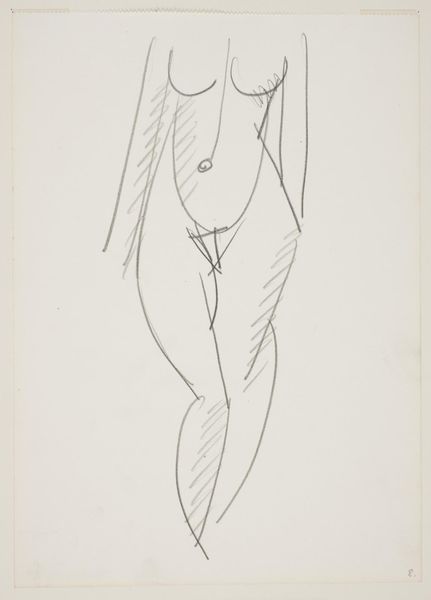
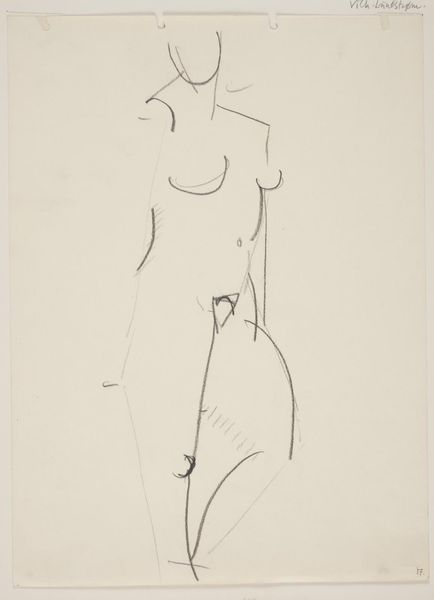
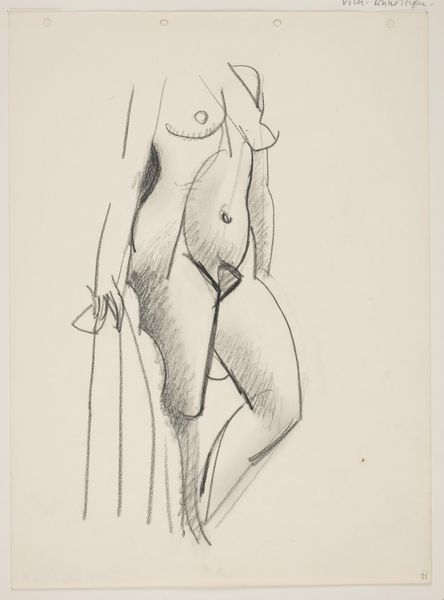
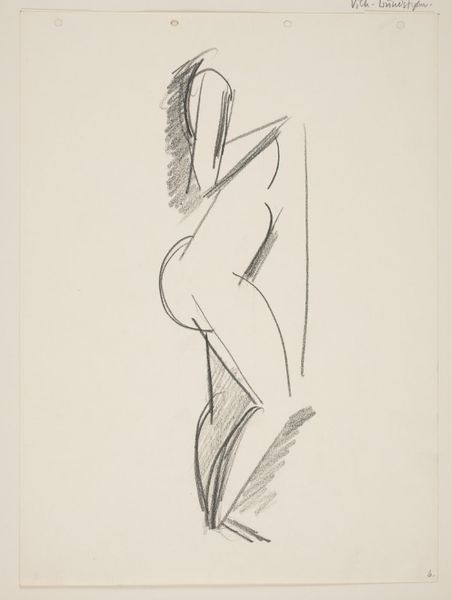
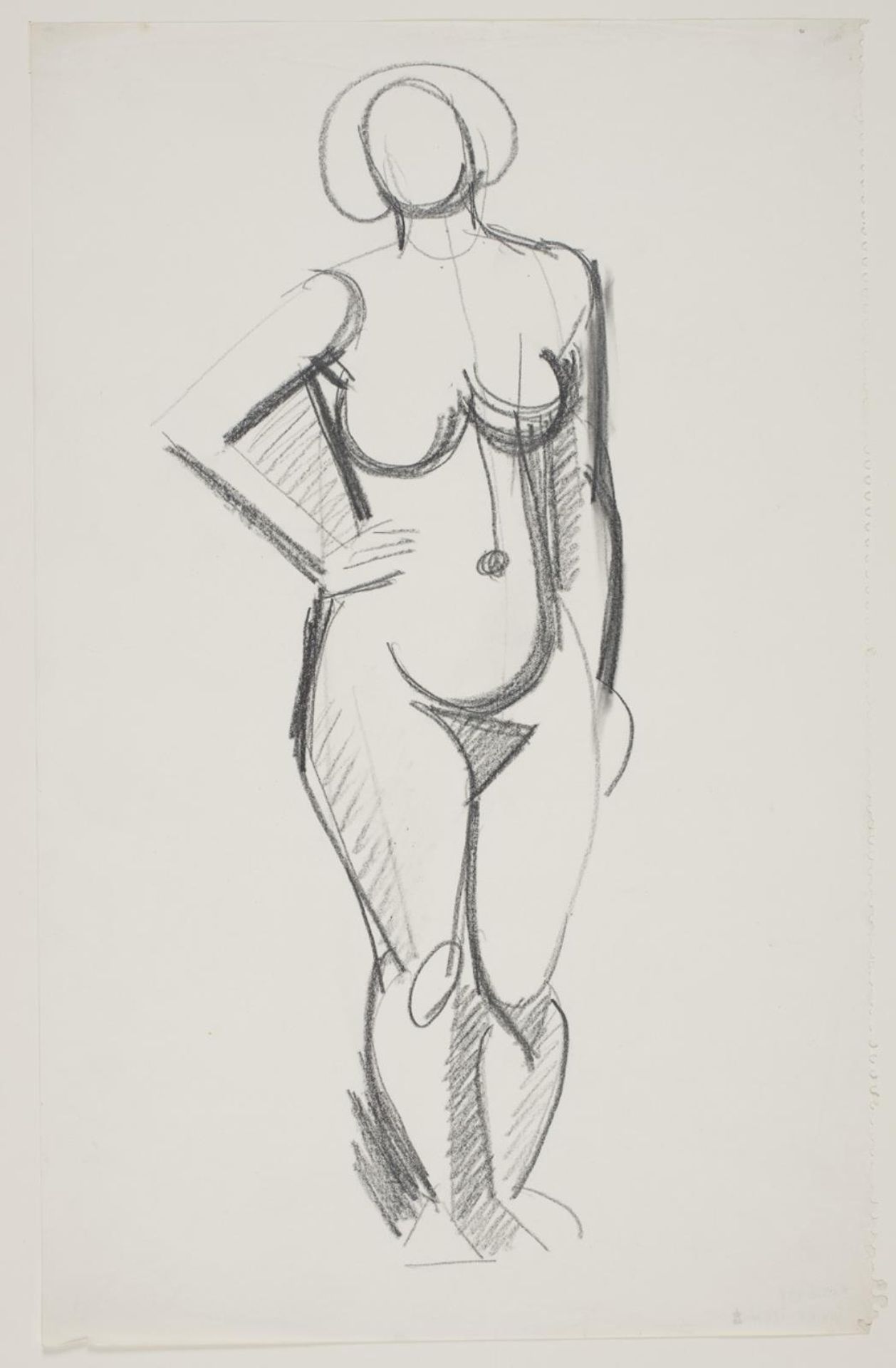
Here we have Vilhelm Lundstrom's sketch, created with pencil on paper, titled 'Standing Female Model with Right Hand on Hip'. The composition is strikingly simple, focusing on the interplay of lines and forms to define the figure. Lundstrom uses contour drawing to capture the essence of the human form. Observe how the shapes are simplified, almost geometric; the limbs are rendered as cylinders, and the torso as a series of curves and planes. This abstraction is not about a lack of skill, but a deliberate choice to strip away the superficial, seeking the underlying structure. Lundstrom's approach invites us to consider the very nature of representation and how much information is needed to convey form and volume. This drawing transcends mere depiction, acting as a study in the structural underpinnings of the human body, reflecting the early 20th-century interest in deconstruction. Ultimately, this work is a testament to the power of reduction and the beauty of form stripped to its essentials.
Stående kvindelig model med højre hånd i hoften
1939 - 1942


Artwork details
- Medium
- drawing, pencil
- Dimensions
- 420 mm (height) x 270 mm (width) (bladmaal)
- Location
- SMK - Statens Museum for Kunst
Tags
Comments
Share your thoughts
About this artwork
Here we have Vilhelm Lundstrom's sketch, created with pencil on paper, titled 'Standing Female Model with Right Hand on Hip'. The composition is strikingly simple, focusing on the interplay of lines and forms to define the figure. Lundstrom uses contour drawing to capture the essence of the human form. Observe how the shapes are simplified, almost geometric; the limbs are rendered as cylinders, and the torso as a series of curves and planes. This abstraction is not about a lack of skill, but a deliberate choice to strip away the superficial, seeking the underlying structure. Lundstrom's approach invites us to consider the very nature of representation and how much information is needed to convey form and volume. This drawing transcends mere depiction, acting as a study in the structural underpinnings of the human body, reflecting the early 20th-century interest in deconstruction. Ultimately, this work is a testament to the power of reduction and the beauty of form stripped to its essentials.
Comments
Share your thoughts