About this artwork
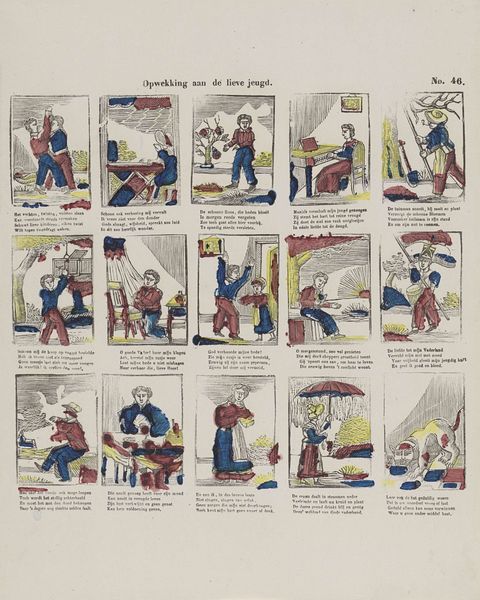
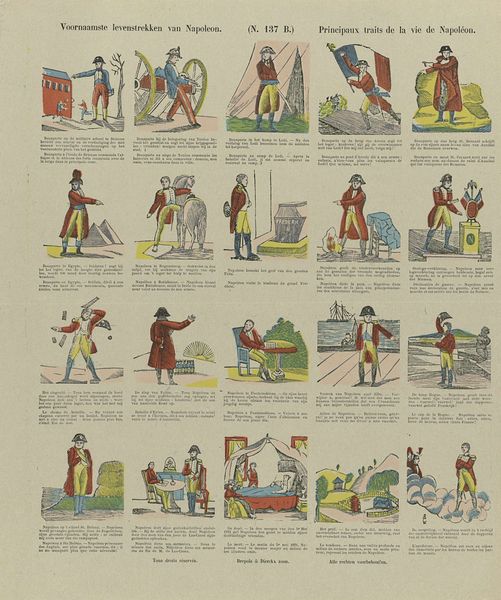
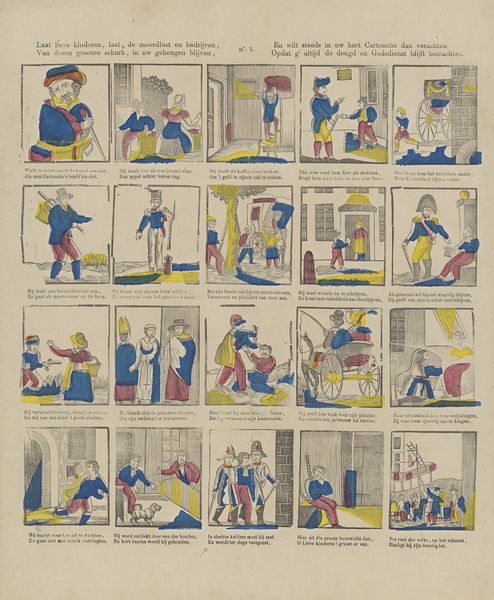
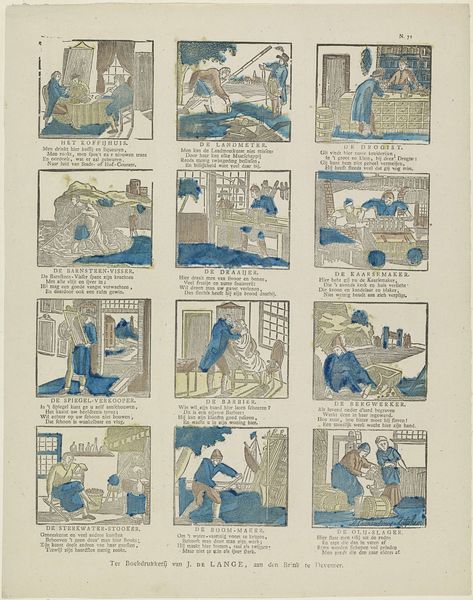
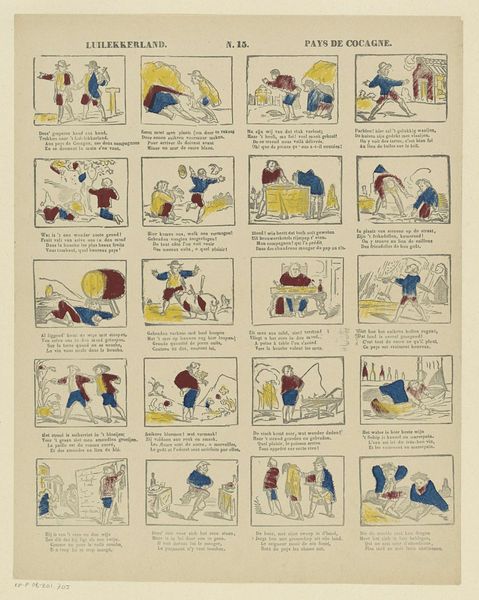
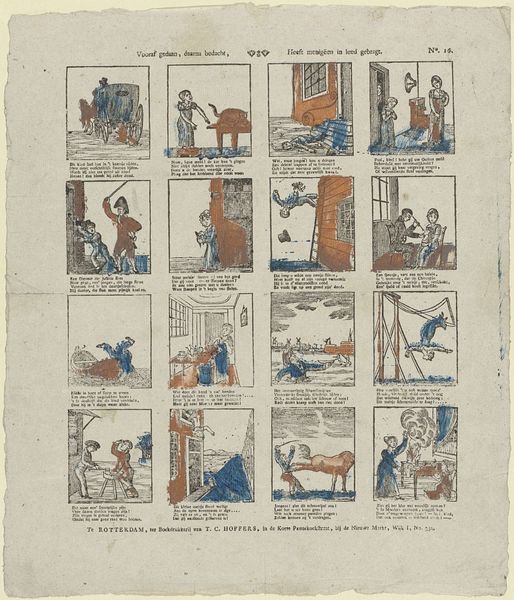
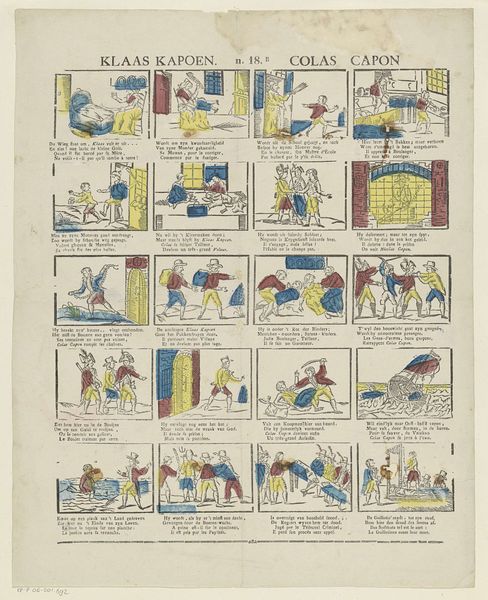
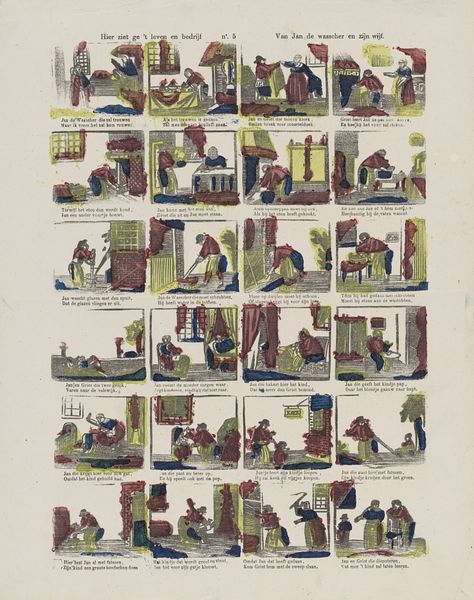
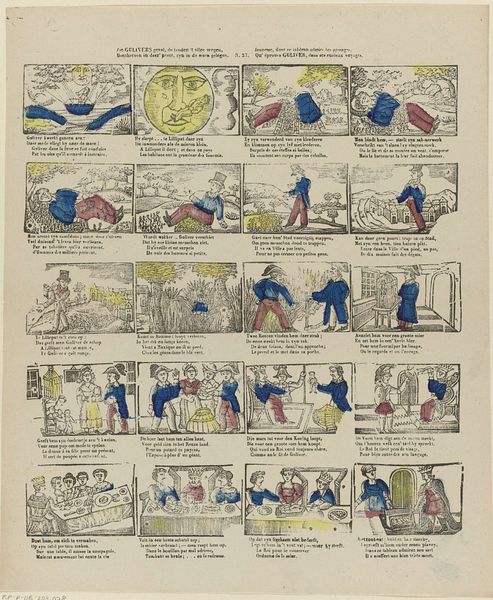
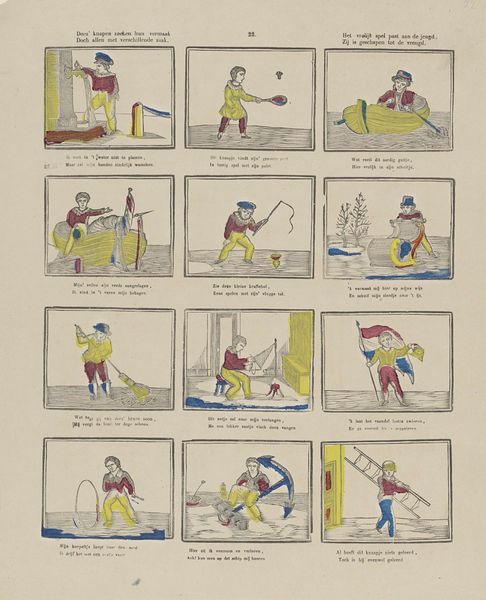
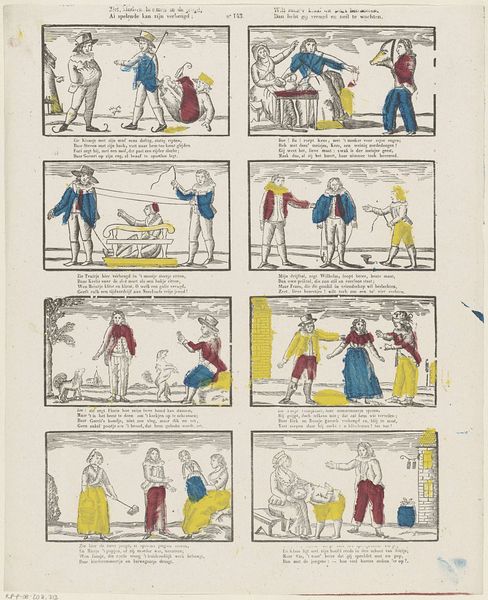
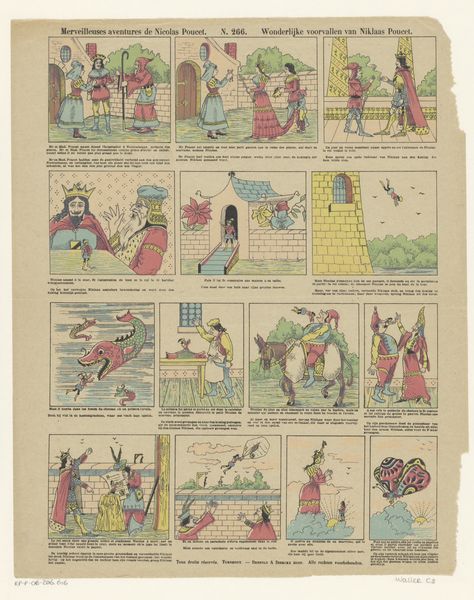
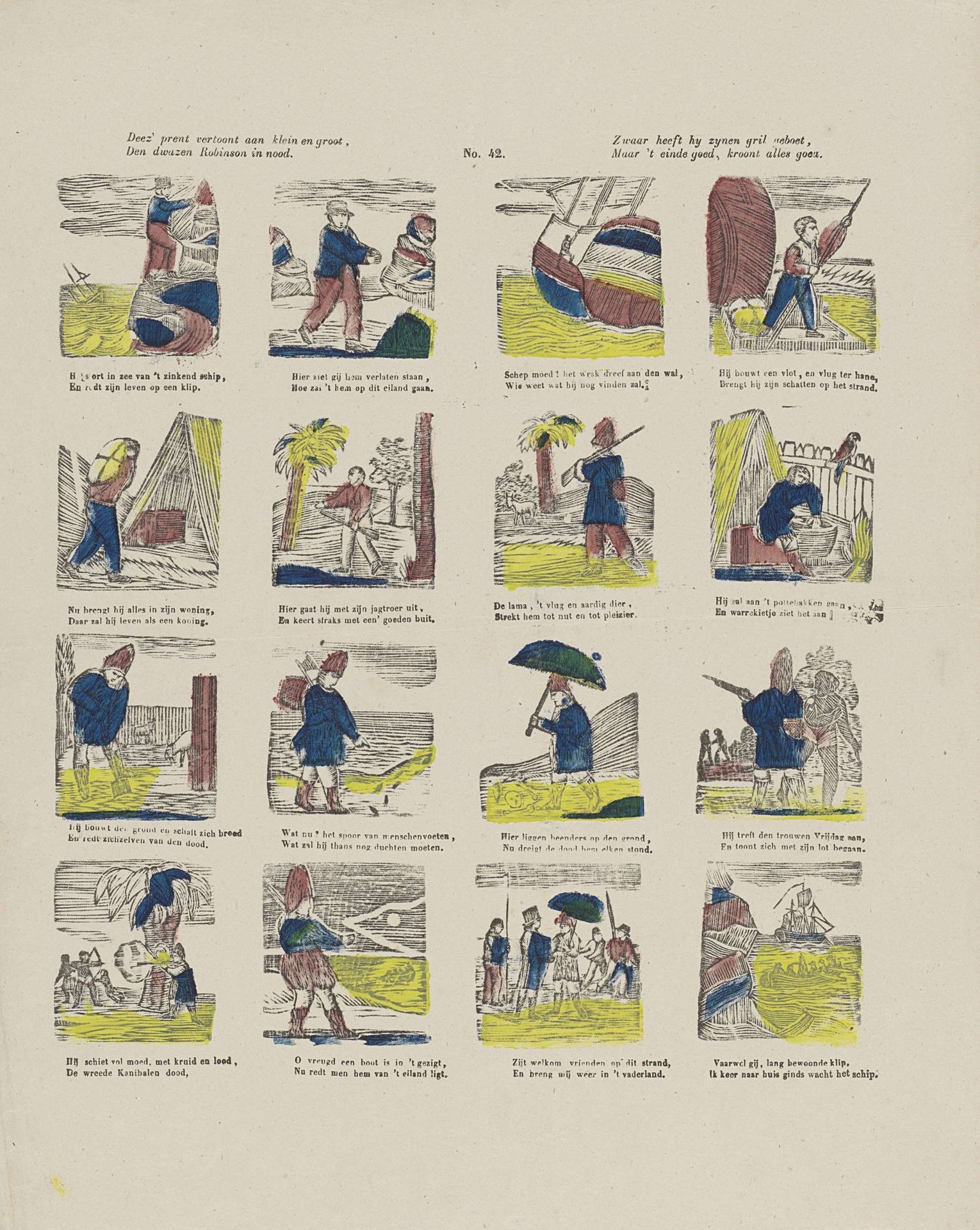
Editor: This is a print titled "Deez' prent vertoont aan klein en groot, / Den dwazen Robinson in nood. / Zwaar heeft hy zynen gril geboet, / Maar 't einde goed, kroont alles goed" made by Lutkie & Cranenburg sometime between 1848 and 1881. It looks like a series of small sequential images, almost like an early comic strip. It feels very quaint. How can we interpret it? Curator: This work reflects the growing literacy and expanding print culture of the 19th century. These narrative prints offered accessible stories to a wider audience, popularizing literature through visual media. Note the clear attempt to convey a story, similar to early forms of graphic novels, and the somewhat limited but purposeful use of color to highlight certain elements. Who do you think would have been the audience for these types of works? Editor: Hmm, considering its simple style and narrative, I’d guess children or perhaps the working class who wanted easy access to stories and entertainment. It feels like a more democratic approach to art. Curator: Exactly. And it’s also fascinating how "Robinson Crusoe" was adapted and re-interpreted across various media during this period, showcasing its enduring influence and cultural resonance. The images give insight into how society consumed stories and built their visual understanding of this narrative. Do you find that the artist conveys the essence of "Robinson Crusoe?" Editor: That's a good question. While each frame gives snapshots of the original story, the charm really stems from its direct approach to making it available to broader audience. It’s great to reflect on access and adaptation in 19th-century popular culture. Curator: Precisely! This work acts as a cultural artifact which gives us a glimpse of popular tastes, distribution methods, and pedagogical methods during that time period. Editor: It does make you realize how stories evolve, based on who they are for! Thanks for pointing that out.
Deez' prent vertoont aan klein en groot, / Den dwazen Robinson in nood. / Zwaar heeft hy zynen gril geboet, / Maar 't einde goed, kroont alles goed
1848 - 1881

Lutkie & Cranenburg
@lutkiecranenburgLocation
RijksmuseumArtwork details
- Medium
- Dimensions
- height 386 mm, width 312 mm
- Location
- Rijksmuseum
- Copyright
- Rijks Museum: Open Domain
Tags
comic strip sketch
quirky sketch
narrative-art
sketch book
traditional media
personal sketchbook
idea generation sketch
sketchwork
comic
sketchbook drawing
genre-painting
storyboard and sketchbook work
sketchbook art
Comments
Be the first to share your thoughts about this work.
About this artwork
Editor: This is a print titled "Deez' prent vertoont aan klein en groot, / Den dwazen Robinson in nood. / Zwaar heeft hy zynen gril geboet, / Maar 't einde goed, kroont alles goed" made by Lutkie & Cranenburg sometime between 1848 and 1881. It looks like a series of small sequential images, almost like an early comic strip. It feels very quaint. How can we interpret it? Curator: This work reflects the growing literacy and expanding print culture of the 19th century. These narrative prints offered accessible stories to a wider audience, popularizing literature through visual media. Note the clear attempt to convey a story, similar to early forms of graphic novels, and the somewhat limited but purposeful use of color to highlight certain elements. Who do you think would have been the audience for these types of works? Editor: Hmm, considering its simple style and narrative, I’d guess children or perhaps the working class who wanted easy access to stories and entertainment. It feels like a more democratic approach to art. Curator: Exactly. And it’s also fascinating how "Robinson Crusoe" was adapted and re-interpreted across various media during this period, showcasing its enduring influence and cultural resonance. The images give insight into how society consumed stories and built their visual understanding of this narrative. Do you find that the artist conveys the essence of "Robinson Crusoe?" Editor: That's a good question. While each frame gives snapshots of the original story, the charm really stems from its direct approach to making it available to broader audience. It’s great to reflect on access and adaptation in 19th-century popular culture. Curator: Precisely! This work acts as a cultural artifact which gives us a glimpse of popular tastes, distribution methods, and pedagogical methods during that time period. Editor: It does make you realize how stories evolve, based on who they are for! Thanks for pointing that out.
Comments
Be the first to share your thoughts about this work.