About this artwork
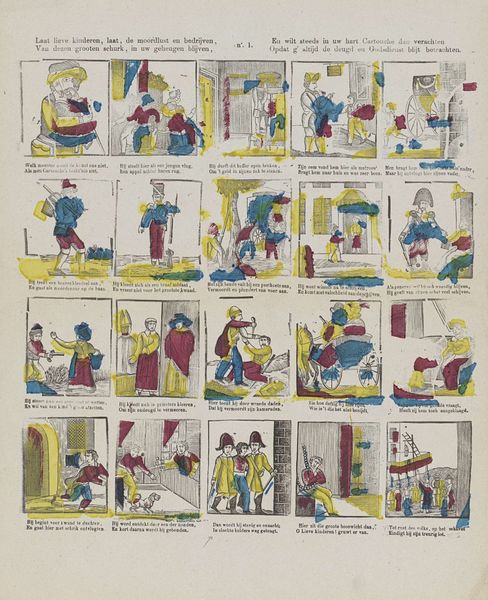
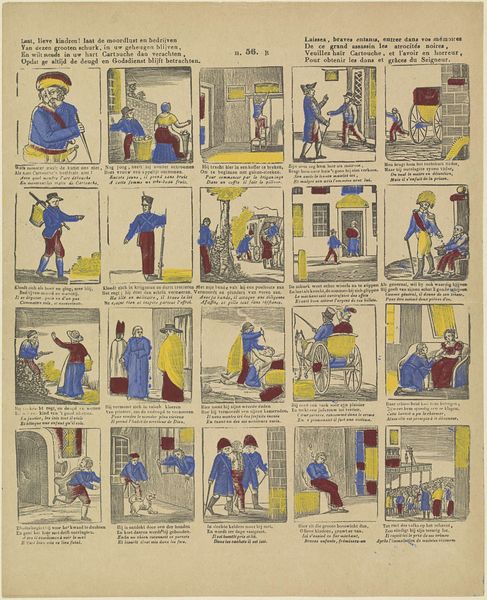
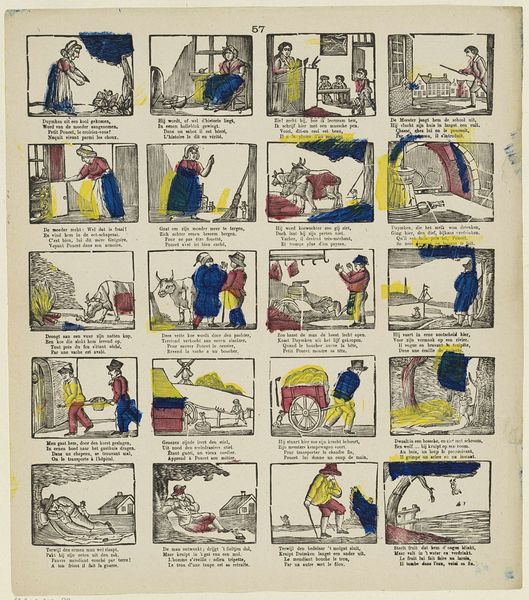
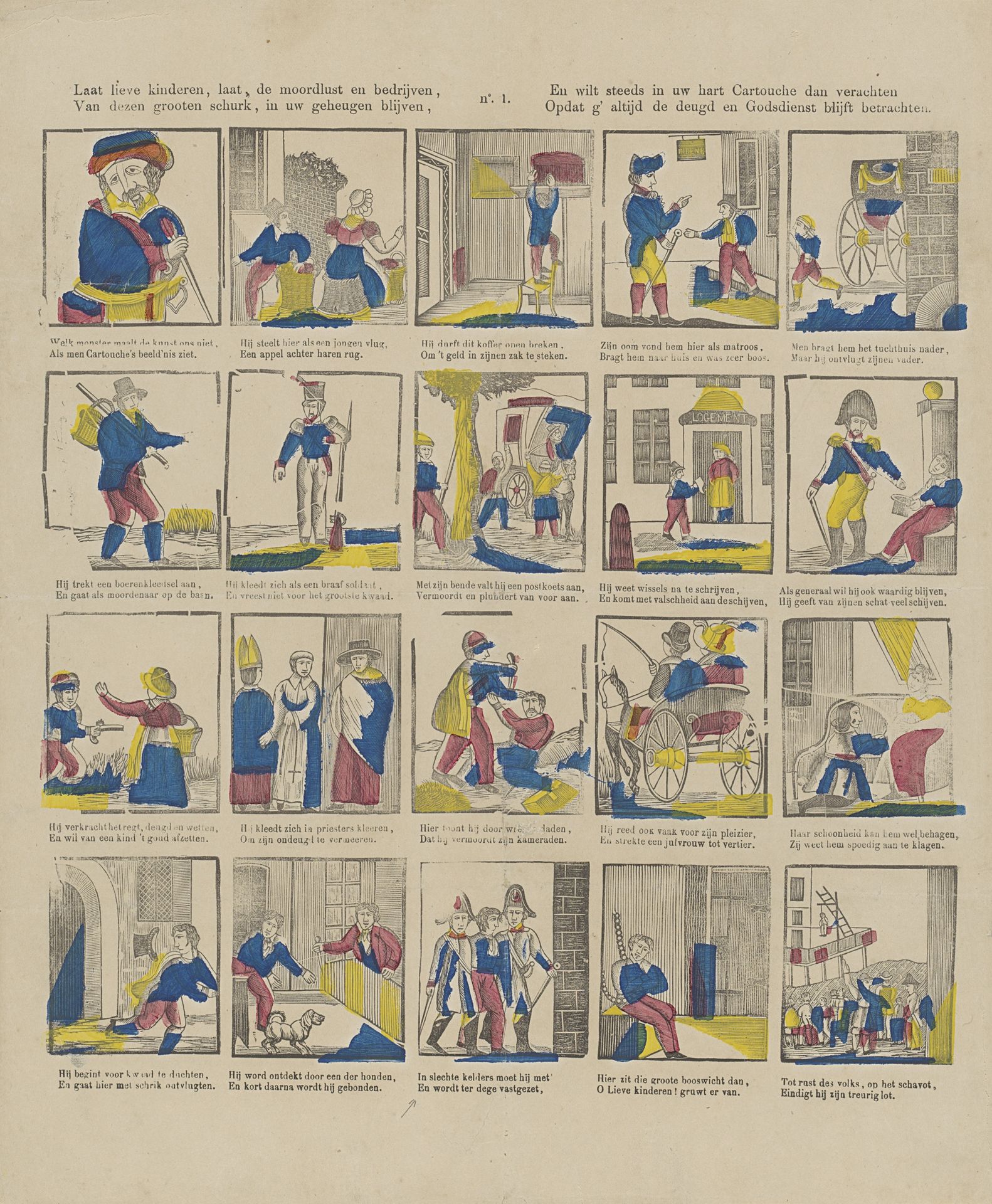
This cautionary print, made by Lutkie & Cranenburg, presents a series of scenes illustrating the misdeeds of a villain. Notice the repeated motif of theft and violence throughout the images. These are visual representations of moral decay, intended to instill in children a fear of straying from the path of virtue. Think of these images as morality plays, a common trope in visual culture through the ages. This didactic approach can be traced back to medieval morality plays, where characters embodied abstract concepts. The scenes here share a lineage with similar cautionary tales found in different cultures and eras, illustrating the timeless human struggle between good and evil. These depictions reflect a collective fear of social disorder, tapping into a deep, subconscious desire for structure. The print serves as a vivid reminder of how cultural anxieties manifest themselves visually, evolving through time and reflecting society's changing values while still echoing perennial themes.
Laat lieve kinderen, laat, de moordlust en bedrijven, / Van dezen grooten schurk, in uw geheugen blijven, / En wilt steeds in uw hart Cartouche dan verachten / Opdat g' altijd de deugd en godsdienst blijt betrachten 1848 - 1881

Lutkie & Cranenburg
@lutkiecranenburgLocation
RijksmuseumArtwork details
- Medium
- print, engraving
- Dimensions
- height 378 mm, width 314 mm
- Location
- Rijksmuseum
- Copyright
- Rijks Museum: Open Domain
Tags
comic strip sketch
narrative-art
dutch-golden-age
sketch book
traditional media
personal sketchbook
idea generation sketch
sketchwork
comic
sketchbook drawing
genre-painting
storyboard and sketchbook work
cartoon carciture
sketchbook art
engraving
Comments
No comments
About this artwork
This cautionary print, made by Lutkie & Cranenburg, presents a series of scenes illustrating the misdeeds of a villain. Notice the repeated motif of theft and violence throughout the images. These are visual representations of moral decay, intended to instill in children a fear of straying from the path of virtue. Think of these images as morality plays, a common trope in visual culture through the ages. This didactic approach can be traced back to medieval morality plays, where characters embodied abstract concepts. The scenes here share a lineage with similar cautionary tales found in different cultures and eras, illustrating the timeless human struggle between good and evil. These depictions reflect a collective fear of social disorder, tapping into a deep, subconscious desire for structure. The print serves as a vivid reminder of how cultural anxieties manifest themselves visually, evolving through time and reflecting society's changing values while still echoing perennial themes.
Comments
No comments