About this artwork
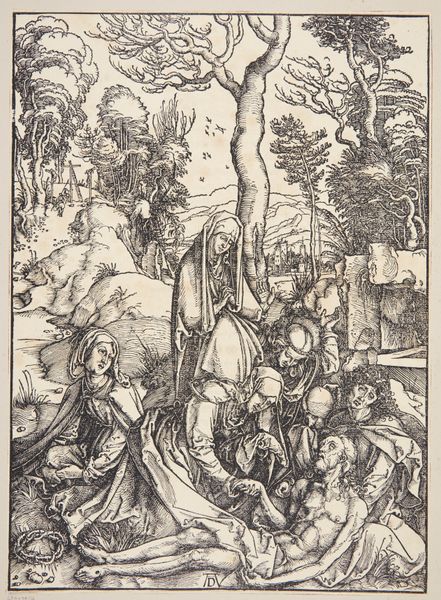
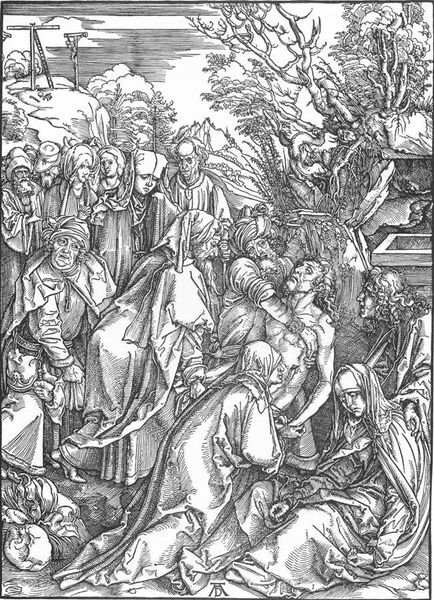
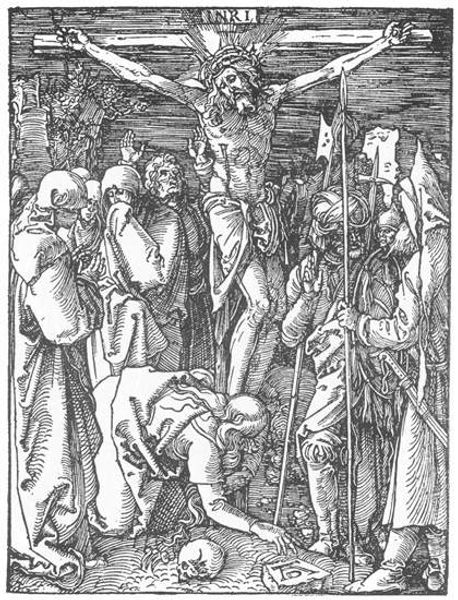
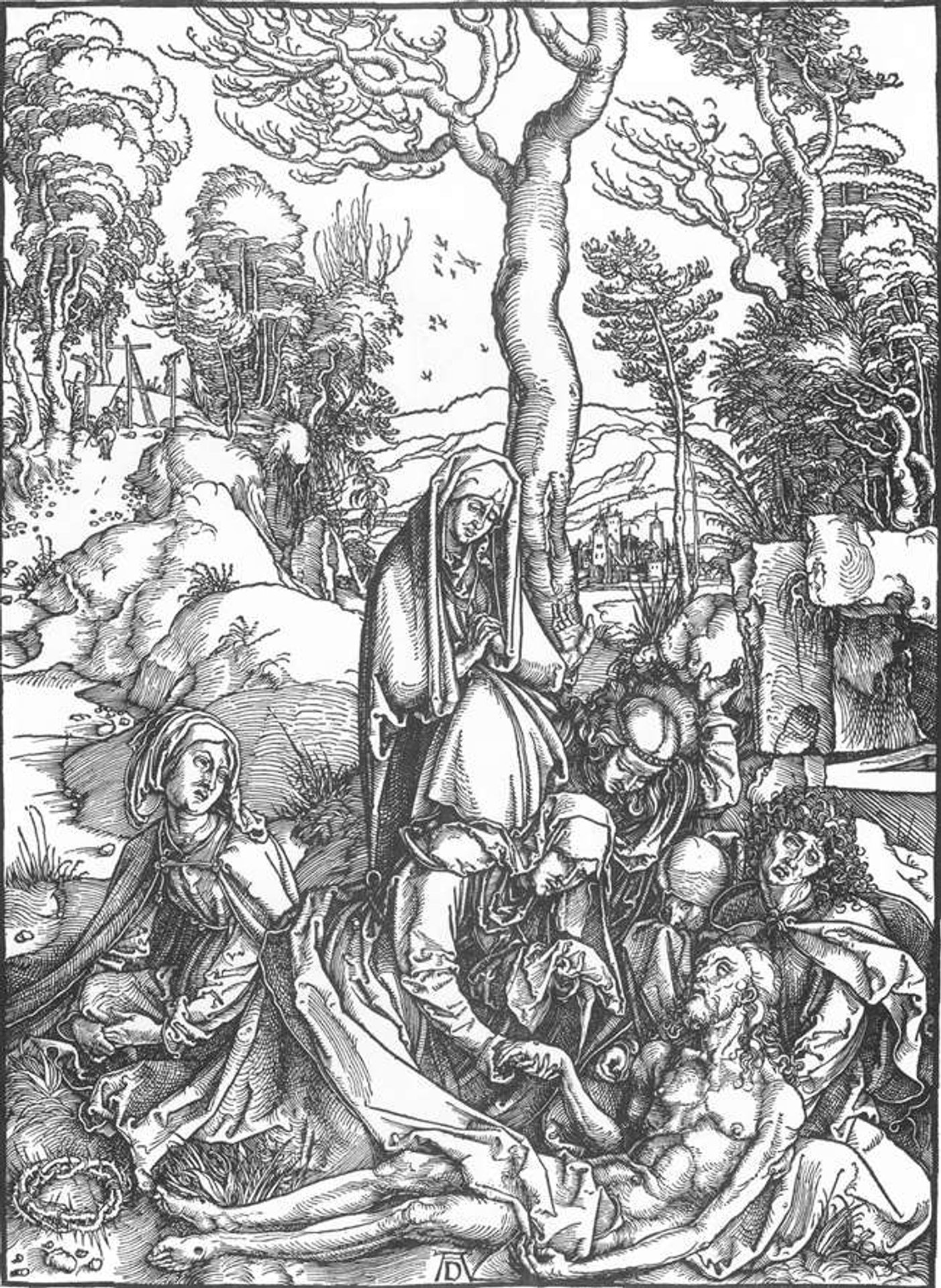
Albrecht Dürer etched "The Lamentation for Christ" in ink on paper, capturing a scene laden with profound sorrow. Observe the motif of lamentation, most clearly represented by Mary holding her son, a gesture echoing ancient mourning rituals. This symbol transcends time, resurfacing in depictions of grief from antiquity to the Renaissance and beyond, linking personal loss to a universal expression of sorrow. Recall the sculpted Pietàs, where Mary cradles Jesus’ body in sorrow, a theme resonant across cultures. The grieving figures express inner turmoil, engaging our collective memory of suffering. Note the crown of thorns discarded near Christ's feet, an emblem of humiliation and sacrifice, prefiguring themes of martyrdom. The non-linear progression of such iconography reveals cultural memory and the psychological weight of symbols, connecting us to shared experiences of pain and hope across generations.
The Lamentation for Christ
1510


Artwork details
- Medium
- drawing, print, woodcut, engraving
- Location
- Albertina, Vienna, Austria
- Copyright
- Public domain
Tags
Comments
Share your thoughts
About this artwork
Albrecht Dürer etched "The Lamentation for Christ" in ink on paper, capturing a scene laden with profound sorrow. Observe the motif of lamentation, most clearly represented by Mary holding her son, a gesture echoing ancient mourning rituals. This symbol transcends time, resurfacing in depictions of grief from antiquity to the Renaissance and beyond, linking personal loss to a universal expression of sorrow. Recall the sculpted Pietàs, where Mary cradles Jesus’ body in sorrow, a theme resonant across cultures. The grieving figures express inner turmoil, engaging our collective memory of suffering. Note the crown of thorns discarded near Christ's feet, an emblem of humiliation and sacrifice, prefiguring themes of martyrdom. The non-linear progression of such iconography reveals cultural memory and the psychological weight of symbols, connecting us to shared experiences of pain and hope across generations.
Comments
Share your thoughts