1690
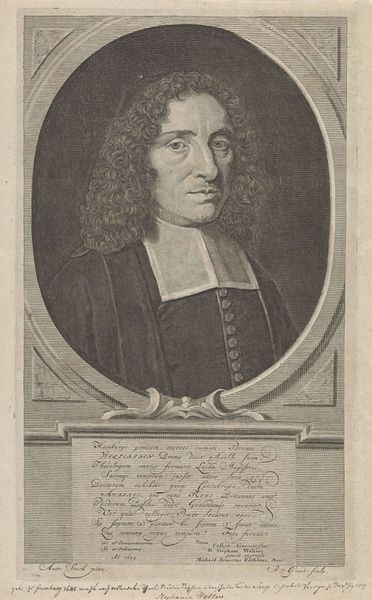
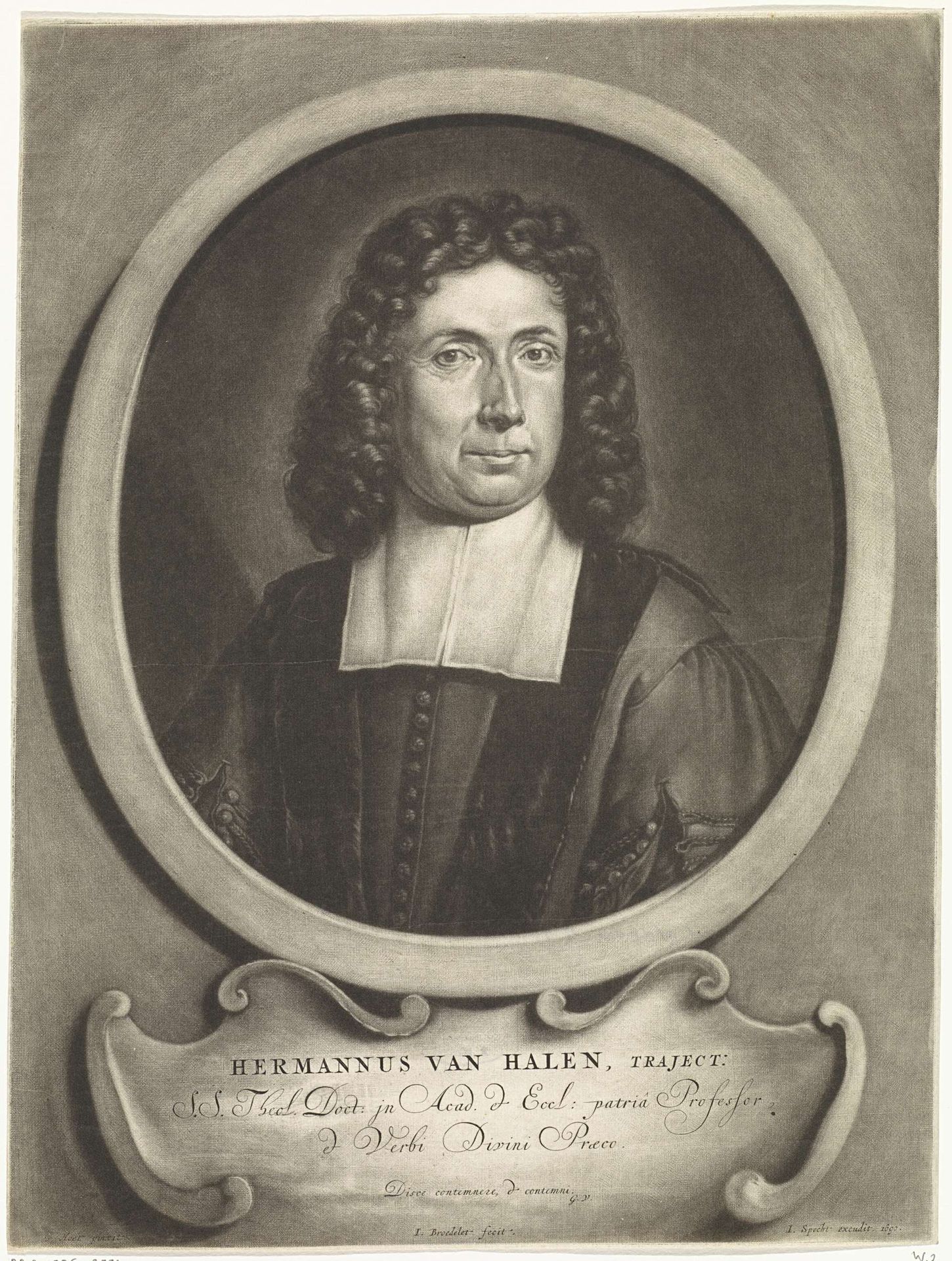
Portret van Herman van Halen

Listen to curator's interpretation
Curatorial notes
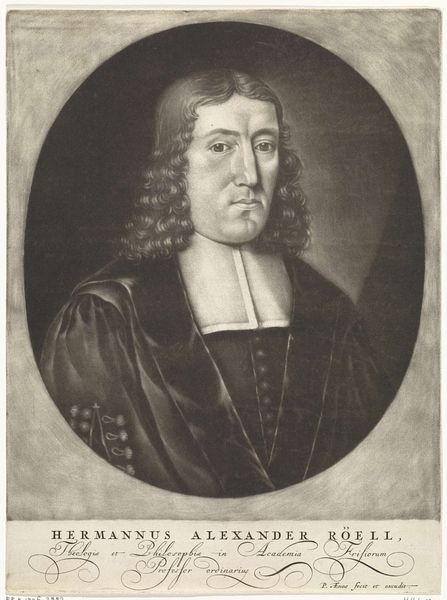
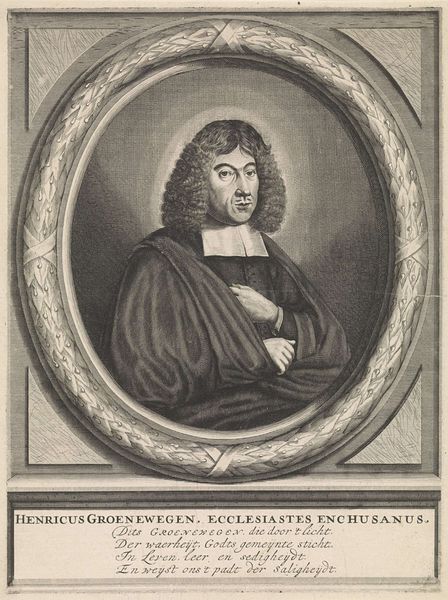
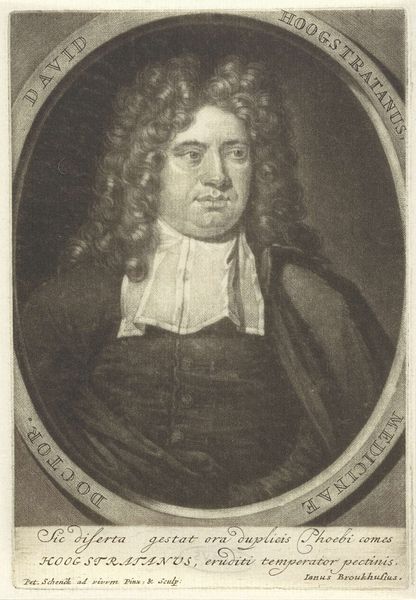
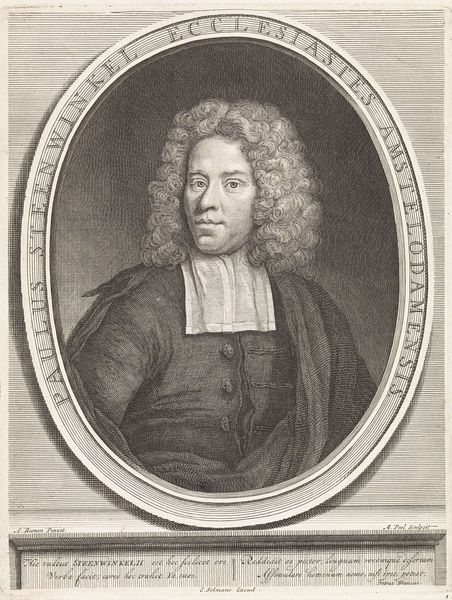
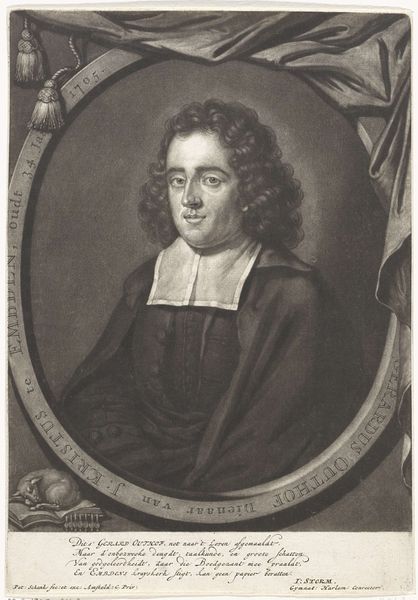
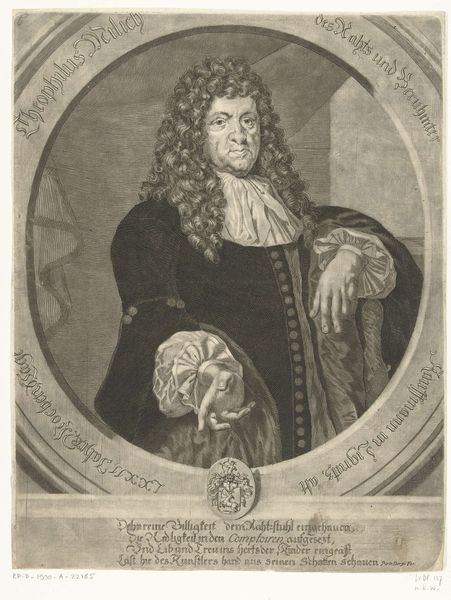
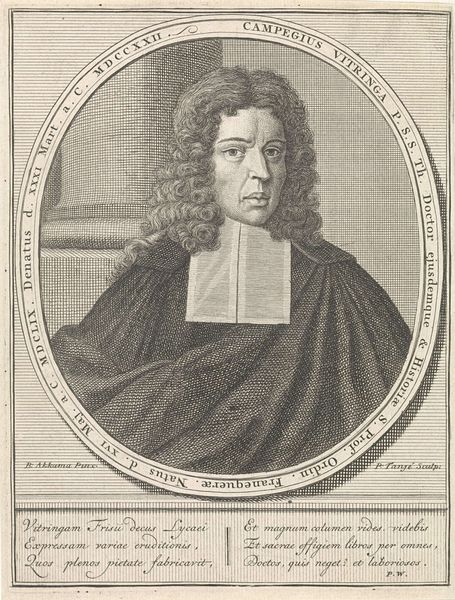
Curator: Standing before us, we have an engraving from the late 17th century. The title is "Portret van Herman van Halen," and it was created in 1690 by Jan Broedelet. Editor: Immediately, what strikes me is the quiet confidence in his gaze. There's a sort of contained energy within this formal Baroque portrait, like a tightly-wound spring. Curator: Portraits of this era served as declarations of status. Van Halen, judging from the inscription, was a theologian and professor, and the composition signals intellectual weight. Notice the oval frame and decorative cartouche adding visual gravitas. Editor: That's interesting, as I’m more intrigued by his humanity than status. Look at the soft rendering of his features—a gentle kindness around the eyes fighting with a more serious mouth. Also his rather exuberant wig adds to the intrigue, what do you think about it? Curator: The wig absolutely speaks to the era's fashion, but it is more than superficial; the cascading curls symbolize erudition and power, reminiscent of classical imagery that the elite appropriated. Symbols often became the currency through which power circulated and manifested. Editor: Maybe! Or perhaps, I just see a guy who endured an hour-long wig styling and desperately wants a biscuit. Those formal engravings can feel distancing at times. Still, the subtle light playing on his face keeps pulling me back in. Broedelet did an incredible job! Curator: Precisely. The beauty in it resides in that very tension; between the outward facing performative symbol and what the human figure behind them conveys. These were, in many ways, meticulously curated representations. Editor: Curation can be another way to say "performance," don’t you think? Even now. And now looking closely it feels quite staged and unnatural, but perhaps in line with those era trends. Well, this discussion really shed some light on hidden nuances I might have initially overlooked. Curator: Absolutely. These portraits give us more than just a glimpse into history— they reveal a deeply considered dialogue between sitter, artist and audience.