About this artwork
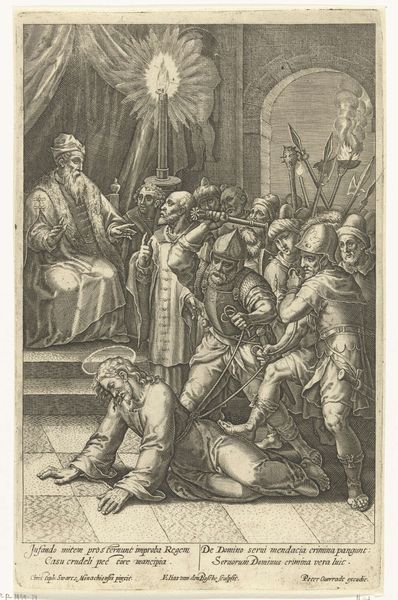
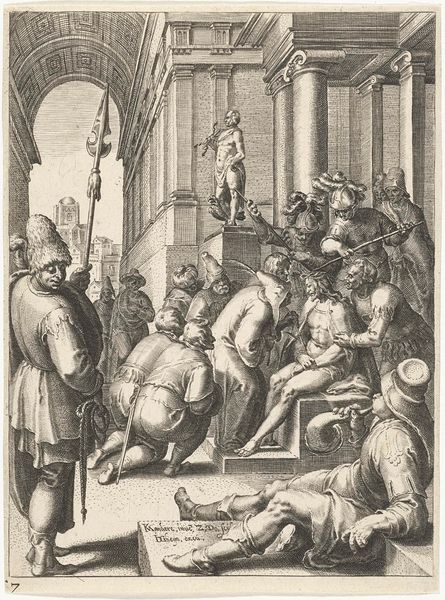
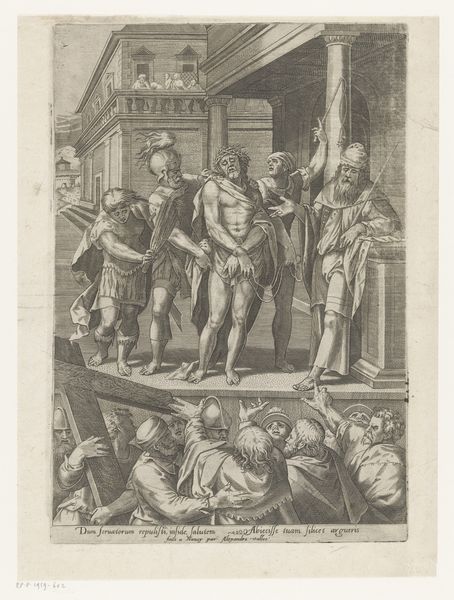
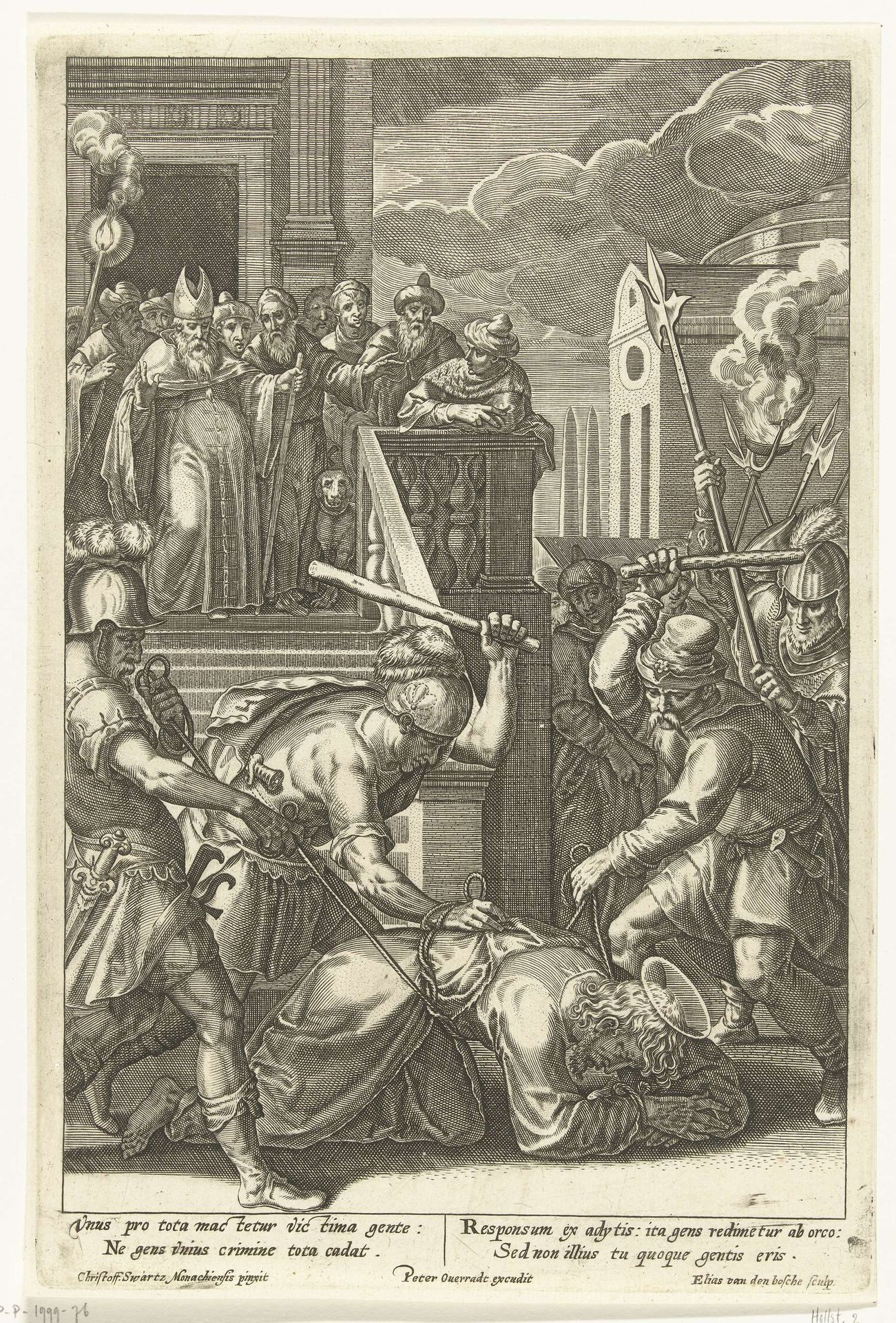
Curator: Oh, this piece, "The Mocking of Christ," dates back to the early 17th century. Elias van den Bossche created this print; it's an engraving. I find the scene depicted so striking; it’s as if time suspends. Editor: You know, my initial reaction is that it's intensely unsettling. The sharp lines of the engraving contribute to a feeling of anxiety. Look at how Christ is positioned, utterly vulnerable, head bowed. Curator: Yes, the composition directs our eyes immediately to that central figure of Christ, doesn't it? Consider how it reflects baroque artistic values that emphasized dynamism and emotional impact, particularly through depictions of dramatic scenes. Editor: The figures surrounding him are brutal and devoid of compassion; their expressions seem to convey pure hostility, it's striking, almost theatrical in its intensity. And that looming architecture in the background, those harsh cloud lines, give a feeling of overwhelming oppression. Curator: Van den Bossche uses the contrast between light and shadow expertly; it seems that even the light source wants nothing to do with what is going on. The upper scene depicts the accusers of Jesus, cloaked in elaborate and opulent outfits who turn away as they reach the judgement seat, while the mob delivers their crude, unfeeling justice. Editor: Indeed. Every line, every shade seems deliberately placed to amplify this narrative of unjust suffering and the total degradation of Christ. Even without knowledge of the biblical narrative it is easy to comprehend the core struggle happening on this plate. Curator: What strikes me is that this is not merely about religious narrative; it’s also a poignant social commentary, isn't it? Questioning how power can corrupt, and how easily humanity can abandon empathy. It's quite profound and sad. Editor: Absolutely. There is a palpable condemnation embedded within the very fibers of the print. So much more than lines on a surface, it is an experience. Curator: Exactly, a conversation that bridges centuries, still so relevant. Thank you, Elias, for leaving us a record and guide.
De bespotting van Christus
1600 - 1620

Elias van den Bossche
@eliasvandenbosscheLocation
RijksmuseumArtwork details
- Medium
- print, engraving
- Dimensions
- height 298 mm, width 190 mm
- Location
- Rijksmuseum
- Copyright
- Rijks Museum: Open Domain
Tags
Comments
Share your thoughts
About this artwork
Curator: Oh, this piece, "The Mocking of Christ," dates back to the early 17th century. Elias van den Bossche created this print; it's an engraving. I find the scene depicted so striking; it’s as if time suspends. Editor: You know, my initial reaction is that it's intensely unsettling. The sharp lines of the engraving contribute to a feeling of anxiety. Look at how Christ is positioned, utterly vulnerable, head bowed. Curator: Yes, the composition directs our eyes immediately to that central figure of Christ, doesn't it? Consider how it reflects baroque artistic values that emphasized dynamism and emotional impact, particularly through depictions of dramatic scenes. Editor: The figures surrounding him are brutal and devoid of compassion; their expressions seem to convey pure hostility, it's striking, almost theatrical in its intensity. And that looming architecture in the background, those harsh cloud lines, give a feeling of overwhelming oppression. Curator: Van den Bossche uses the contrast between light and shadow expertly; it seems that even the light source wants nothing to do with what is going on. The upper scene depicts the accusers of Jesus, cloaked in elaborate and opulent outfits who turn away as they reach the judgement seat, while the mob delivers their crude, unfeeling justice. Editor: Indeed. Every line, every shade seems deliberately placed to amplify this narrative of unjust suffering and the total degradation of Christ. Even without knowledge of the biblical narrative it is easy to comprehend the core struggle happening on this plate. Curator: What strikes me is that this is not merely about religious narrative; it’s also a poignant social commentary, isn't it? Questioning how power can corrupt, and how easily humanity can abandon empathy. It's quite profound and sad. Editor: Absolutely. There is a palpable condemnation embedded within the very fibers of the print. So much more than lines on a surface, it is an experience. Curator: Exactly, a conversation that bridges centuries, still so relevant. Thank you, Elias, for leaving us a record and guide.
Comments
Share your thoughts