About this artwork
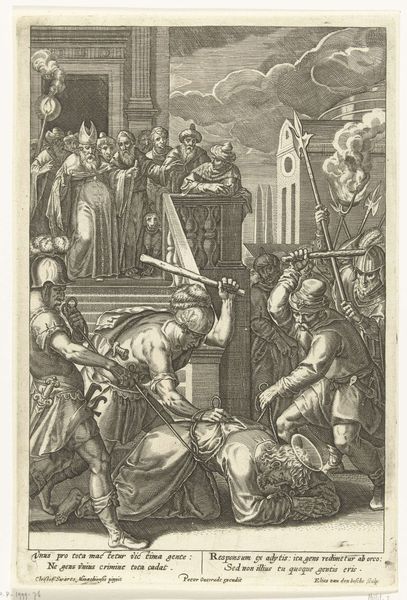
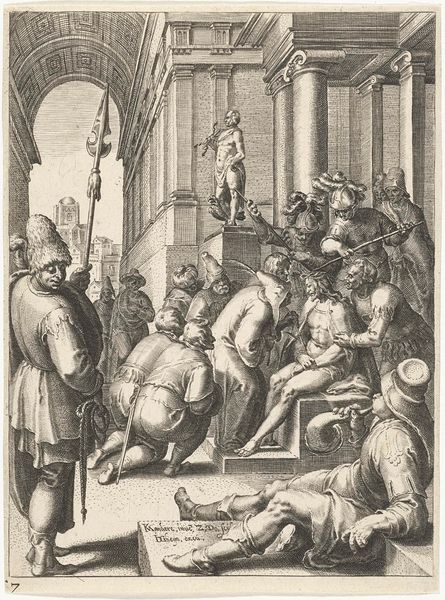
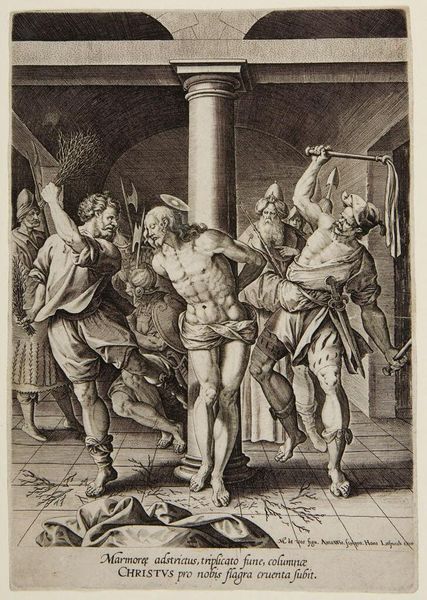
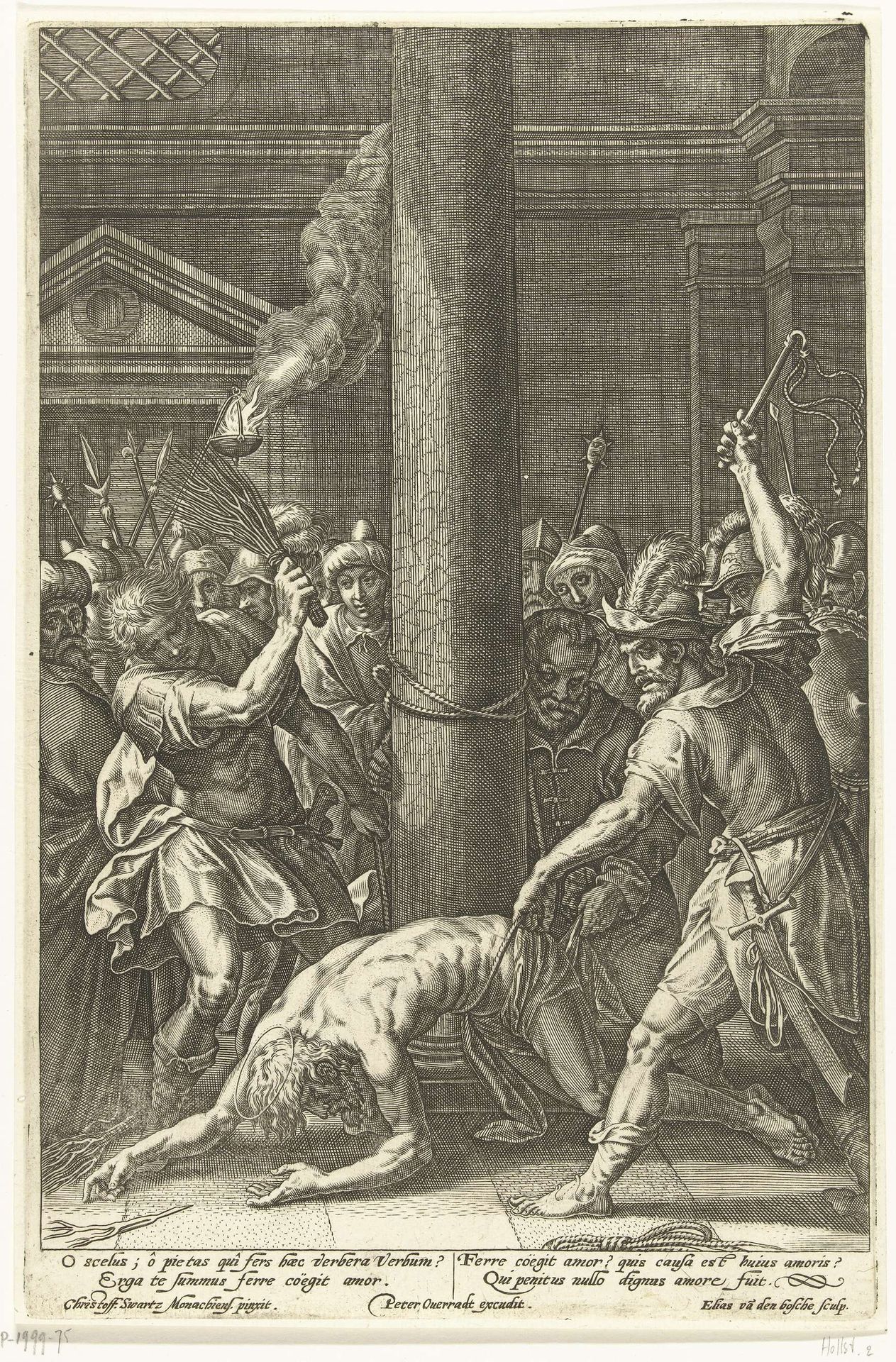
This engraving by Elias van den Bossche depicts Christ’s flagellation, a scene brimming with symbolic significance. The column, to which Christ is bound, isn't merely an architectural element; it’s a visual anchor, laden with historical and theological weight. This motif of the column appears in numerous artistic depictions across centuries, each time serving as a silent witness to suffering. Think of ancient Roman columns as symbols of strength and empire, now repurposed to underscore the vulnerability of Christ. The act of flagellation itself—the whips, the rods—is charged with psychological intensity, representing not only physical torment but also a deeper, existential anguish. It is a powerful emotional image that evokes pity, fear, and even a sense of collective guilt. The column, the whips, the suffering: these are not isolated symbols but rather nodes in a vast network of cultural memory, constantly evolving, constantly resurfacing.
De geseling van Christus
1600 - 1620

Elias van den Bossche
@eliasvandenbosscheLocation
RijksmuseumArtwork details
- Medium
- print, intaglio, ink, pen, engraving
- Dimensions
- height 298 mm, width 190 mm
- Location
- Rijksmuseum
- Copyright
- Rijks Museum: Open Domain
Tags
Comments
Share your thoughts
About this artwork
This engraving by Elias van den Bossche depicts Christ’s flagellation, a scene brimming with symbolic significance. The column, to which Christ is bound, isn't merely an architectural element; it’s a visual anchor, laden with historical and theological weight. This motif of the column appears in numerous artistic depictions across centuries, each time serving as a silent witness to suffering. Think of ancient Roman columns as symbols of strength and empire, now repurposed to underscore the vulnerability of Christ. The act of flagellation itself—the whips, the rods—is charged with psychological intensity, representing not only physical torment but also a deeper, existential anguish. It is a powerful emotional image that evokes pity, fear, and even a sense of collective guilt. The column, the whips, the suffering: these are not isolated symbols but rather nodes in a vast network of cultural memory, constantly evolving, constantly resurfacing.
Comments
Share your thoughts