About this artwork
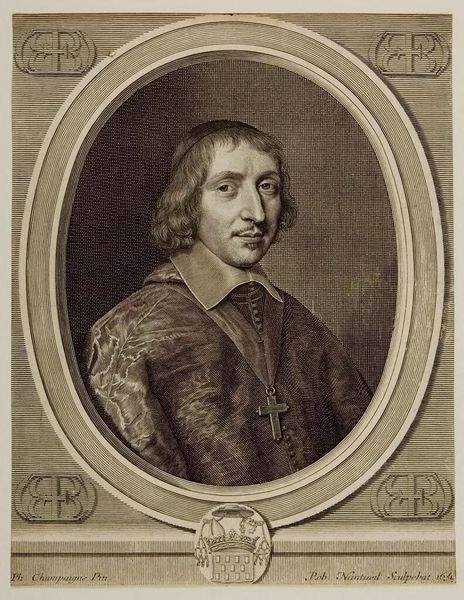
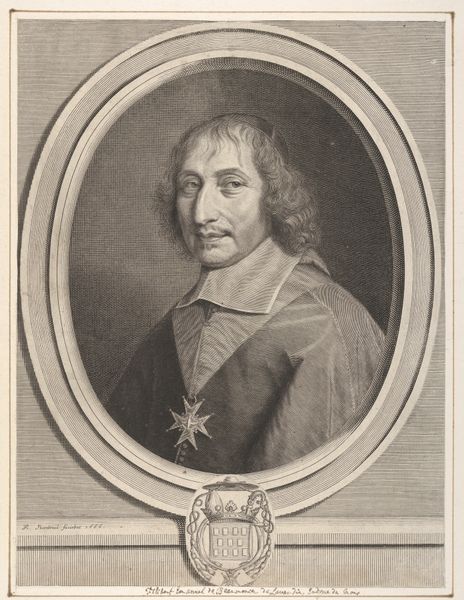
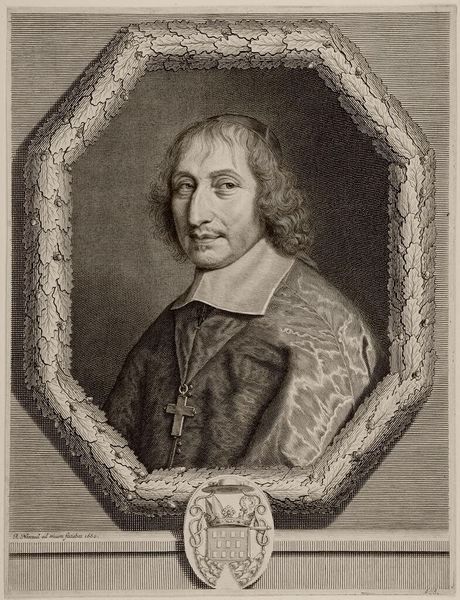
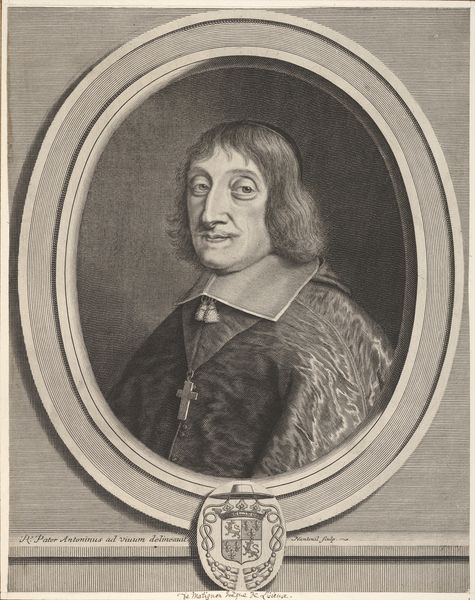
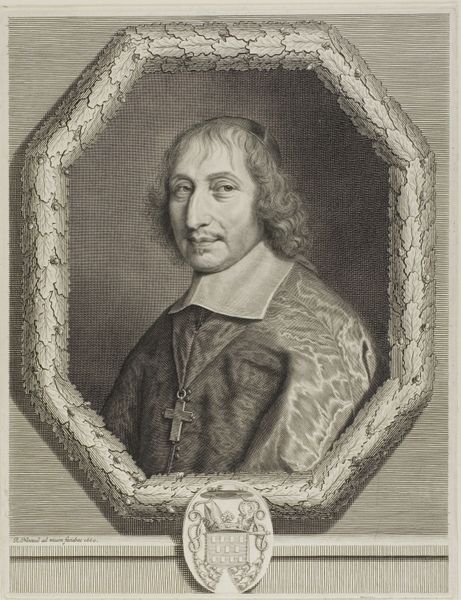
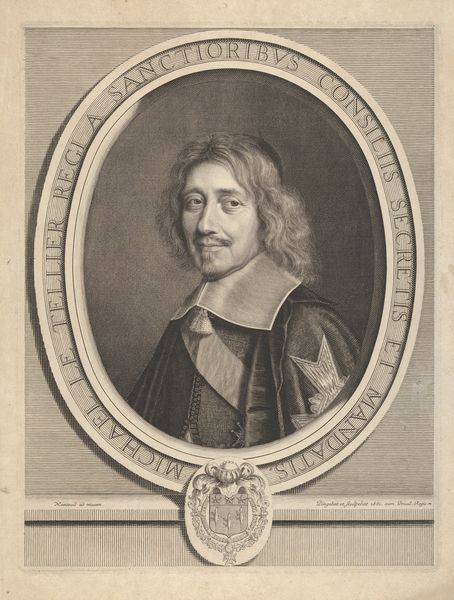
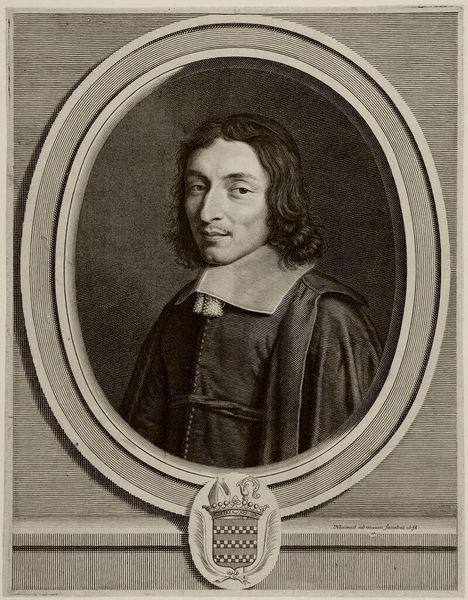
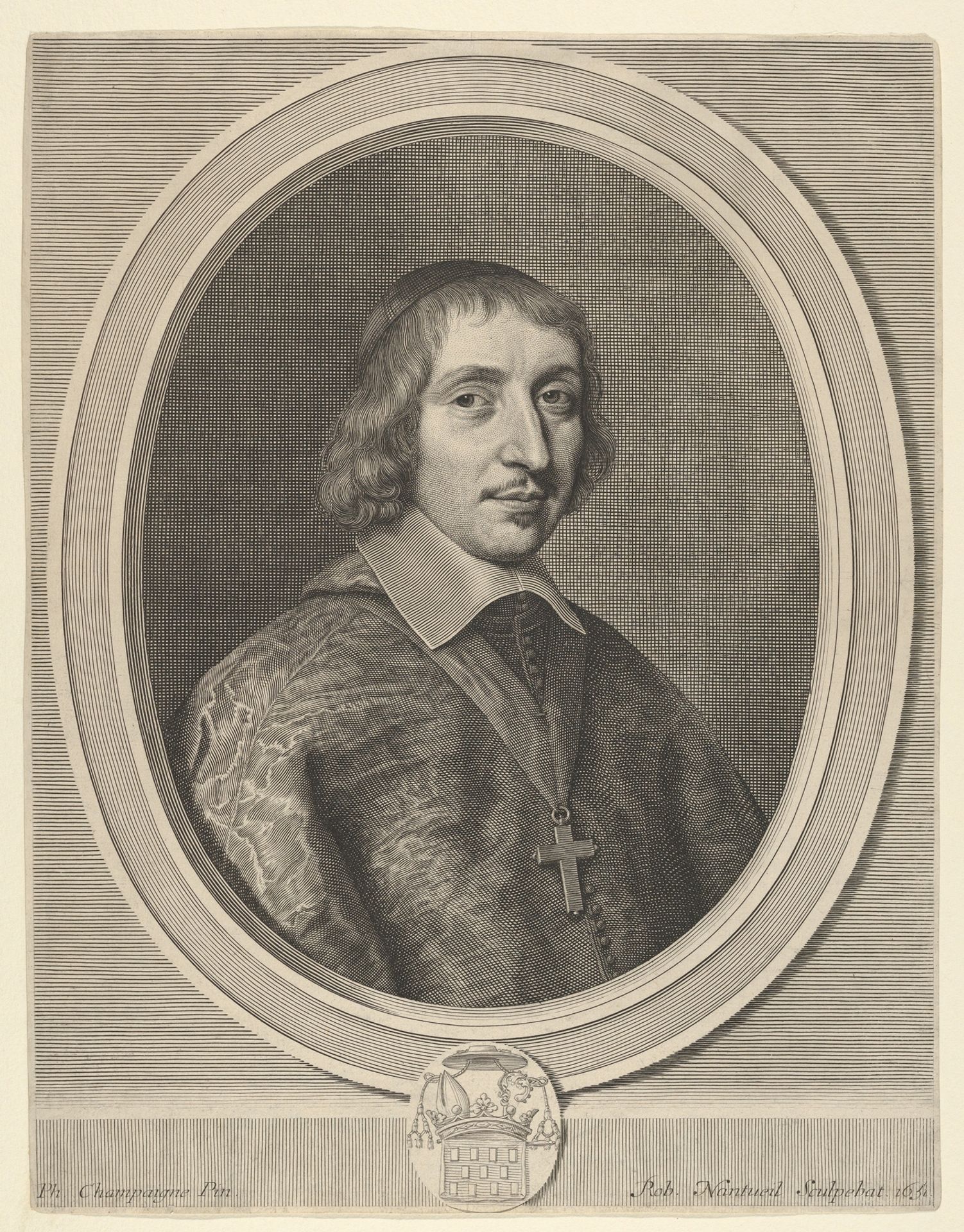
This is Robert Nanteuil's portrait of Philibert-Emmanuel de Beaumanoir de Lavardin, a print rendered in meticulous detail. The oval format immediately draws our focus to the subject, framed as if in a mirror reflecting the Bishop’s status. Nanteuil masterfully employs line and texture. Notice how fine hatching defines the contours of Lavardin’s face and vestments, creating a sense of depth and volume. The texture varies from the smooth, polished surface of the face to the intricate patterns of his robes. This contrast enlivens the composition, giving the image a tangible presence. The composition's structure operates through a system of signs, with each element carefully placed to communicate power and authority. The gaze, the clothing, the emblem—all converge to construct a visual language that speaks to the sitter’s identity and role within the social hierarchy. This portrait, therefore, functions not merely as a representation but as a carefully constructed statement about identity, power, and representation within 17th-century French society.
Philibert-Emmanuel de Beaumanoir de Lavardin
1651


Artwork details
- Medium
- drawing, print, metal, engraving
- Dimensions
- Sheet: 12 5/16 × 9 1/2 in. (31.2 × 24.2 cm)
- Location
- Metropolitan Museum of Art, New York, NY
- Copyright
- Public Domain
Tags
Comments
Share your thoughts
About this artwork
This is Robert Nanteuil's portrait of Philibert-Emmanuel de Beaumanoir de Lavardin, a print rendered in meticulous detail. The oval format immediately draws our focus to the subject, framed as if in a mirror reflecting the Bishop’s status. Nanteuil masterfully employs line and texture. Notice how fine hatching defines the contours of Lavardin’s face and vestments, creating a sense of depth and volume. The texture varies from the smooth, polished surface of the face to the intricate patterns of his robes. This contrast enlivens the composition, giving the image a tangible presence. The composition's structure operates through a system of signs, with each element carefully placed to communicate power and authority. The gaze, the clothing, the emblem—all converge to construct a visual language that speaks to the sitter’s identity and role within the social hierarchy. This portrait, therefore, functions not merely as a representation but as a carefully constructed statement about identity, power, and representation within 17th-century French society.
Comments
Share your thoughts