About this artwork
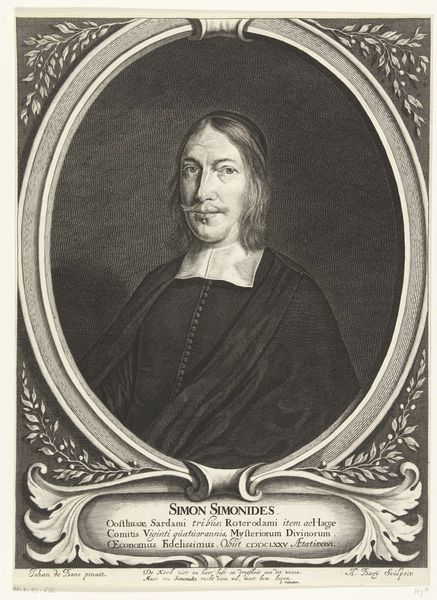
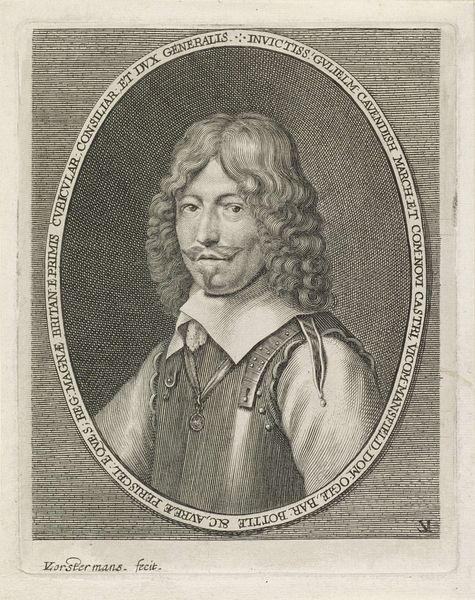
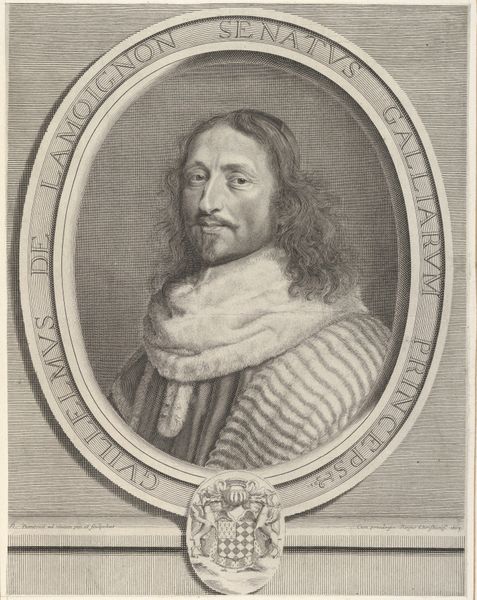
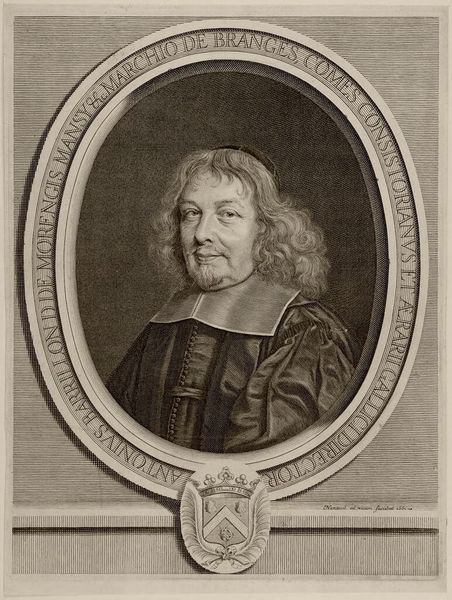
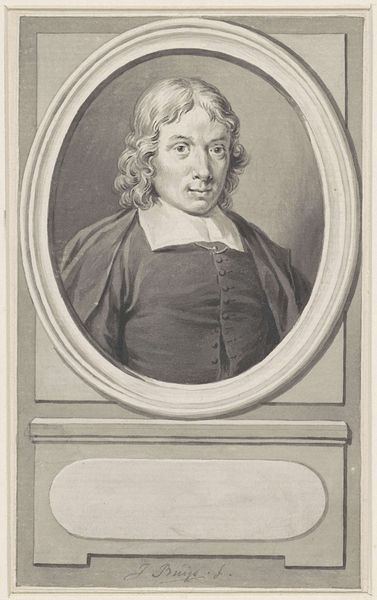
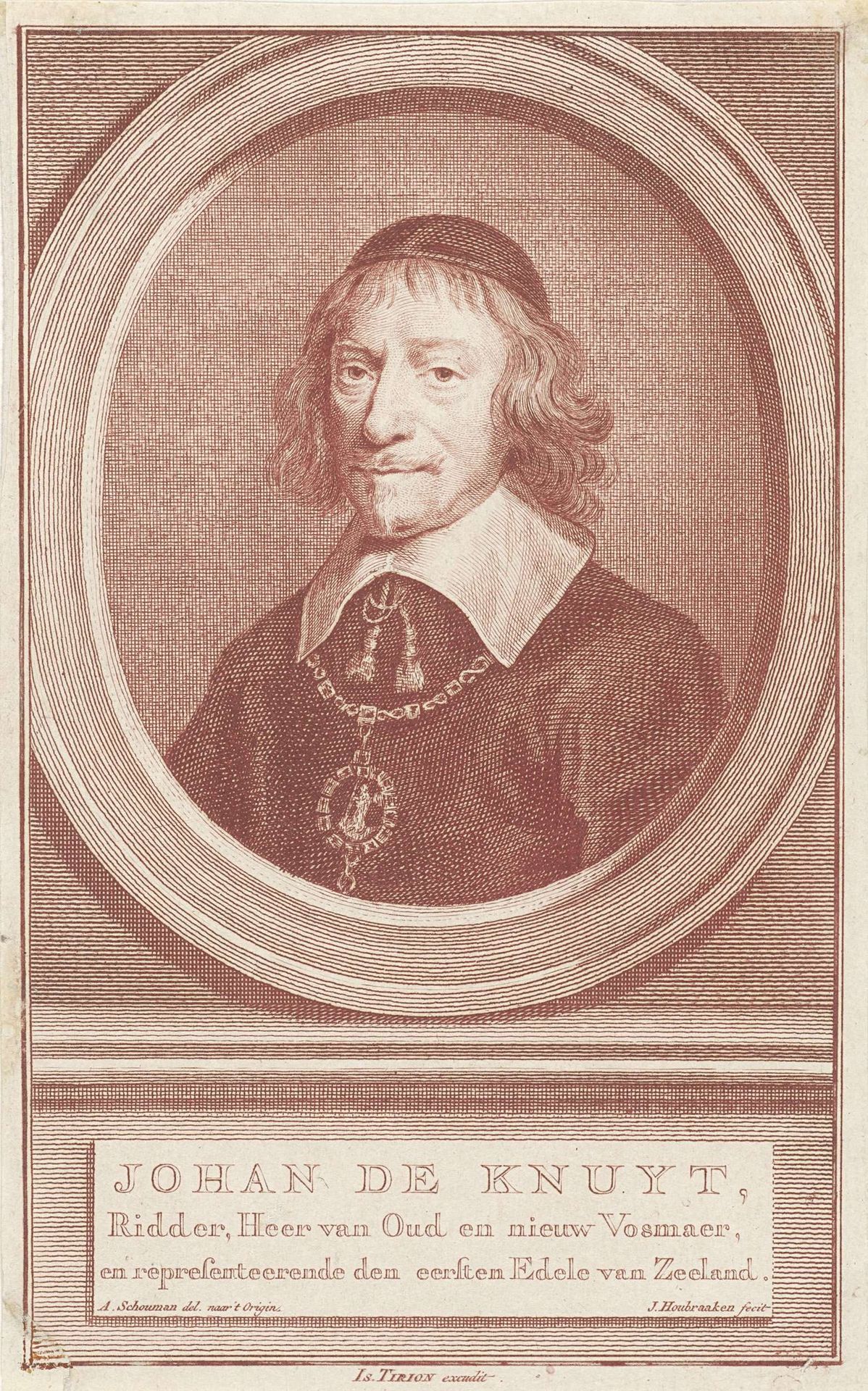
This portrait of Johan de Knuyt, etched by Jacob Houbraken, presents us with symbols of status and societal role. The chain of office, prominently displayed, speaks to de Knuyt’s position as a representative of Zeeland, a chain not unlike those worn by ancient Roman senators, reborn in a new era. But consider this: the circle of the chain, a motif echoing through time. From the Ouroboros, the snake devouring its tail, to wedding rings, the circle symbolizes eternity, completion, and unbroken connection. Here, it binds de Knuyt to his duty, and the present to a long line of history. The subconscious pull of such symbols is potent. The weight of office, the endless cycle of responsibility—these aren't just concepts but feelings, evoked by the artist's masterful deployment of visual language. This symbol persists through the ages, taking on new significations while rooted in something primal, something ancient.

Artwork details
- Medium
- drawing, print, engraving
- Dimensions
- height 179 mm, width 111 mm
- Location
- Rijksmuseum
- Copyright
- Rijks Museum: Open Domain
Tags
portrait
drawing
baroque
old engraving style
15_18th-century
engraving
Comments
Be the first to share your thoughts about this work.
About this artwork
This portrait of Johan de Knuyt, etched by Jacob Houbraken, presents us with symbols of status and societal role. The chain of office, prominently displayed, speaks to de Knuyt’s position as a representative of Zeeland, a chain not unlike those worn by ancient Roman senators, reborn in a new era. But consider this: the circle of the chain, a motif echoing through time. From the Ouroboros, the snake devouring its tail, to wedding rings, the circle symbolizes eternity, completion, and unbroken connection. Here, it binds de Knuyt to his duty, and the present to a long line of history. The subconscious pull of such symbols is potent. The weight of office, the endless cycle of responsibility—these aren't just concepts but feelings, evoked by the artist's masterful deployment of visual language. This symbol persists through the ages, taking on new significations while rooted in something primal, something ancient.
Comments
Be the first to share your thoughts about this work.