c. 17th century
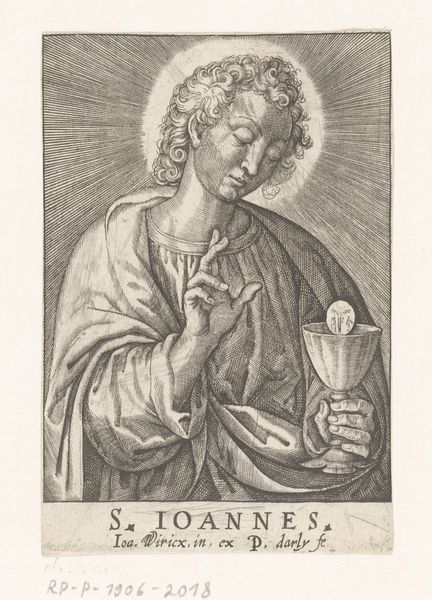
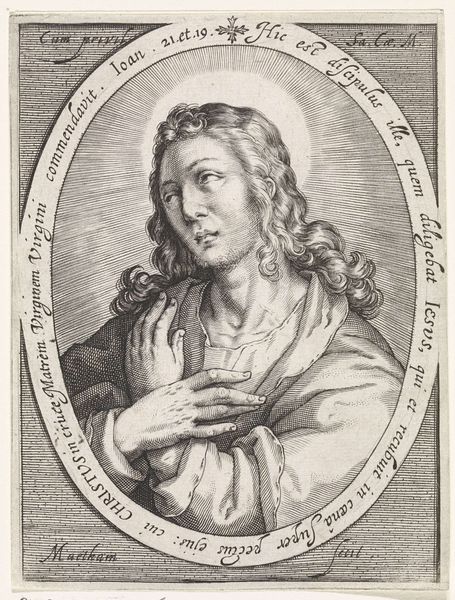
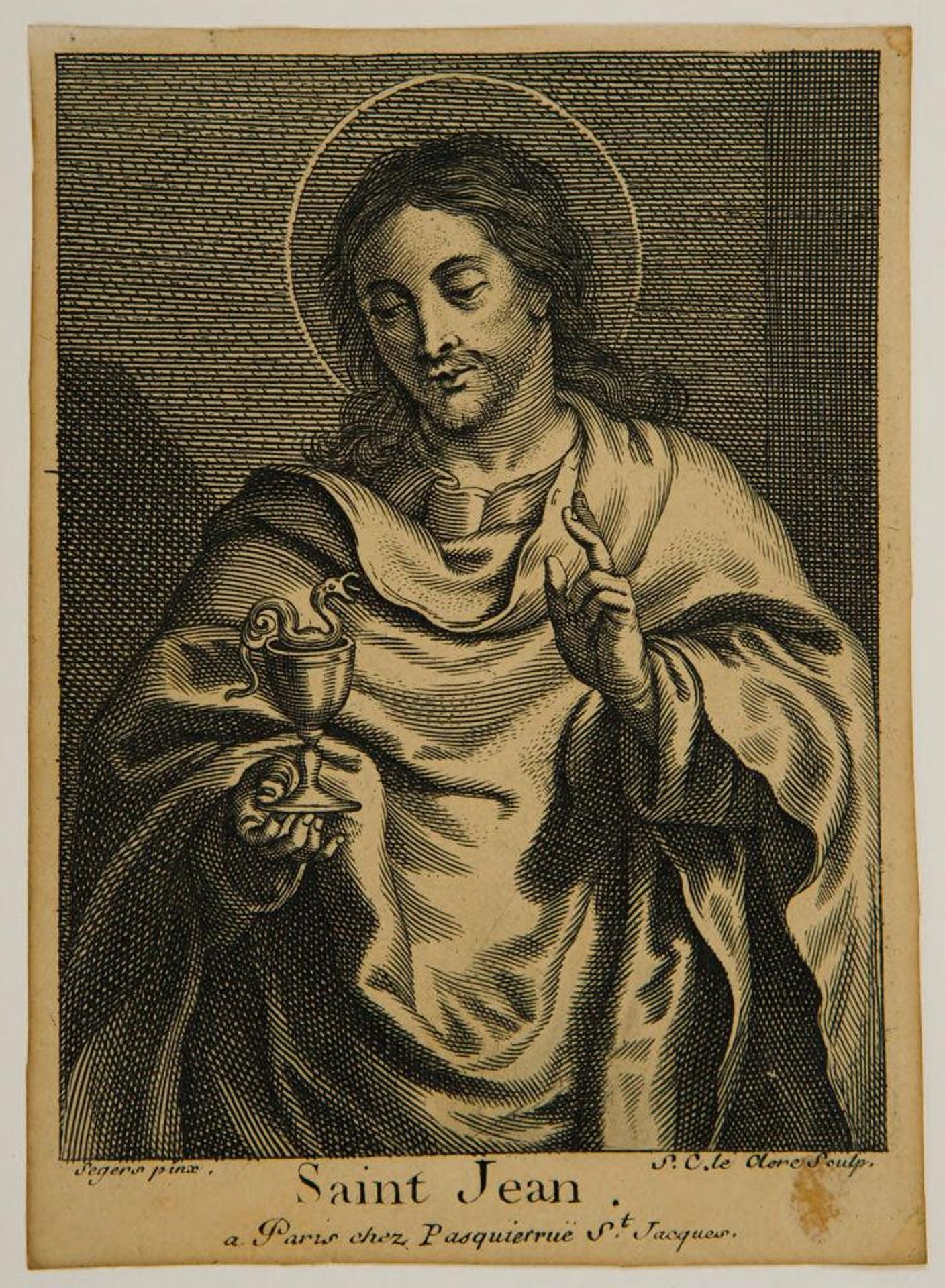
Saint John


Listen to curator's interpretation
Curatorial notes
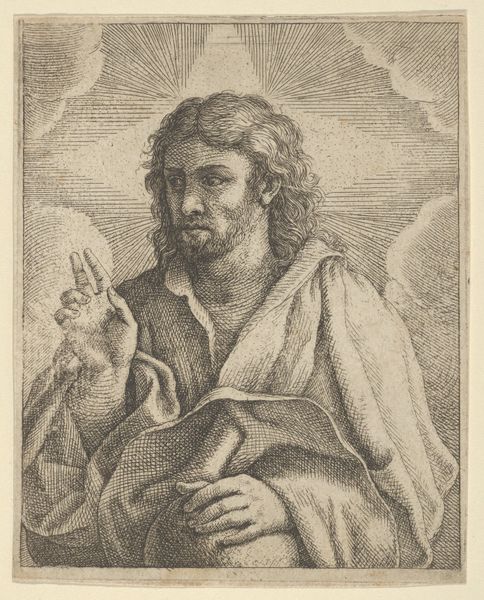
Curator: Looking at this engraving by Sébastien Le Clerc the elder, titled Saint John, my first thought is how contained it feels, like a whispered secret. Editor: I feel that, and perhaps it’s because these devotional images, especially those circulated in prints, had a strong public role during the Counter-Reformation, solidifying visual culture's role in shaping religious and political identities. Curator: Indeed. There’s a quiet strength, though. John holds the chalice, a serpent rising from it, yet his face is serene, almost contemplative. It's that contrast that really gets to me. Editor: And Le Clerc, active in Louis XIV's court, was part of a generation grappling with religious and political upheaval. This image, a testament to faith, carries the weight of that era's complexities. Curator: So, in this tiny, detailed engraving, we find echoes of grand historical dramas, personal devotion, and the artist's own inner world. Pretty neat, isn't it? Editor: Absolutely. Art, even on a small scale, holds a mirror to society, reflecting its beliefs, anxieties, and aspirations.