About this artwork
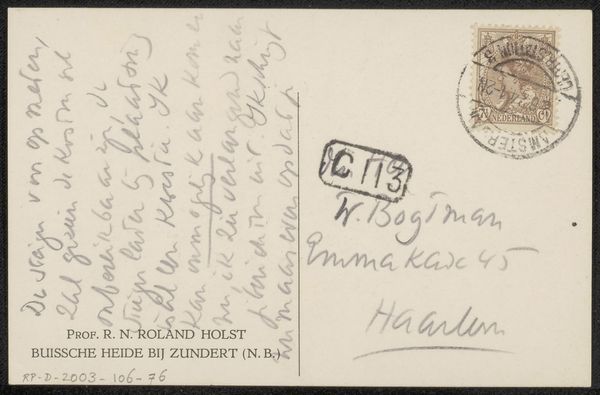
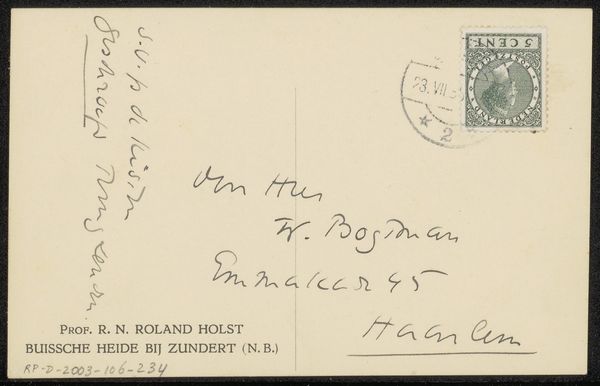
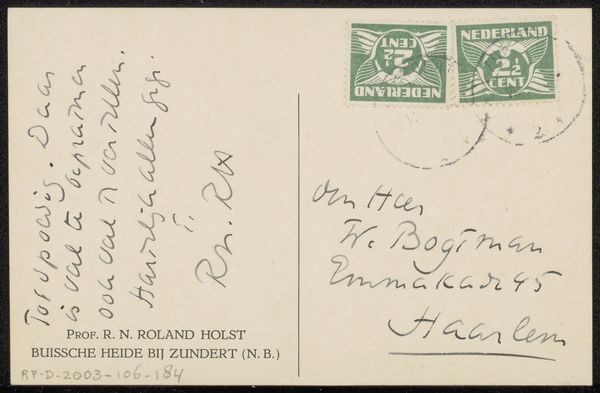
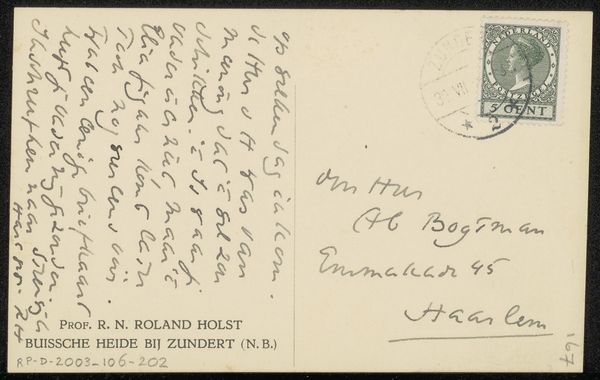
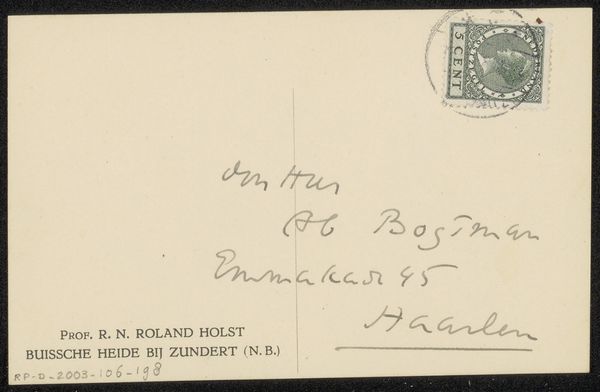
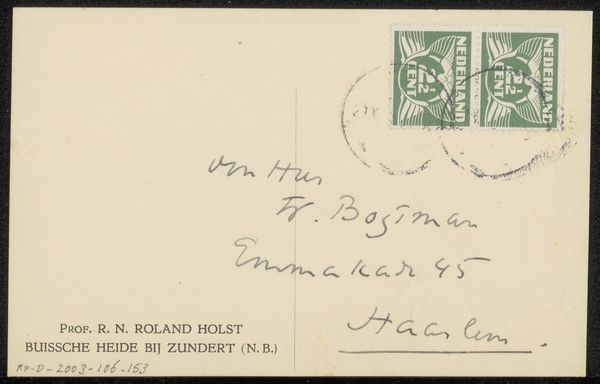
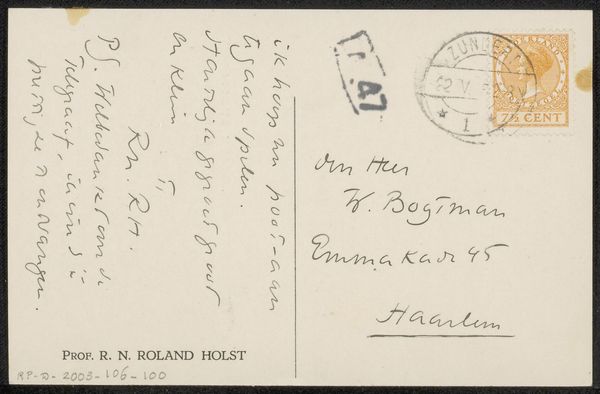
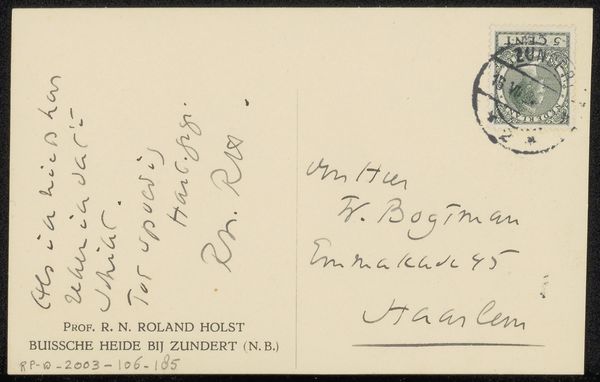
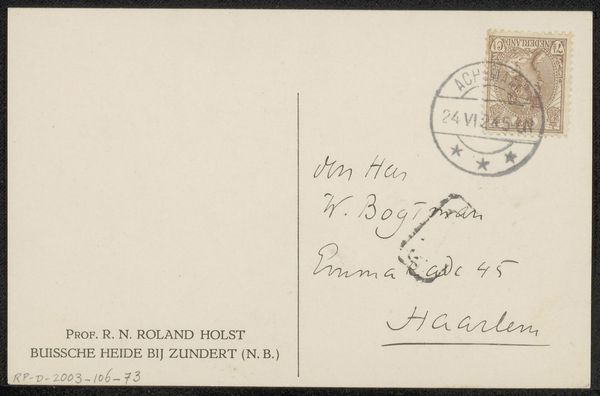
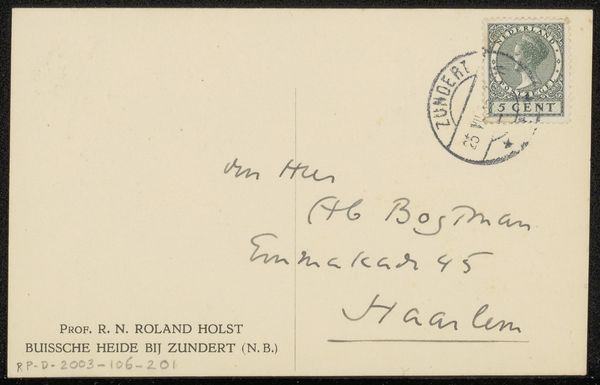
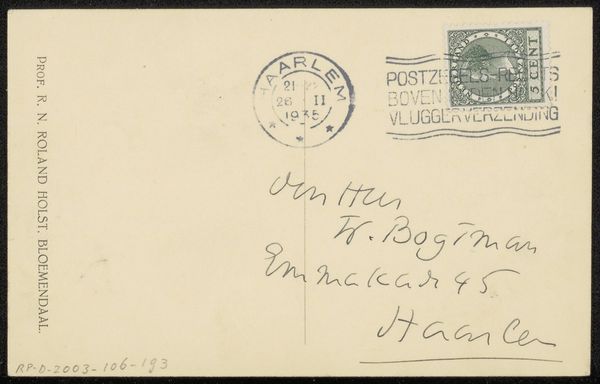
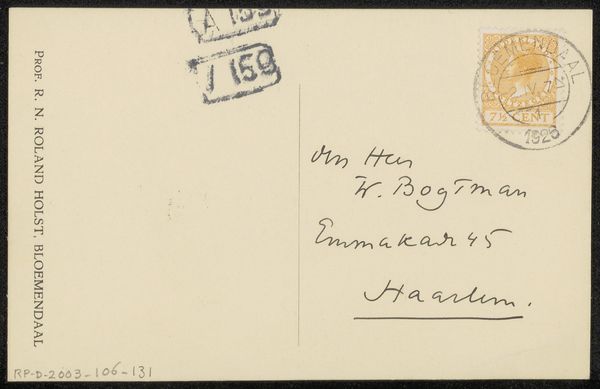
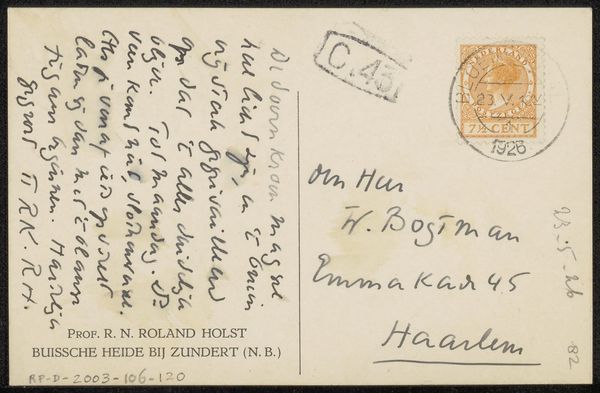
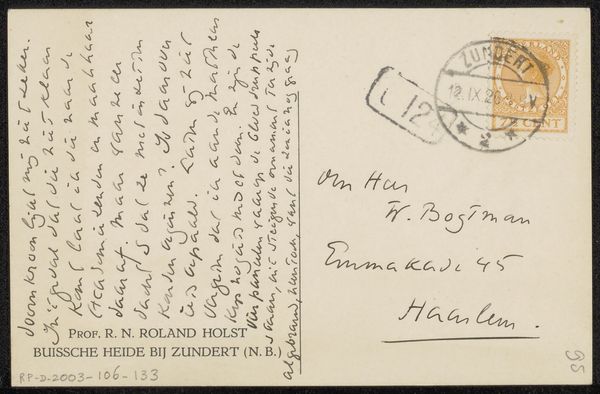
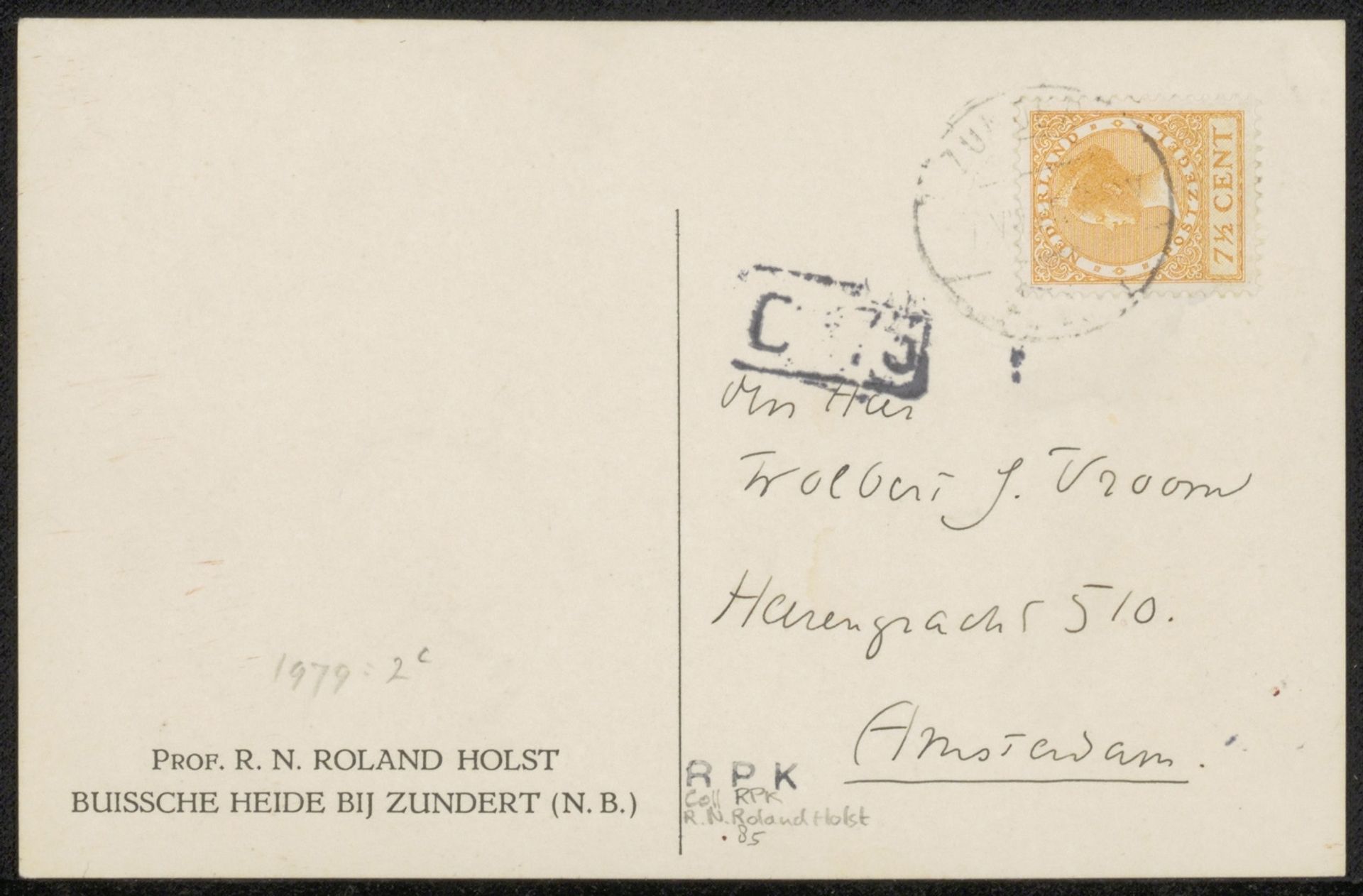
Editor: Here we have a postcard addressed to Wolbert J. Vroom, conceivably created between 1925 and 1927 by Richard Nicolaüs Roland Holst. It's ink on paper, so a drawing. It gives the impression of capturing a specific moment in time, frozen, like a little historical artifact. What visual echoes do you notice in this modest drawing? Curator: Postcards such as this can be viewed as both a personal and cultural artifact. This isn't merely an image, it's a portal into an exchange between individuals. The handwriting, the stamp, the address – each detail whispers of connection and communication from a bygone era. What meaning do you see in the fact that it's a drawing, and not, say, a photograph? Editor: That's an interesting question. Perhaps, a drawing carries a personal imprint, an intimacy, that a mass-produced image lacks? Curator: Precisely. Holst choosing pen and ink elevates a common message into an act of artistic expression. Look at the stamp. Currency is a cultural symbol—the color, the design. Consider what its worth would represent during the time. What needs or cultural values were embedded in such low denomination? Editor: It highlights, maybe, the economic realities of the time. Even something as commonplace as a stamp carries so much significance when viewed through this lens. Thank you! Curator: It reveals the interconnectedness of art and life. Symbols aren't static; they transform with culture, and carry stories. That makes any image from the past resonate with our present.
Briefkaart aan Wolbert J. Vroom
Possibly 1925 - 1927

Richard Nicolaüs Roland Holst
1868 - 1938Location
RijksmuseumArtwork details
- Medium
- drawing, ink, pen
- Location
- Rijksmuseum
- Copyright
- Rijks Museum: Open Domain
Tags
Comments
Share your thoughts
About this artwork
Editor: Here we have a postcard addressed to Wolbert J. Vroom, conceivably created between 1925 and 1927 by Richard Nicolaüs Roland Holst. It's ink on paper, so a drawing. It gives the impression of capturing a specific moment in time, frozen, like a little historical artifact. What visual echoes do you notice in this modest drawing? Curator: Postcards such as this can be viewed as both a personal and cultural artifact. This isn't merely an image, it's a portal into an exchange between individuals. The handwriting, the stamp, the address – each detail whispers of connection and communication from a bygone era. What meaning do you see in the fact that it's a drawing, and not, say, a photograph? Editor: That's an interesting question. Perhaps, a drawing carries a personal imprint, an intimacy, that a mass-produced image lacks? Curator: Precisely. Holst choosing pen and ink elevates a common message into an act of artistic expression. Look at the stamp. Currency is a cultural symbol—the color, the design. Consider what its worth would represent during the time. What needs or cultural values were embedded in such low denomination? Editor: It highlights, maybe, the economic realities of the time. Even something as commonplace as a stamp carries so much significance when viewed through this lens. Thank you! Curator: It reveals the interconnectedness of art and life. Symbols aren't static; they transform with culture, and carry stories. That makes any image from the past resonate with our present.
Comments
Share your thoughts