About this artwork
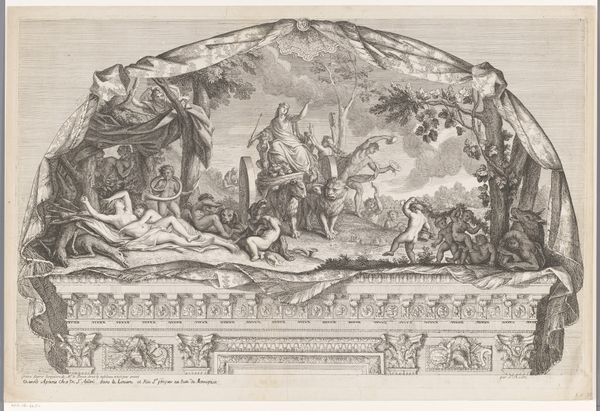
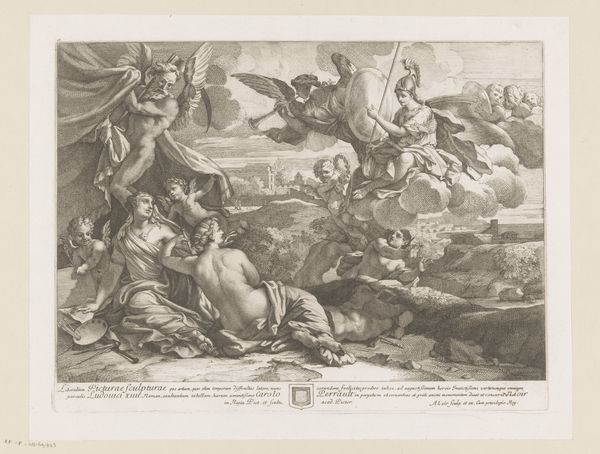
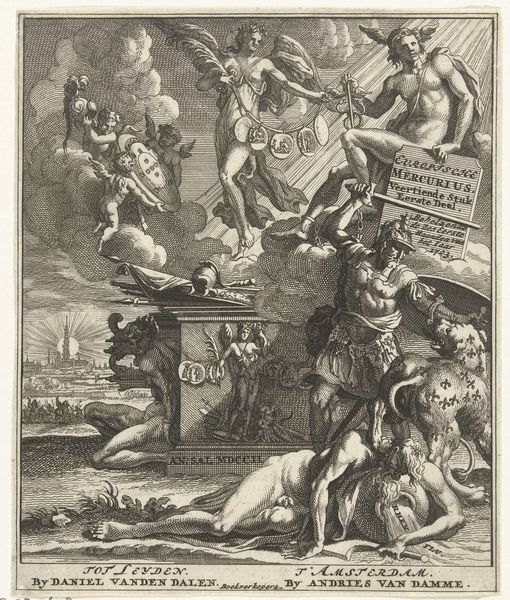
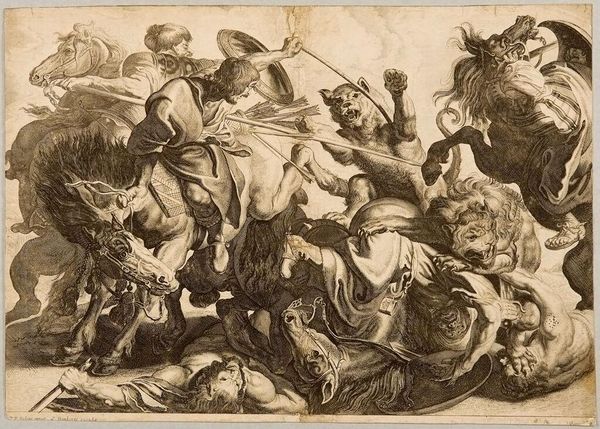
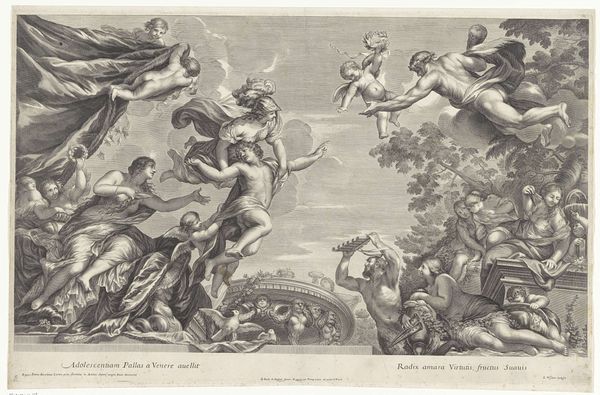
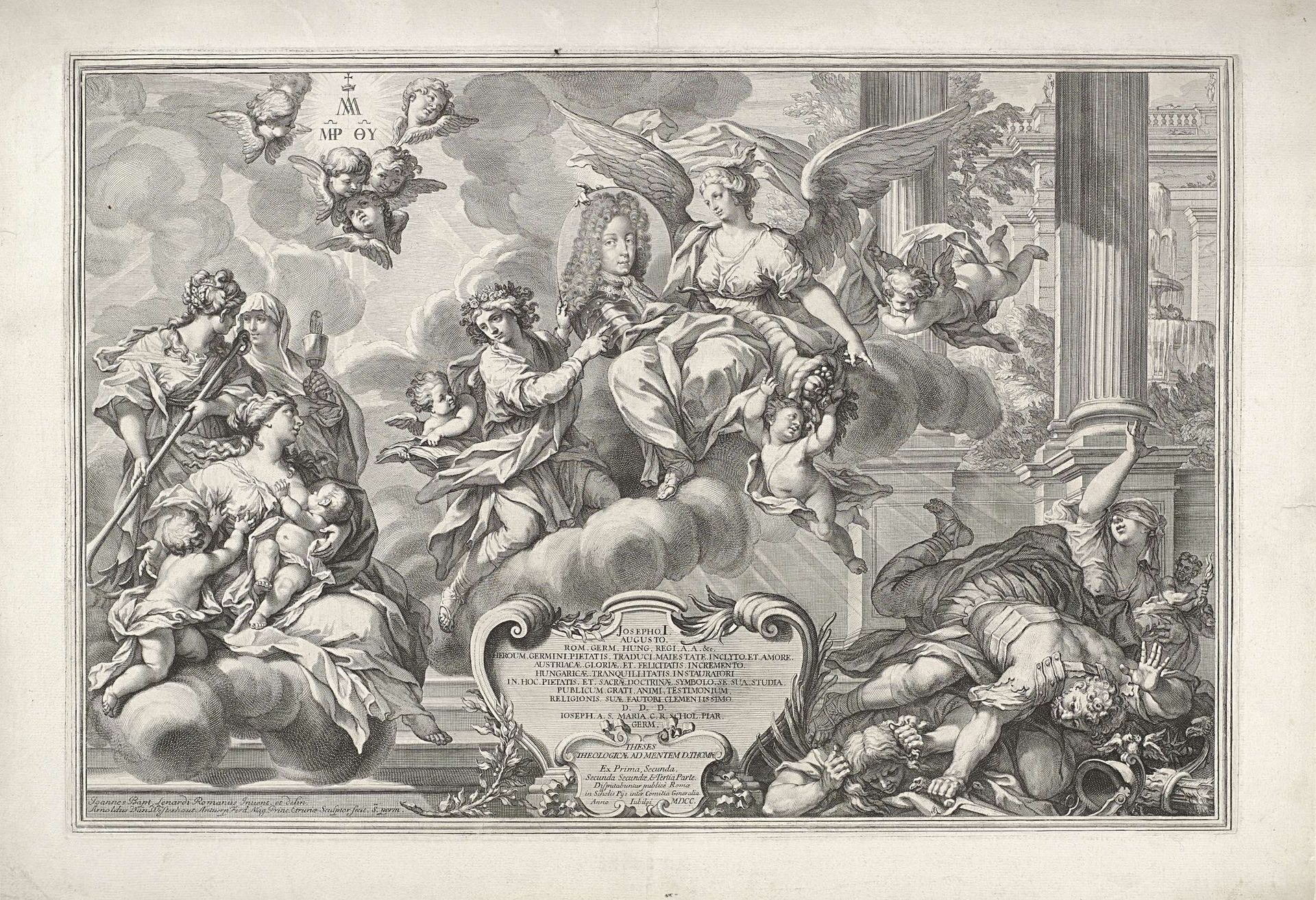
This is Arnold van Westerhout's promotional print featuring the portrait of the German Emperor Joseph I. Note the fallen figures at the lower right; blindfolded and struggling, they symbolize Ignorance, overcome by the enlightened rule of Joseph. This harks back to classical allegories, where the triumph of reason over darkness was a common theme. Consider the recurring image of blinding throughout history, from the blinding of Polyphemus by Odysseus to the biblical blinding of Saul, and even forward to the surrealist image of an eye being cut in Un Chien Andalou; these symbols carry the weight of a collective anxiety about knowledge and sight, and an impulse toward destruction when faced with the unknown. The composition conveys a sense of intense conflict and liberation, engaging us on a subconscious level with primal themes. This symbol is a testament to the cyclical nature of visual motifs and the emotional power they carry, forever resurfacing in new contexts, yet rooted in our shared cultural psyche.
Promotieprent met het portret van de Duitse keizer Jozef I
1700

Artwork details
- Medium
- engraving
- Dimensions
- height 452 mm, width 673 mm
- Copyright
- Rijks Museum: Open Domain
Tags
Comments
Share your thoughts
About this artwork
This is Arnold van Westerhout's promotional print featuring the portrait of the German Emperor Joseph I. Note the fallen figures at the lower right; blindfolded and struggling, they symbolize Ignorance, overcome by the enlightened rule of Joseph. This harks back to classical allegories, where the triumph of reason over darkness was a common theme. Consider the recurring image of blinding throughout history, from the blinding of Polyphemus by Odysseus to the biblical blinding of Saul, and even forward to the surrealist image of an eye being cut in Un Chien Andalou; these symbols carry the weight of a collective anxiety about knowledge and sight, and an impulse toward destruction when faced with the unknown. The composition conveys a sense of intense conflict and liberation, engaging us on a subconscious level with primal themes. This symbol is a testament to the cyclical nature of visual motifs and the emotional power they carry, forever resurfacing in new contexts, yet rooted in our shared cultural psyche.
Comments
Share your thoughts