About this artwork
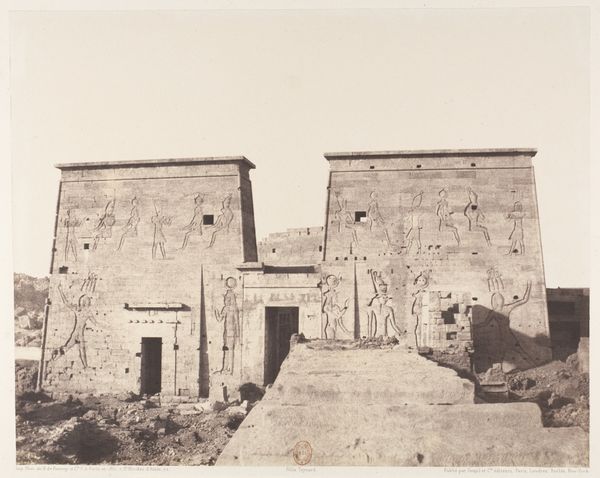
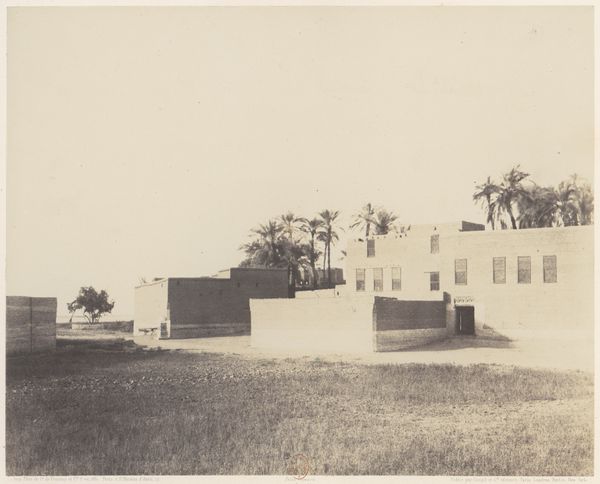
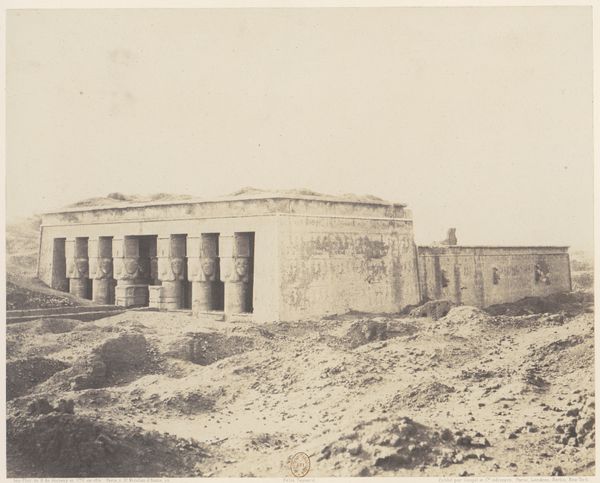
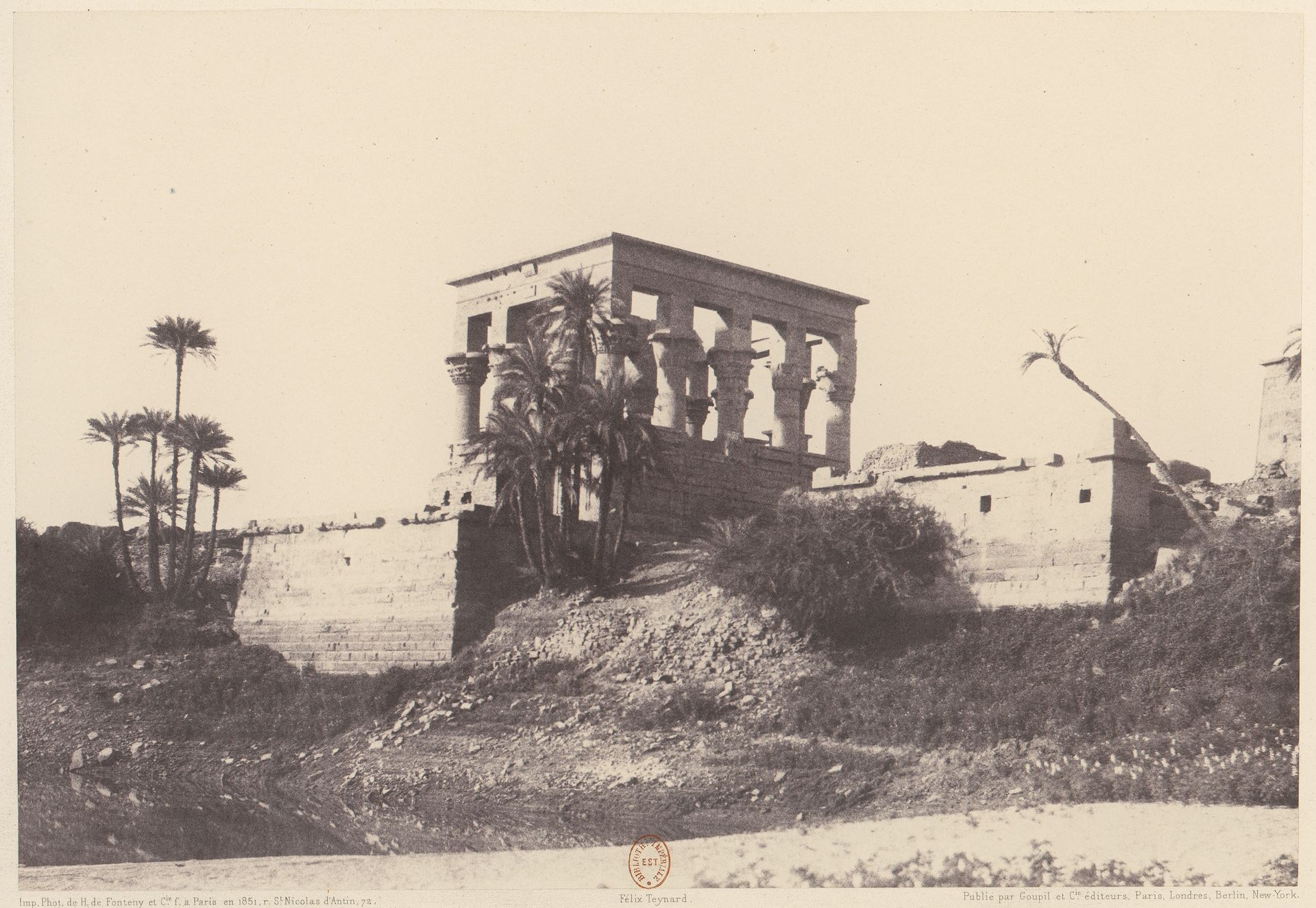
Félix Teynard made this photograph of the island of Philae, Egypt, using a calotype process. This early photographic technique, superseded by newer, sharper methods, involves coating paper with silver iodide. The resulting print has a soft, almost hazy quality. This aesthetic, combined with the subject matter, transports us to a distant time and place. The image captures the imposing stone architecture, and also the surrounding landscape. Teynard’s choice of the calotype emphasizes the monumental scale and ancient origins of the site. Consider the labor-intensive nature of the process, each print meticulously crafted. In contrast to today's instant images, the calotype demanded time, skill, and patience, mirroring the work required to build and maintain the island’s monumental structures. By understanding Teynard’s methods, and the amount of work involved, we can see photography not just as a means of documentation, but as a creative practice, deeply intertwined with craftsmanship.
Ile de Fîleh (Philæ), Édifice de l'Est - Vue Générale Prise du Point C
1851 - 1852


Artwork details
- Medium
- print, daguerreotype, photography, architecture
- Dimensions
- 20.8 x 30.5 cm. (8 3/16 x 12 in.)
- Location
- Metropolitan Museum of Art, New York, NY
- Copyright
- Public Domain
Tags
Comments
Share your thoughts
About this artwork
Félix Teynard made this photograph of the island of Philae, Egypt, using a calotype process. This early photographic technique, superseded by newer, sharper methods, involves coating paper with silver iodide. The resulting print has a soft, almost hazy quality. This aesthetic, combined with the subject matter, transports us to a distant time and place. The image captures the imposing stone architecture, and also the surrounding landscape. Teynard’s choice of the calotype emphasizes the monumental scale and ancient origins of the site. Consider the labor-intensive nature of the process, each print meticulously crafted. In contrast to today's instant images, the calotype demanded time, skill, and patience, mirroring the work required to build and maintain the island’s monumental structures. By understanding Teynard’s methods, and the amount of work involved, we can see photography not just as a means of documentation, but as a creative practice, deeply intertwined with craftsmanship.
Comments
Share your thoughts