About this artwork
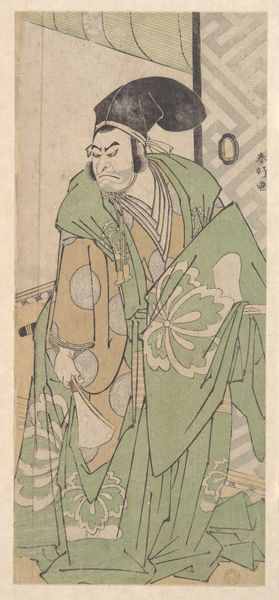
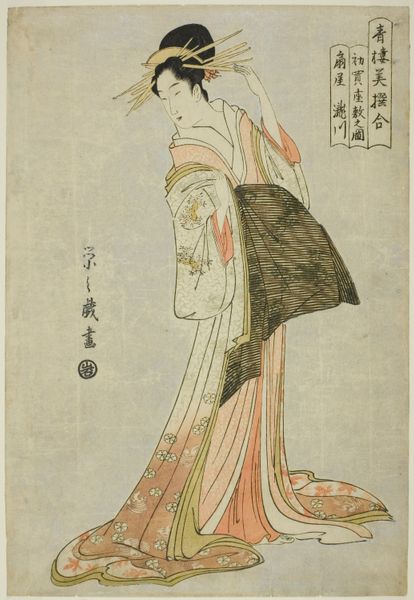
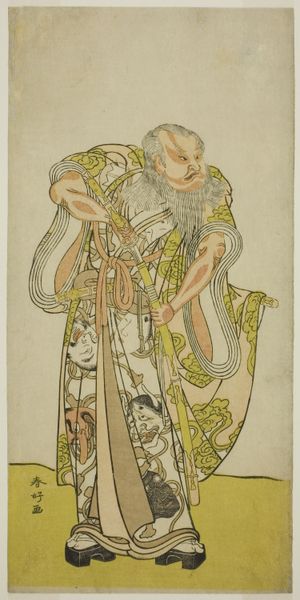
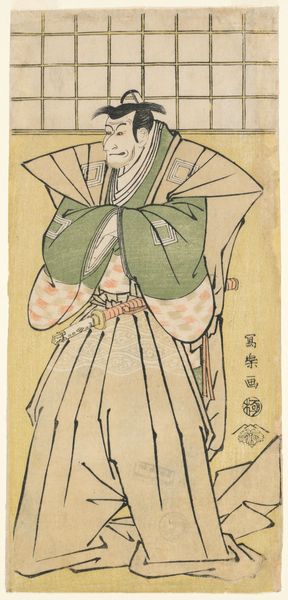
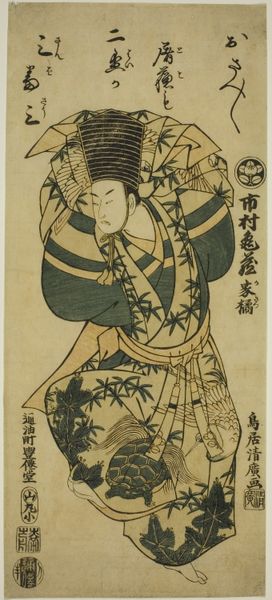
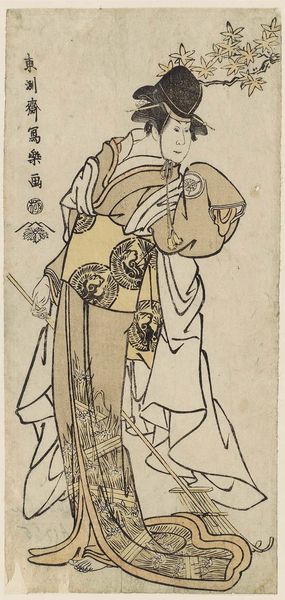
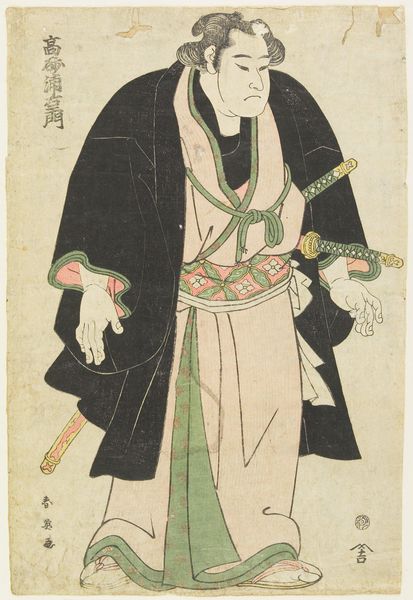
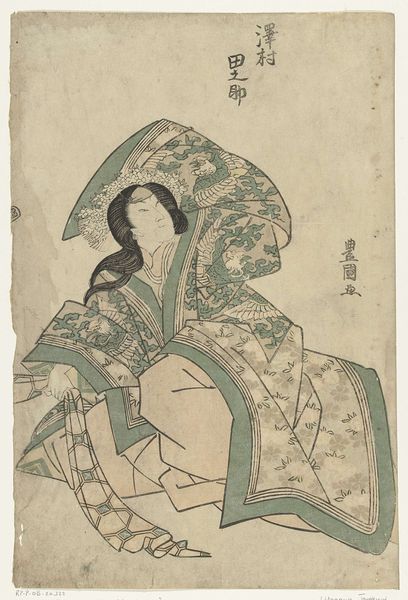
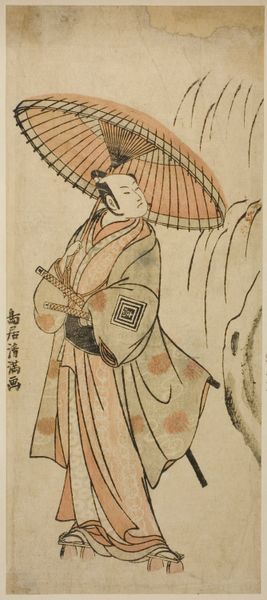
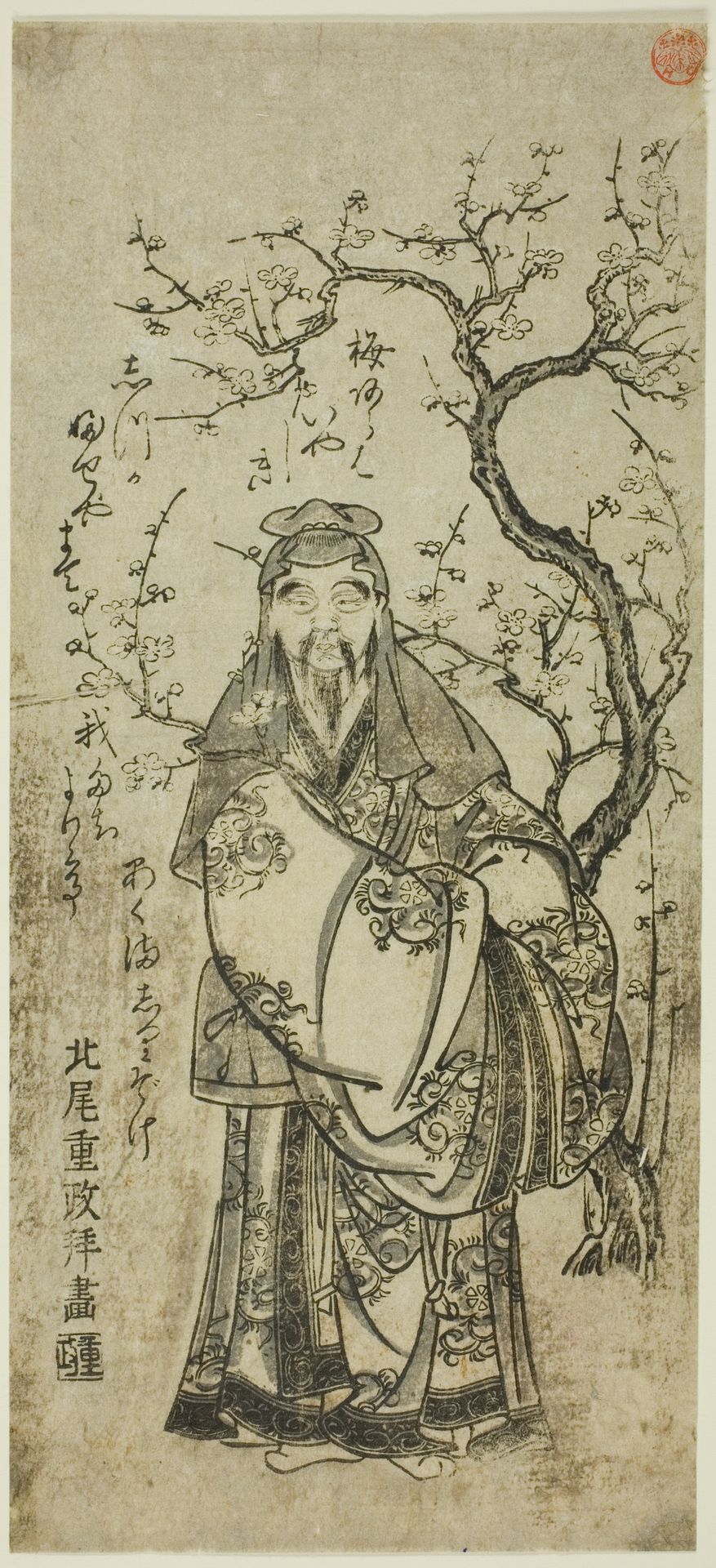
This print, made by Kitao Shigemasa sometime before 1820, depicts Sugawara Michizane and was made using the *ukiyo-e* woodblock printing technique. The process begins with a drawing, which is then meticulously carved into a woodblock, usually cherry. Ink is applied to the block, and then paper is laid on top and burnished to transfer the image. For a multi-colored print like this one, separate blocks were used for each color, demanding incredible precision. Look closely, and you'll see a range of grays and blacks which create texture and depth. Notice the fine lines that define the figure’s robes, the plum blossoms, and the calligraphy. Woodblock printing was a commercial enterprise, requiring the coordinated labor of artists, carvers, printers, and publishers. The *ukiyo-e* prints were relatively inexpensive and widely available, making art accessible to a broad audience. Appreciating the material and technical aspects of *ukiyo-e* prints allows us to move beyond conventional definitions of art, to consider their cultural and economic significance.
Sugawara Michizane crossing to China (Toto Tenjin) c. 1770s


Artwork details
- Medium
- print, paper, ink
- Dimensions
- 11 7/8 × 5 3/8 in.
- Location
- The Art Institute of Chicago
- Copyright
- Public Domain
Tags
portrait
pen sketch
asian-art
ukiyo-e
paper
ink
Comments
No comments
About this artwork
This print, made by Kitao Shigemasa sometime before 1820, depicts Sugawara Michizane and was made using the *ukiyo-e* woodblock printing technique. The process begins with a drawing, which is then meticulously carved into a woodblock, usually cherry. Ink is applied to the block, and then paper is laid on top and burnished to transfer the image. For a multi-colored print like this one, separate blocks were used for each color, demanding incredible precision. Look closely, and you'll see a range of grays and blacks which create texture and depth. Notice the fine lines that define the figure’s robes, the plum blossoms, and the calligraphy. Woodblock printing was a commercial enterprise, requiring the coordinated labor of artists, carvers, printers, and publishers. The *ukiyo-e* prints were relatively inexpensive and widely available, making art accessible to a broad audience. Appreciating the material and technical aspects of *ukiyo-e* prints allows us to move beyond conventional definitions of art, to consider their cultural and economic significance.
Comments
No comments