About this artwork
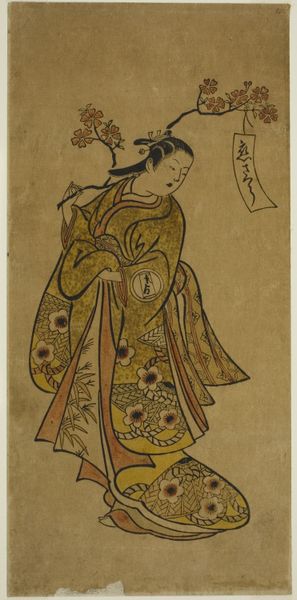
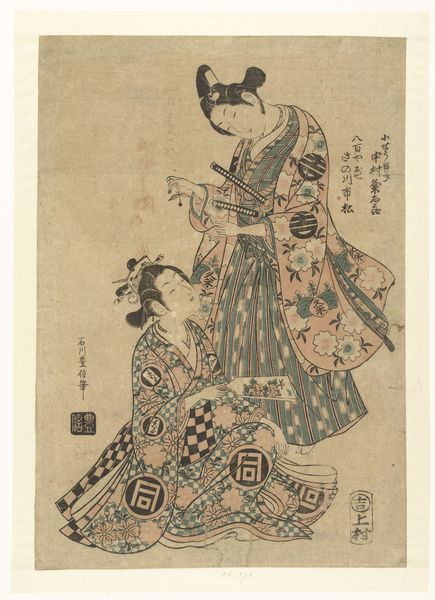
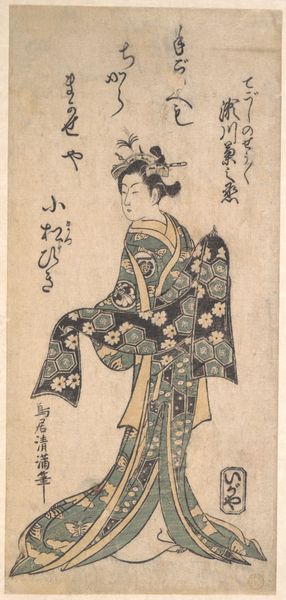
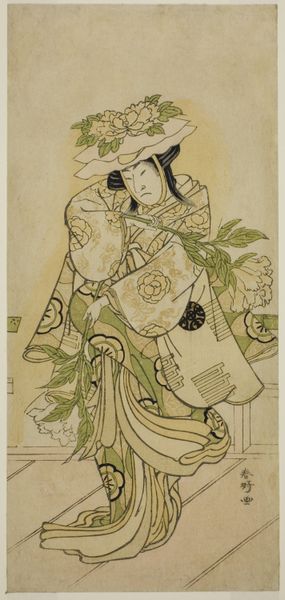
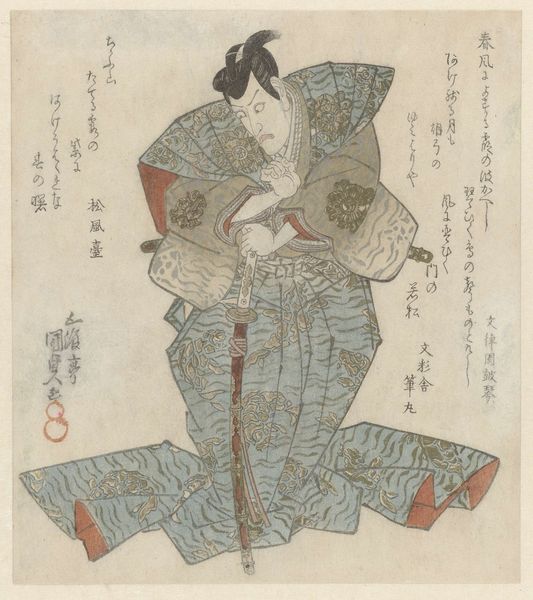
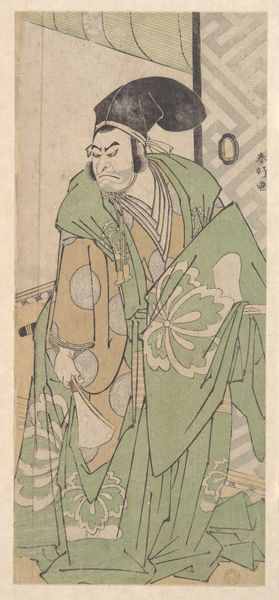
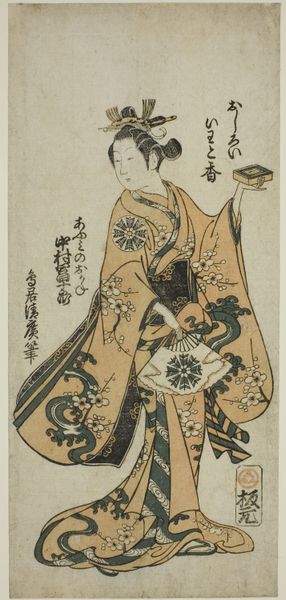
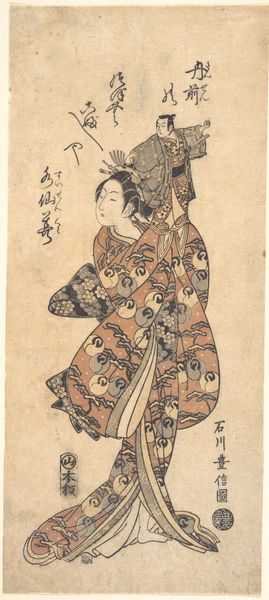
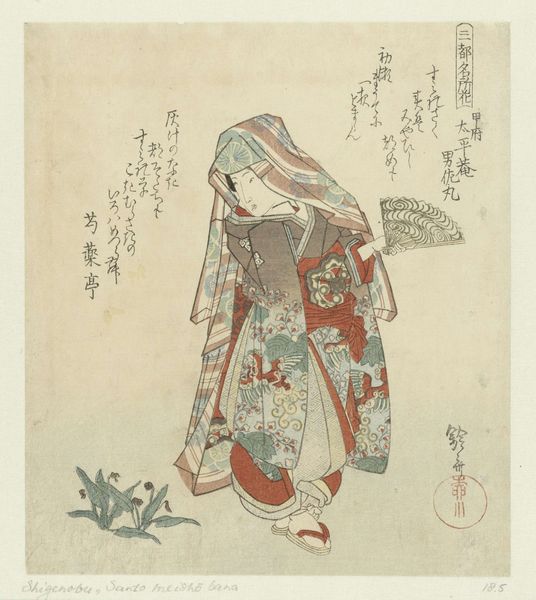
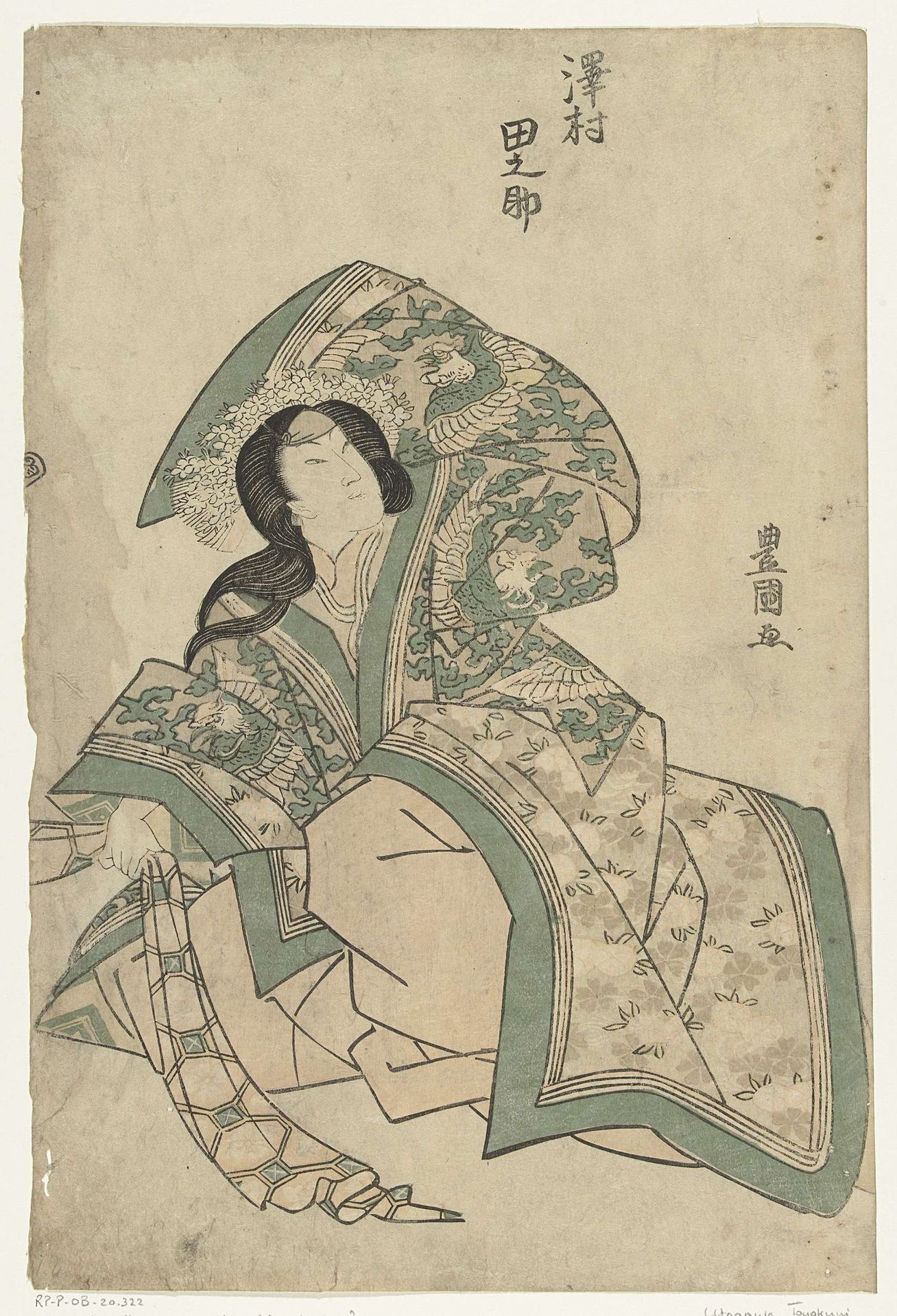
Editor: This is “Sawamura Tanosuke” by Utagawa Toyokuni I, made sometime between 1800 and 1805. It's a woodblock print with ink. The figure seems so elegant and theatrical, draped in these incredible patterned robes, almost otherworldly. How do you interpret this work within its cultural context? Curator: That sense of theatricality is key. This is Ukiyo-e, a genre deeply entwined with the floating world of Edo-period Japan – think theatre, pleasure districts, and a burgeoning merchant class. Sawamura Tanosuke was a famous Kabuki actor, and these prints weren't just art; they were celebrity merchandise. But what does it mean to represent a male actor who often played female roles, especially within a society with strict gender roles? Editor: So, it’s about more than just capturing a likeness? Is it also a commentary on gender and performance? Curator: Precisely! Consider the layering of identities: a male artist representing a male actor *performing* as a woman. These prints become sites of negotiation, challenging fixed notions of gender. Think about the power dynamics involved – who is seeing whom, and what assumptions are being made? This image captures the dynamism and the ambiguity. Ukiyo-e allowed artists and their audiences to push boundaries. The male gaze of the woodblock cutters played a significant role. What sort of intersectionality may that pose in present times? Editor: That makes me rethink the subject. There's a subversion at play. Thanks for opening up a different way to look at this. I would have walked right by without really getting the depth of the piece. Curator: Exactly. Art, and especially art like this, invites us to question the societal norms it both reflects and refracts. Seeing it is a skill of observing culture.

Artwork details
- Medium
- print, ink, woodblock-print, woodcut
- Dimensions
- height 374 mm, width 250 mm
- Location
- Rijksmuseum
- Copyright
- Rijks Museum: Open Domain
Tags
Comments
Share your thoughts
About this artwork
Editor: This is “Sawamura Tanosuke” by Utagawa Toyokuni I, made sometime between 1800 and 1805. It's a woodblock print with ink. The figure seems so elegant and theatrical, draped in these incredible patterned robes, almost otherworldly. How do you interpret this work within its cultural context? Curator: That sense of theatricality is key. This is Ukiyo-e, a genre deeply entwined with the floating world of Edo-period Japan – think theatre, pleasure districts, and a burgeoning merchant class. Sawamura Tanosuke was a famous Kabuki actor, and these prints weren't just art; they were celebrity merchandise. But what does it mean to represent a male actor who often played female roles, especially within a society with strict gender roles? Editor: So, it’s about more than just capturing a likeness? Is it also a commentary on gender and performance? Curator: Precisely! Consider the layering of identities: a male artist representing a male actor *performing* as a woman. These prints become sites of negotiation, challenging fixed notions of gender. Think about the power dynamics involved – who is seeing whom, and what assumptions are being made? This image captures the dynamism and the ambiguity. Ukiyo-e allowed artists and their audiences to push boundaries. The male gaze of the woodblock cutters played a significant role. What sort of intersectionality may that pose in present times? Editor: That makes me rethink the subject. There's a subversion at play. Thanks for opening up a different way to look at this. I would have walked right by without really getting the depth of the piece. Curator: Exactly. Art, and especially art like this, invites us to question the societal norms it both reflects and refracts. Seeing it is a skill of observing culture.
Comments
Share your thoughts