1829
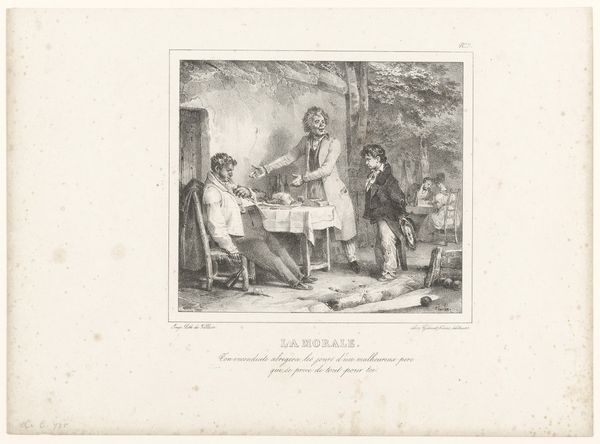
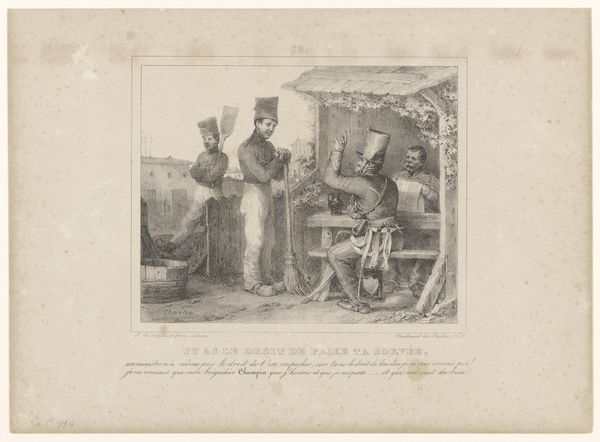
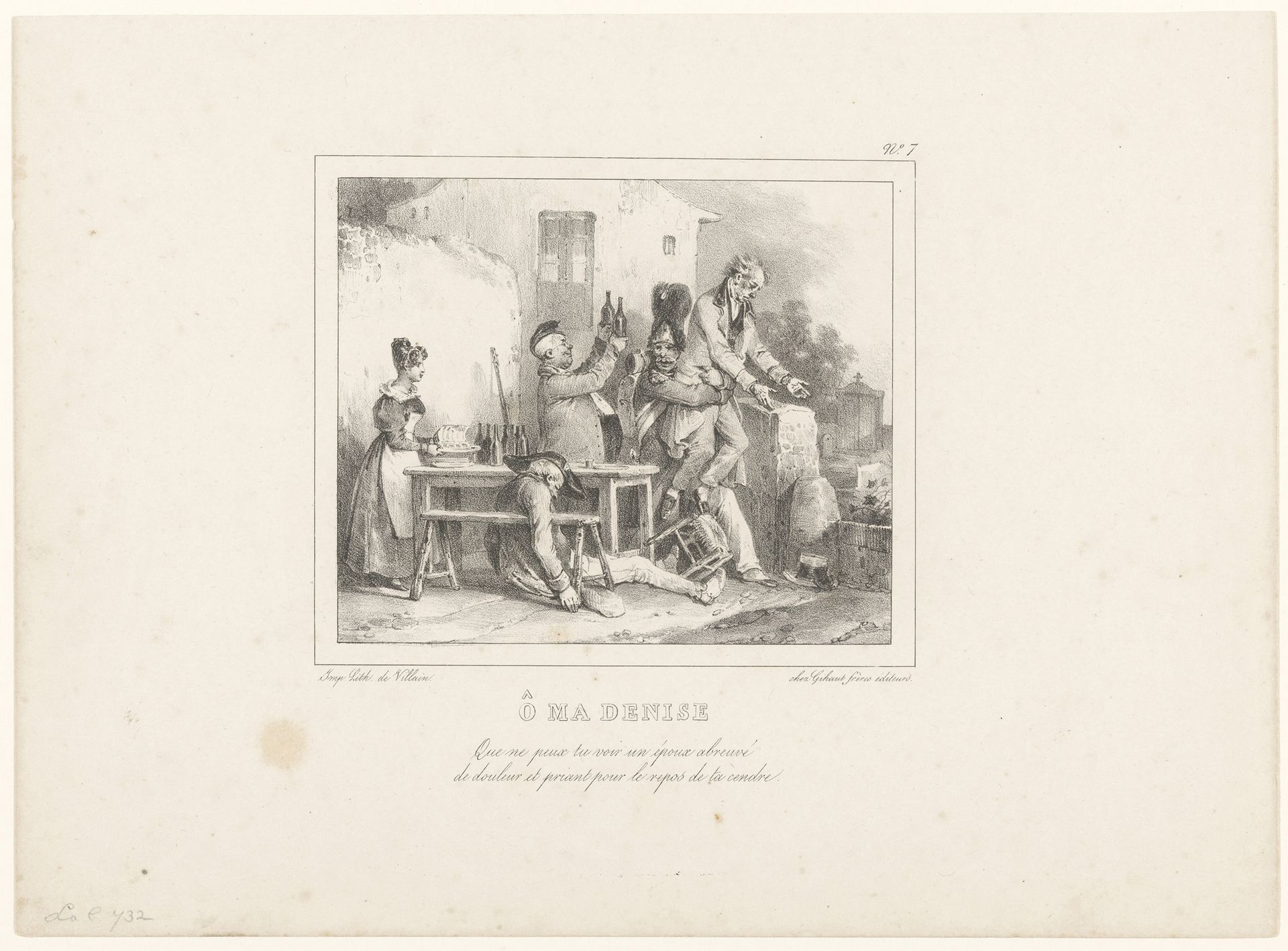
Dronken man strekt vanuit de kroeg zijn armen uit naar het graf van zijn vrouw

Nicolas Toussaint Charlet
1792 - 1845Location
RijksmuseumListen to curator's interpretation
Curatorial notes
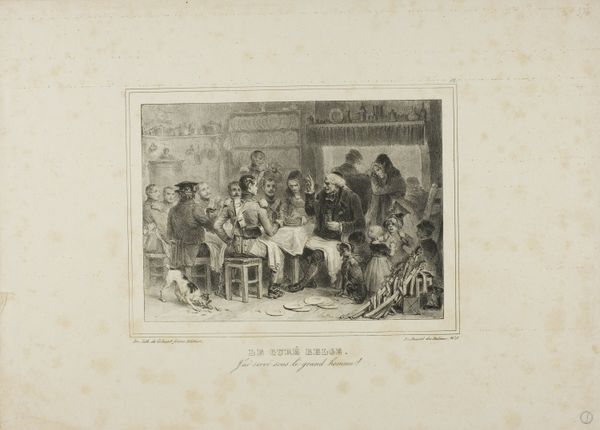
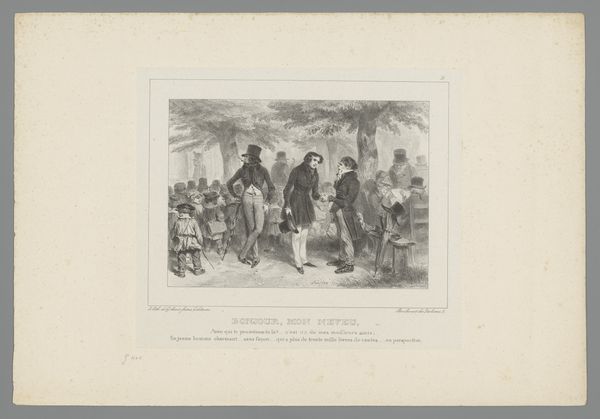
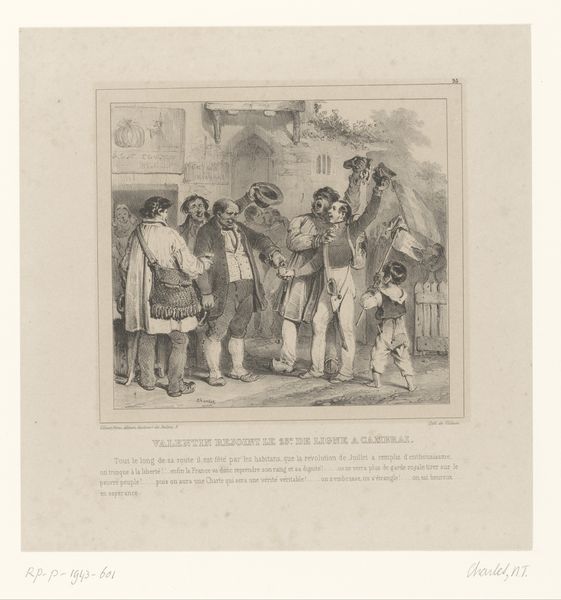
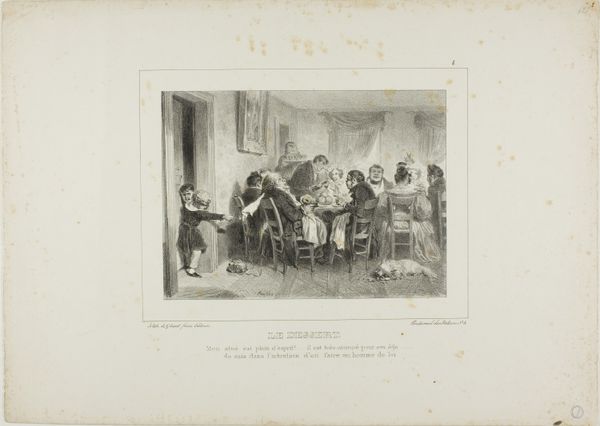
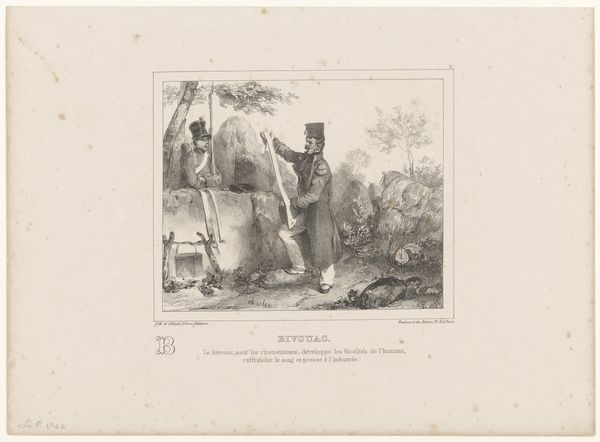
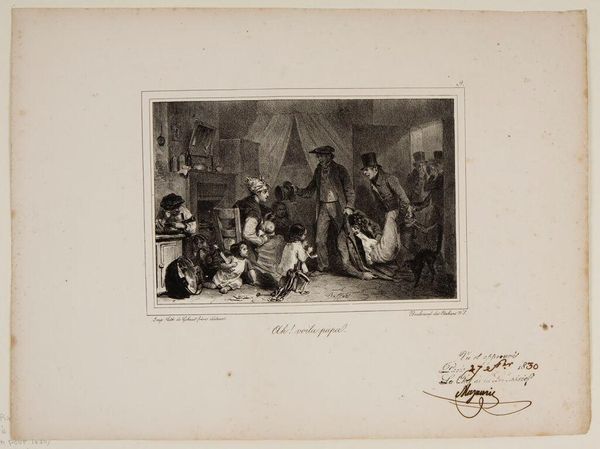
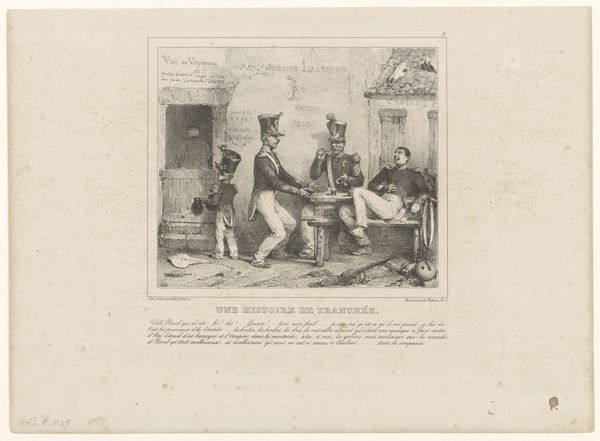
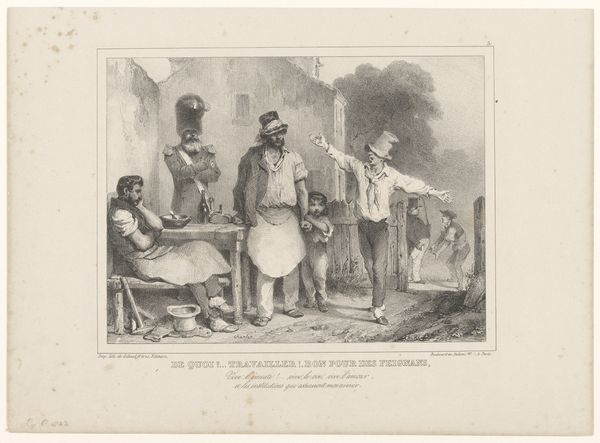
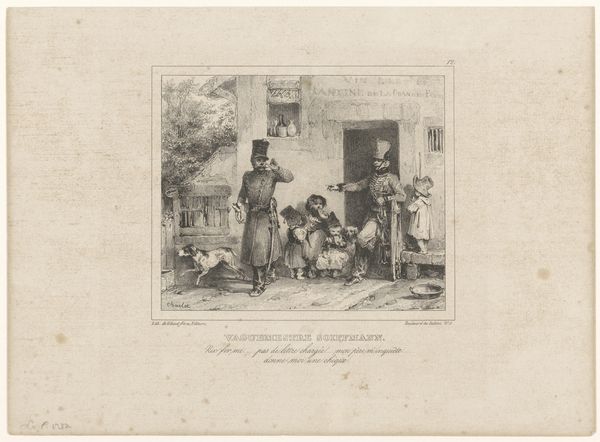
Nicolas Toussaint Charlet created this print, "Drunken Man Reaching Out From The Pub To His Wife's Grave," using etching and engraving techniques. The fine lines, gradients, and textures are all achieved through the meticulous work of cutting into a metal plate. Notice the contrast between the dark, densely worked areas and the untouched paper, creating a dramatic, almost theatrical scene. Printmaking processes like this played a crucial role in disseminating imagery widely in the 19th century. The imagery is of course very political. Charlet’s print reflects the social realities of his time, depicting a scene of working-class life marked by poverty, intoxication, and grief. It's a commentary on the human condition, specifically, those who turned to the pub to forget their grief in that place and time. The very act of creating an editioned print makes it an accessible object, a stark contrast to unique artworks reserved for the elite. By understanding its making, we see how this print blurs the lines between art, social commentary, and mass production.