About this artwork
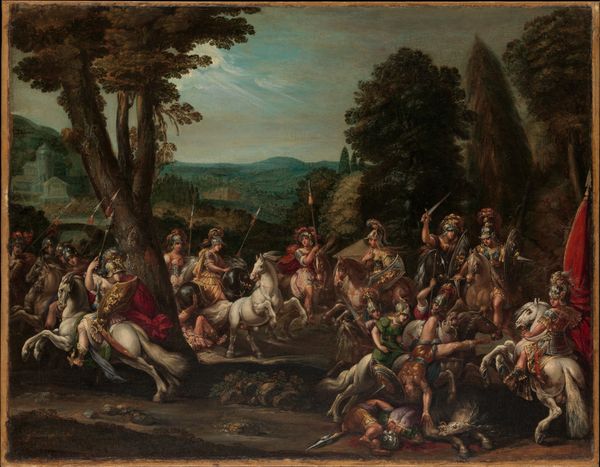
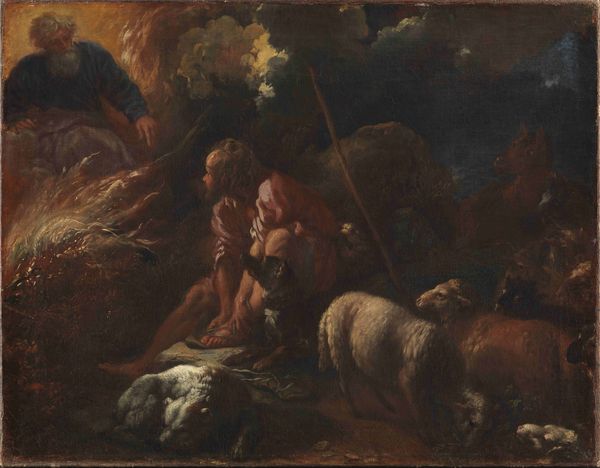
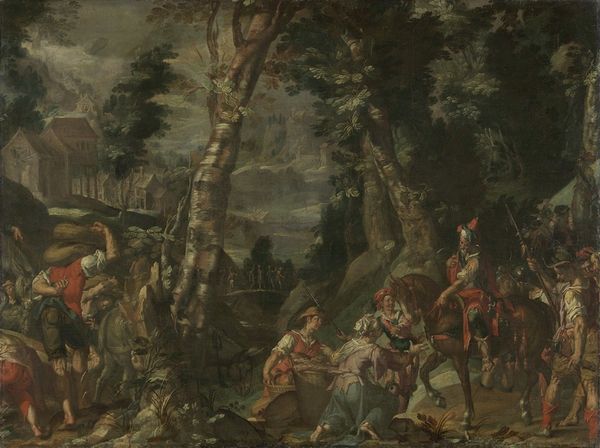
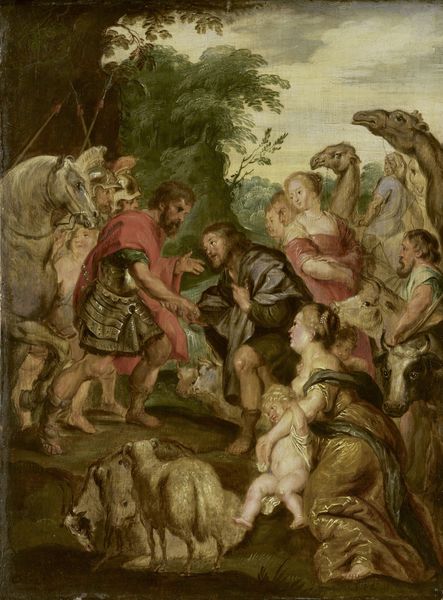
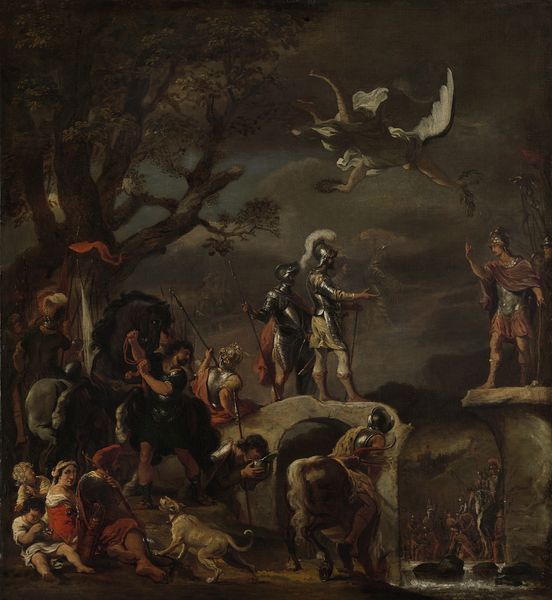
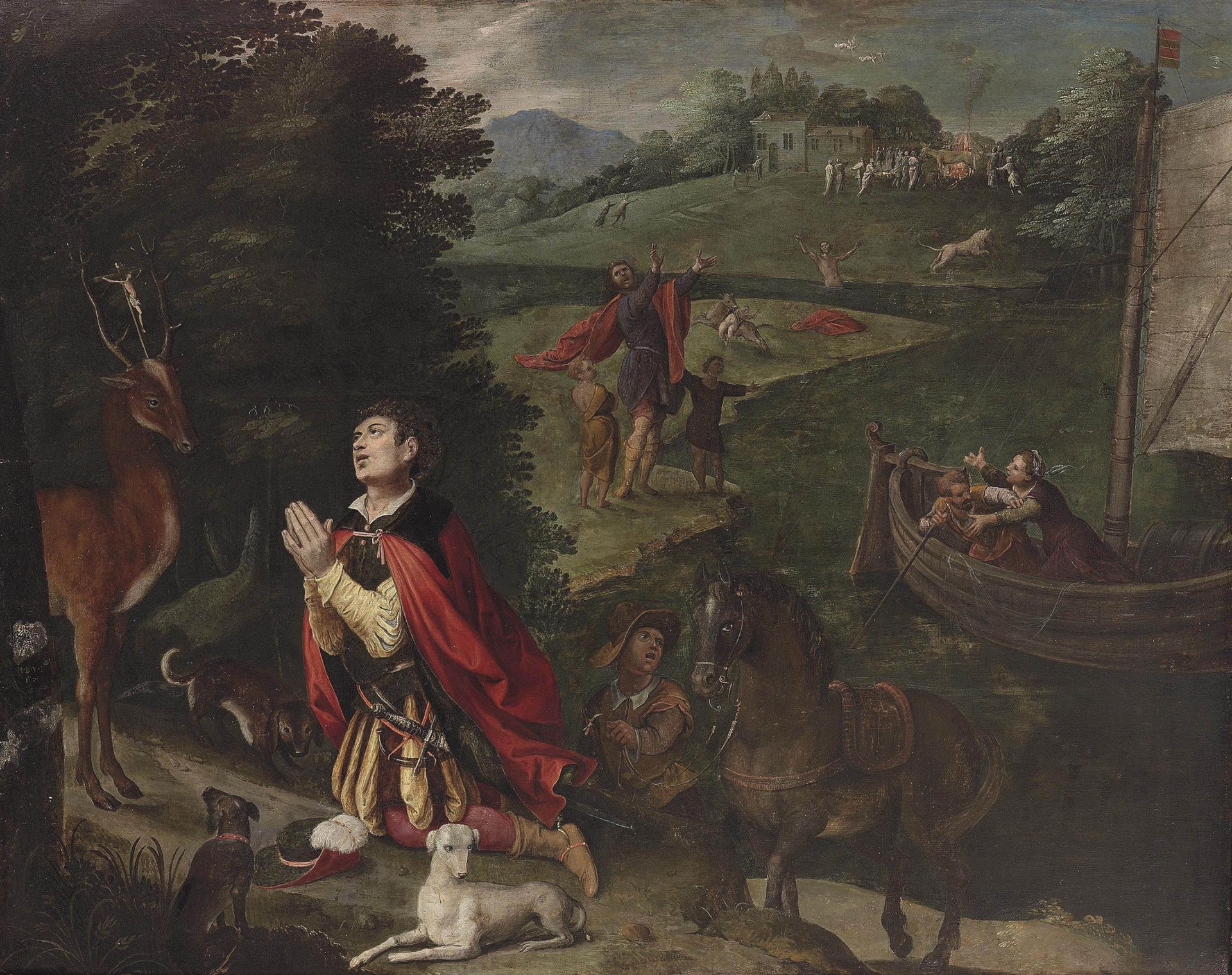
Maarten de Vos painted the "Vision of Saint Eustace" and other scenes of his trials, presenting a tableau rich with symbols of faith and ordeal. The most striking motif is the stag bearing a crucifix between its antlers, a divine apparition that led Eustace to convert. We see similar motifs across cultures and eras. The stag, revered in pagan traditions, is here Christianized, echoing tales of miraculous encounters. Consider the vision of Constantine before the Battle of the Milvian Bridge, where the cross appeared as a sign of victory. Such images underscore the transformative power of spiritual experiences, capturing moments of profound psychological impact. Note the pose of Saint Eustace in prayer, a gesture of submission and devotion found in countless religious works. From antiquity to the Renaissance, this posture conveys humanity's yearning for divine connection. Such symbols tap into our collective memory, triggering deep-seated emotional responses and affirming the enduring quest for meaning. The image, therefore, becomes a conduit for an intense, subconscious connection to the sacred.
The Vision of Saint Eustace, Other Scenes with Tests of His Faith Beyond 1601

Artwork details
- Medium
- oil-paint
- Copyright
- Public domain
Tags
narrative-art
oil-paint
landscape
mannerism
figuration
history-painting
Comments
No comments
About this artwork
Maarten de Vos painted the "Vision of Saint Eustace" and other scenes of his trials, presenting a tableau rich with symbols of faith and ordeal. The most striking motif is the stag bearing a crucifix between its antlers, a divine apparition that led Eustace to convert. We see similar motifs across cultures and eras. The stag, revered in pagan traditions, is here Christianized, echoing tales of miraculous encounters. Consider the vision of Constantine before the Battle of the Milvian Bridge, where the cross appeared as a sign of victory. Such images underscore the transformative power of spiritual experiences, capturing moments of profound psychological impact. Note the pose of Saint Eustace in prayer, a gesture of submission and devotion found in countless religious works. From antiquity to the Renaissance, this posture conveys humanity's yearning for divine connection. Such symbols tap into our collective memory, triggering deep-seated emotional responses and affirming the enduring quest for meaning. The image, therefore, becomes a conduit for an intense, subconscious connection to the sacred.
Comments
No comments