About this artwork
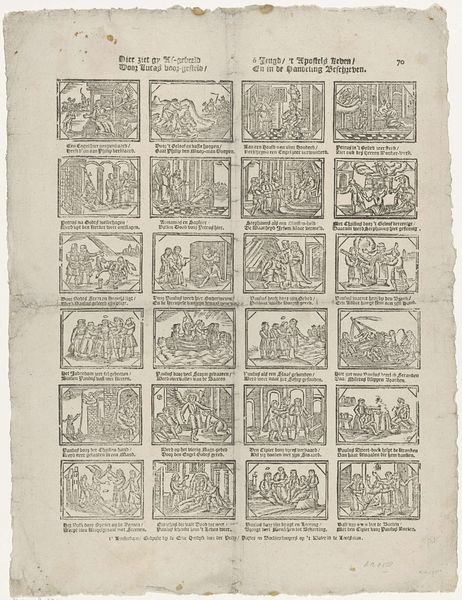
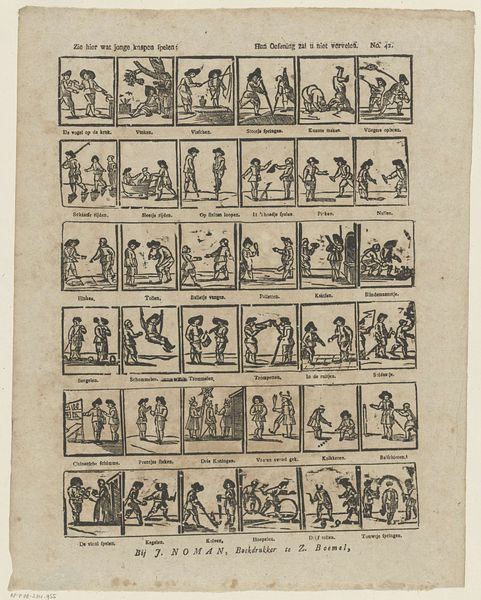
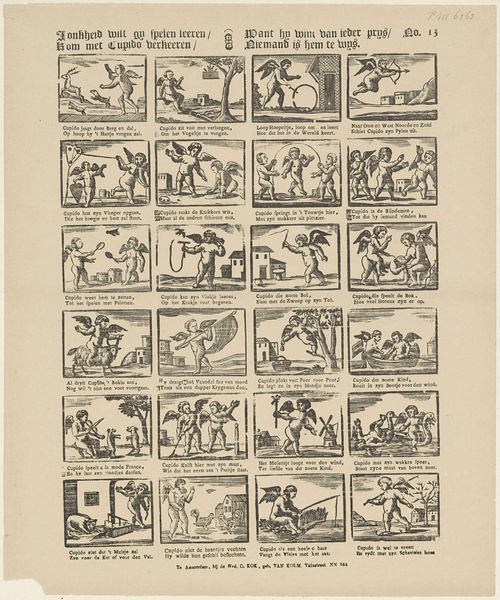
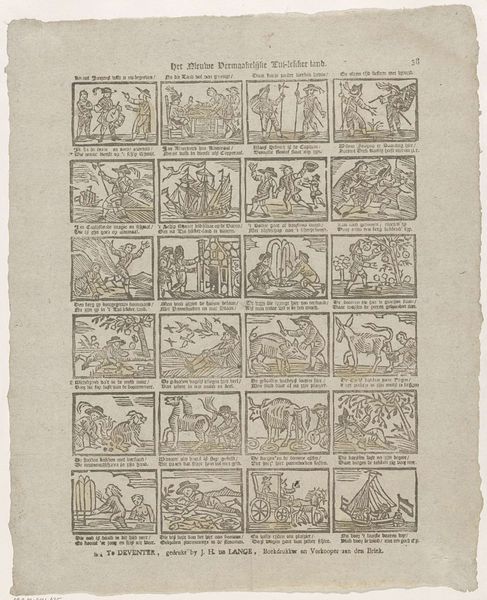
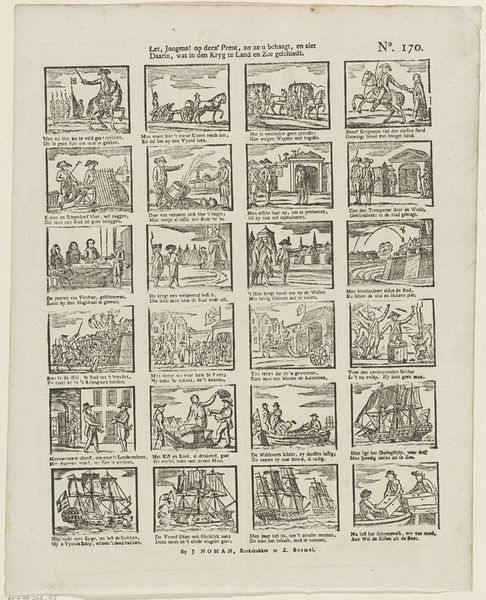
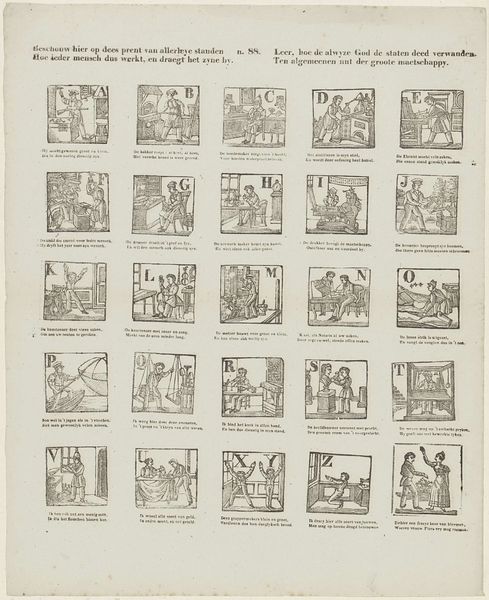
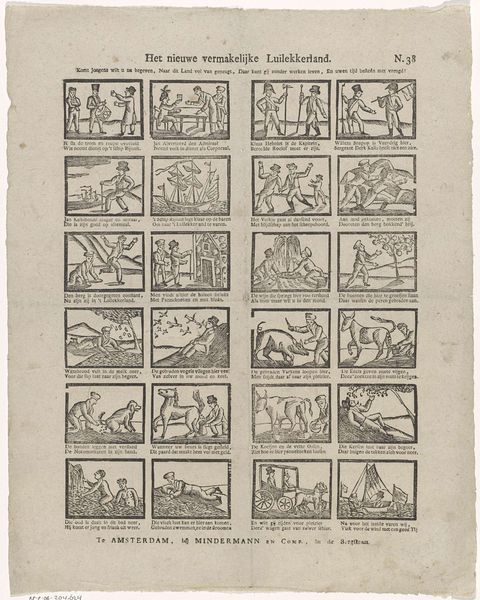
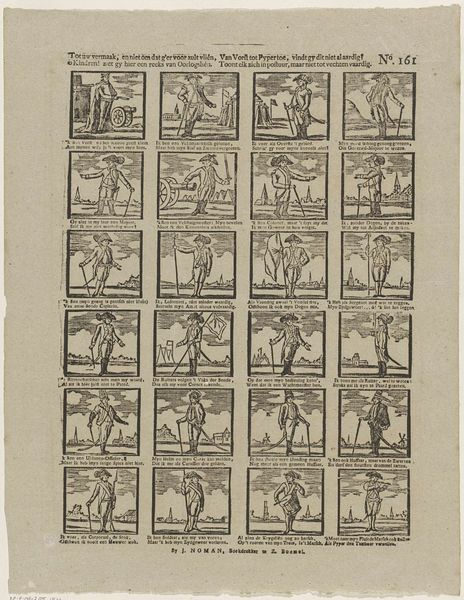
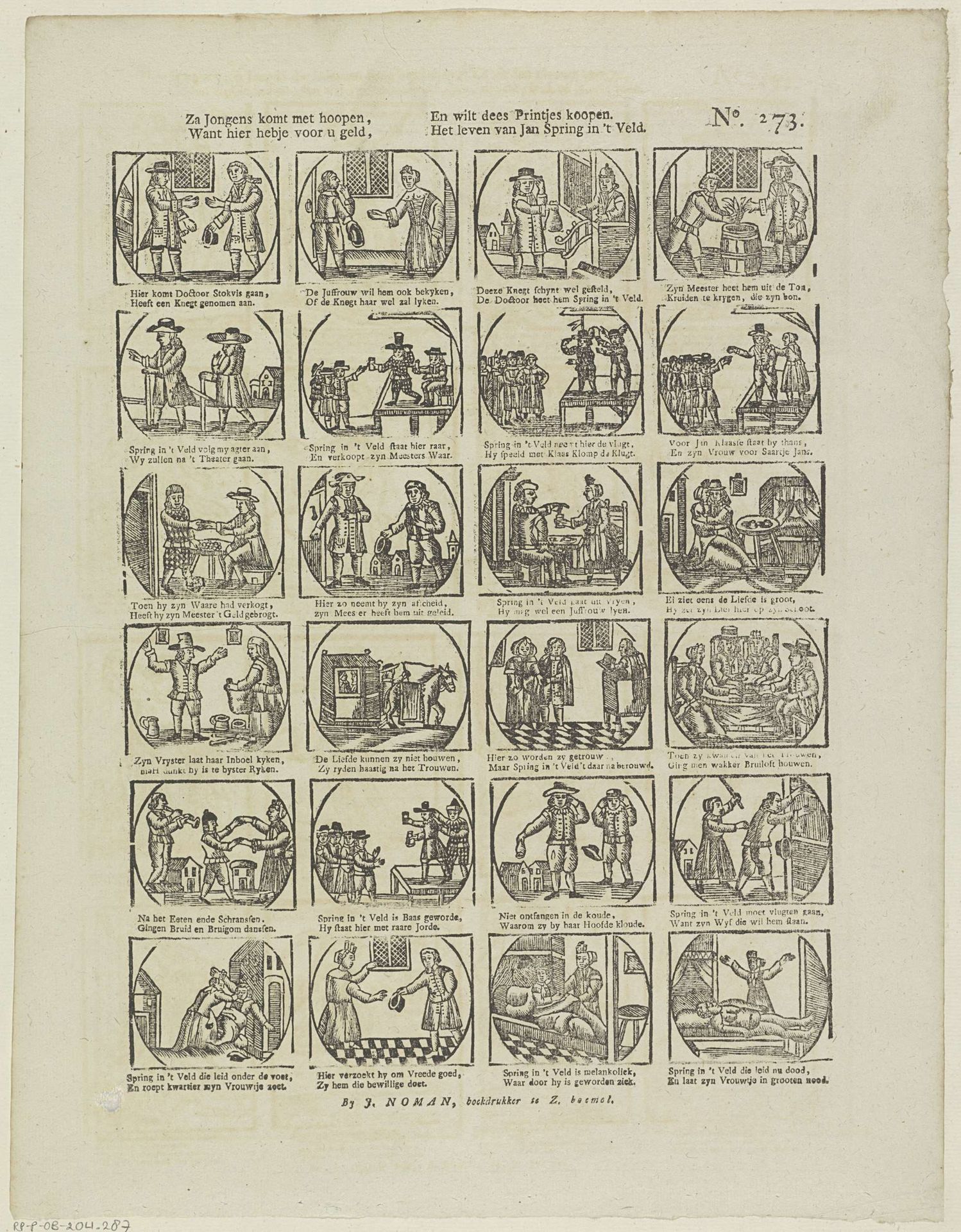
This print, made by Johan Noman, presents a series of vignettes illustrating the life of Jan Spring in 't Veld. The panels, reminiscent of a medieval morality play, are rife with scenes of commerce, labor, and domestic life. Consider the recurring motif of the open hand, either offering or receiving. This gesture, simple as it seems, carries deep symbolic weight. Throughout history, the open hand has been a sign of honesty, generosity, and exchange. We see it mirrored in ancient Roman art, where emperors extended their hands in a show of power and benevolence, and in religious iconography, where saints offer blessings. But the same hand, in a different context, can signify supplication or even deceit. This duality, this oscillation between opposing meanings, is a testament to the complex psychological dimensions of symbols. They are not static; their meaning shifts and evolves, shaped by the currents of collective memory and subconscious associations. As you gaze at this print, remember the intricate dance of symbols across time and the echoes of human experience they carry within them.
Za jongens komt met hoopen, / En wilt dees printjes koopen. Want hier hebje voor u geld, / Het leven van Jan Spring in 't Veld
1806 - 1830

Johan Noman
1833Location
RijksmuseumArtwork details
- Medium
- graphic-art, print, engraving
- Dimensions
- height 410 mm, width 319 mm
- Location
- Rijksmuseum
- Copyright
- Rijks Museum: Open Domain
Tags
Comments
Share your thoughts
About this artwork
This print, made by Johan Noman, presents a series of vignettes illustrating the life of Jan Spring in 't Veld. The panels, reminiscent of a medieval morality play, are rife with scenes of commerce, labor, and domestic life. Consider the recurring motif of the open hand, either offering or receiving. This gesture, simple as it seems, carries deep symbolic weight. Throughout history, the open hand has been a sign of honesty, generosity, and exchange. We see it mirrored in ancient Roman art, where emperors extended their hands in a show of power and benevolence, and in religious iconography, where saints offer blessings. But the same hand, in a different context, can signify supplication or even deceit. This duality, this oscillation between opposing meanings, is a testament to the complex psychological dimensions of symbols. They are not static; their meaning shifts and evolves, shaped by the currents of collective memory and subconscious associations. As you gaze at this print, remember the intricate dance of symbols across time and the echoes of human experience they carry within them.
Comments
Share your thoughts