About this artwork
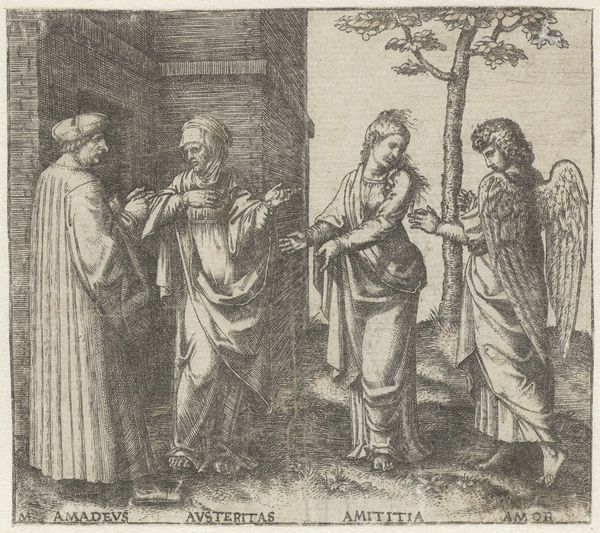
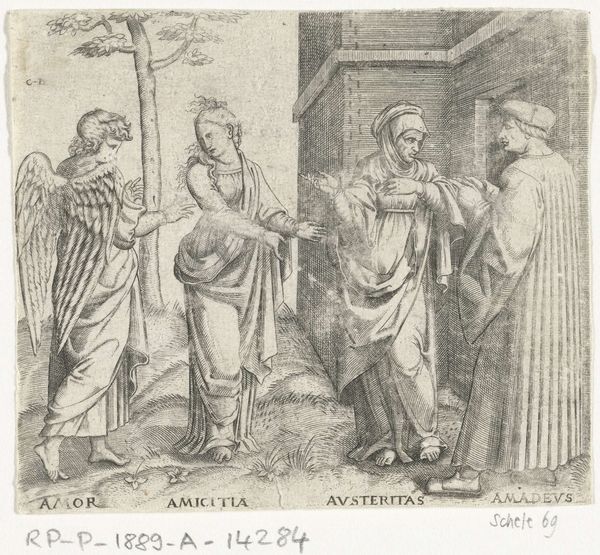
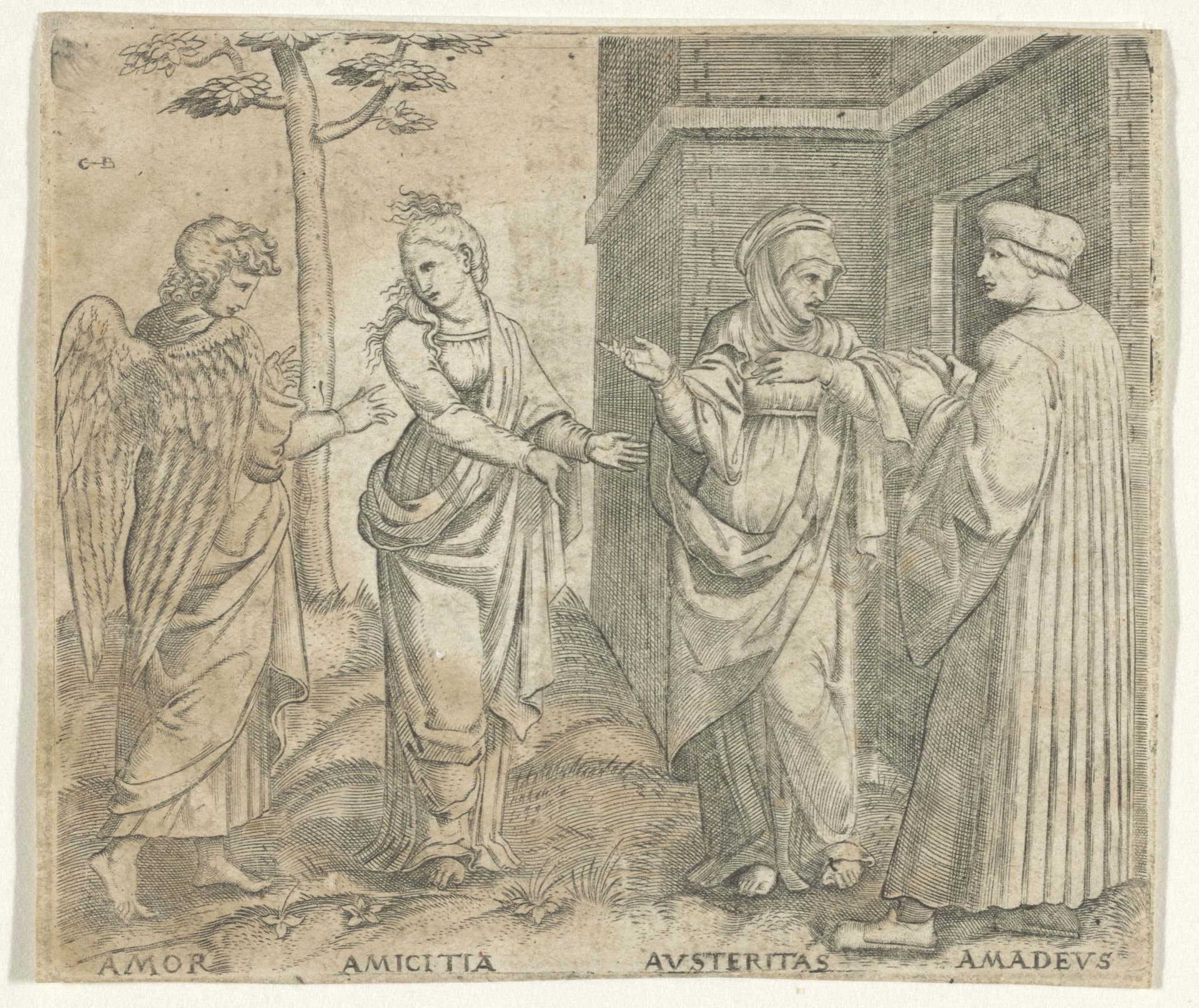
This print, titled "Amadeus Berutti met Strengheid, Vriendschap en Liefde," was made in the 16th century by Cornelis Bos using the intaglio technique of engraving. With its precise lines incised into a metal plate, engraving was the ideal medium for the dissemination of humanist ideas. Bos would have used a tool called a burin to physically cut away slivers of metal, creating grooves that hold ink. The pressure involved in this process, and the expertise required, speaks to the level of skill involved in the production of these prints. Notice the symbolic figures represented here—Love, Friendship, Austerity, and Amadeus. With clean, definitive lines, the artist emphasizes the clarity of thought valued during the Renaissance. The act of engraving was, in itself, a kind of austerity, a painstaking procedure that contrasts with the sensuality of the scene’s subject. This underscores how the meaning of an artwork can be embedded not only in its imagery, but also in the very labor that brought it into being.
Amadeus Berutti met Strengheid, Vriendschap en Liefde
before 1566

Cornelis Bos
1510 - 1556Location
RijksmuseumArtwork details
- Medium
- drawing, print, ink, engraving
- Dimensions
- height 81 mm, width 97 mm
- Location
- Rijksmuseum
- Copyright
- Rijks Museum: Open Domain
Tags
Comments
Share your thoughts
About this artwork
This print, titled "Amadeus Berutti met Strengheid, Vriendschap en Liefde," was made in the 16th century by Cornelis Bos using the intaglio technique of engraving. With its precise lines incised into a metal plate, engraving was the ideal medium for the dissemination of humanist ideas. Bos would have used a tool called a burin to physically cut away slivers of metal, creating grooves that hold ink. The pressure involved in this process, and the expertise required, speaks to the level of skill involved in the production of these prints. Notice the symbolic figures represented here—Love, Friendship, Austerity, and Amadeus. With clean, definitive lines, the artist emphasizes the clarity of thought valued during the Renaissance. The act of engraving was, in itself, a kind of austerity, a painstaking procedure that contrasts with the sensuality of the scene’s subject. This underscores how the meaning of an artwork can be embedded not only in its imagery, but also in the very labor that brought it into being.
Comments
Share your thoughts