About this artwork
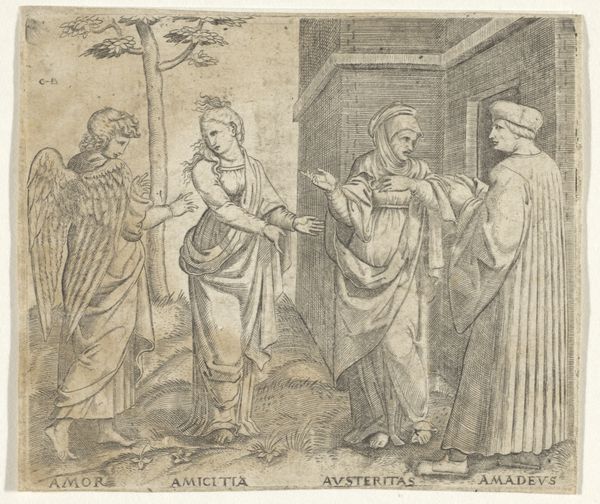
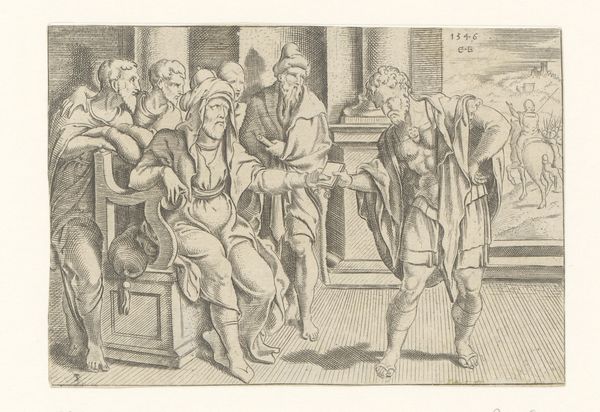
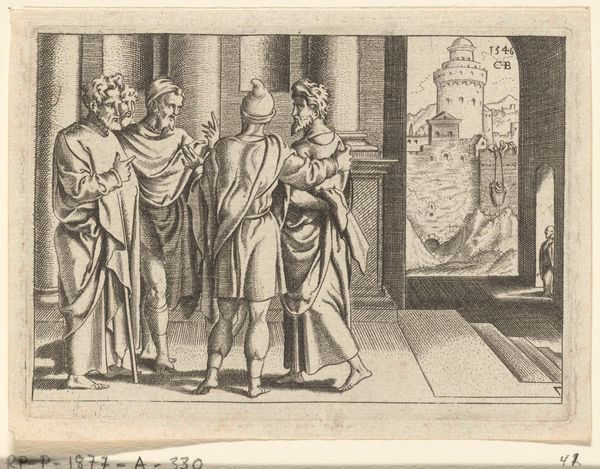
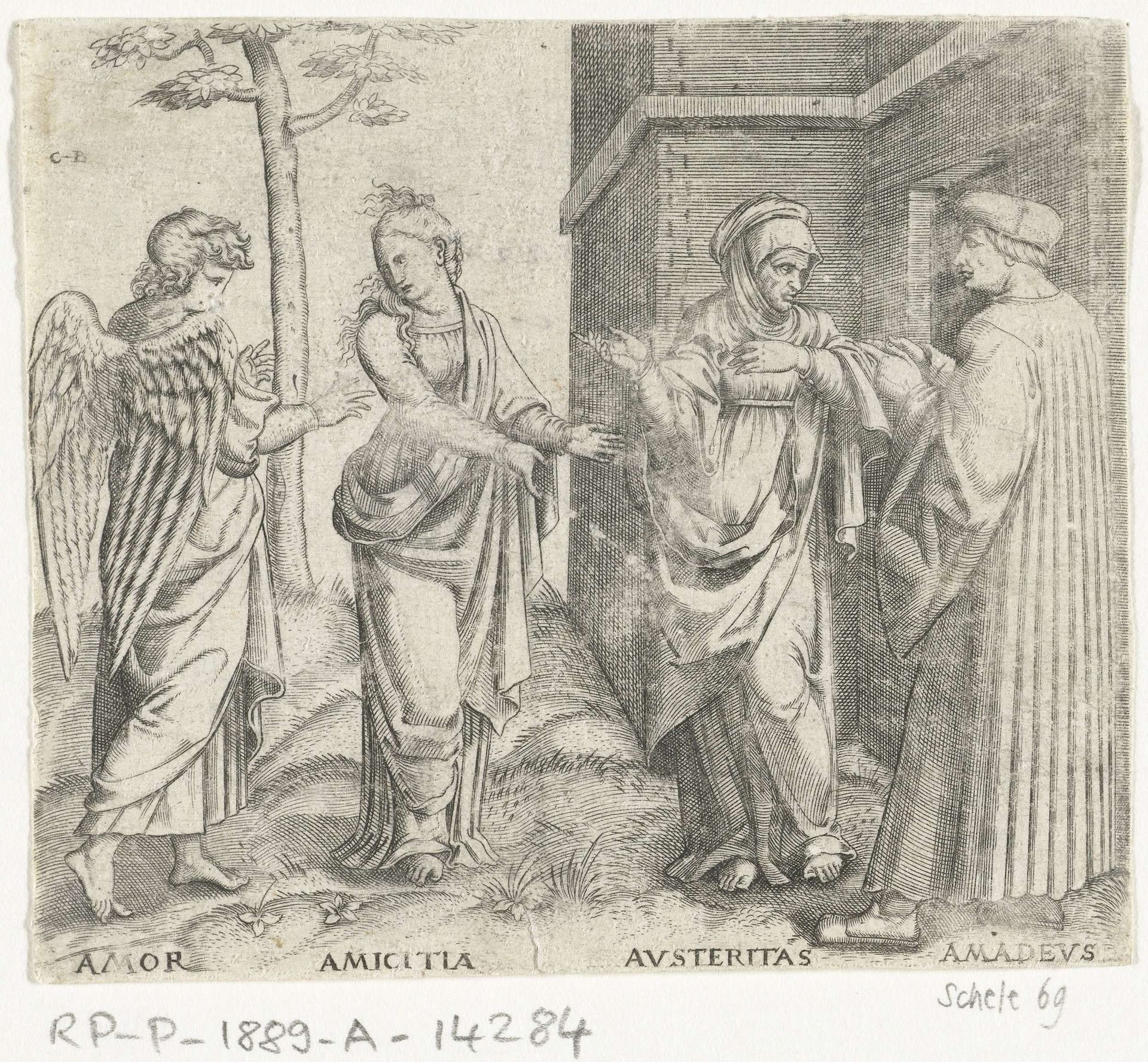
This print, titled 'Amadeus Berutti met Strengheid, Vriendschap en Liefde', was made by Cornelis Bos in the mid-16th century. It’s an engraving, meaning the artist used a tool called a burin to cut lines into a metal plate, which was then inked and printed. The stark contrast between the dark lines and the white paper gives the scene a crisp, almost severe quality. The density of the lines create shading and volume, giving form to the figures and architectural elements. The act of engraving, which is a slow and deliberate process, aligns with the subject matter of discipline, represented by 'Austerity'. The engraver’s hand, guided by intellect and skill, mirrors the humanistic ideals of the Renaissance. Consider the labor involved in creating this image – the careful planning, the precise cutting, the physical exertion. This highlights the engraver's role, bridging the gap between artist and craftsman. It challenges us to think about how skill and intellect come together in the making of art.
Amadeus Berutti met Strengheid (Austeritas) en Vriendschap (Amicitia) en Liefde (Amor)
c. 1537 - 1555

Cornelis Bos
1510 - 1556Location
RijksmuseumArtwork details
- Medium
- print, engraving
- Dimensions
- height 80 mm, width 93 mm
- Location
- Rijksmuseum
- Copyright
- Rijks Museum: Open Domain
Tags
Comments
Share your thoughts
About this artwork
This print, titled 'Amadeus Berutti met Strengheid, Vriendschap en Liefde', was made by Cornelis Bos in the mid-16th century. It’s an engraving, meaning the artist used a tool called a burin to cut lines into a metal plate, which was then inked and printed. The stark contrast between the dark lines and the white paper gives the scene a crisp, almost severe quality. The density of the lines create shading and volume, giving form to the figures and architectural elements. The act of engraving, which is a slow and deliberate process, aligns with the subject matter of discipline, represented by 'Austerity'. The engraver’s hand, guided by intellect and skill, mirrors the humanistic ideals of the Renaissance. Consider the labor involved in creating this image – the careful planning, the precise cutting, the physical exertion. This highlights the engraver's role, bridging the gap between artist and craftsman. It challenges us to think about how skill and intellect come together in the making of art.
Comments
Share your thoughts