Copyright: Toshi Yoshida,Fair Use
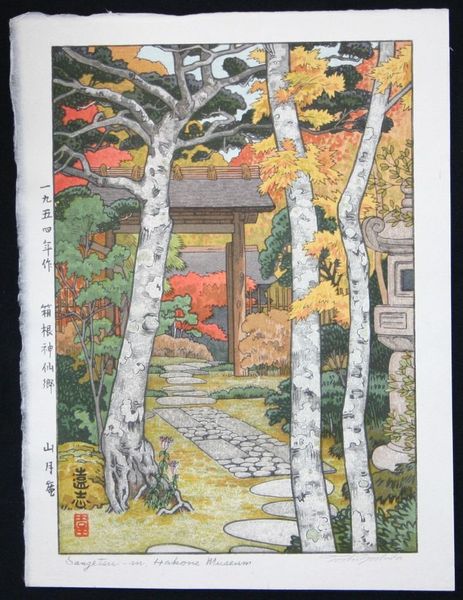
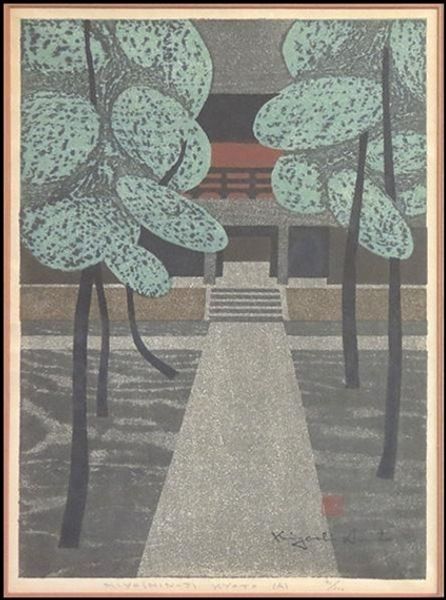
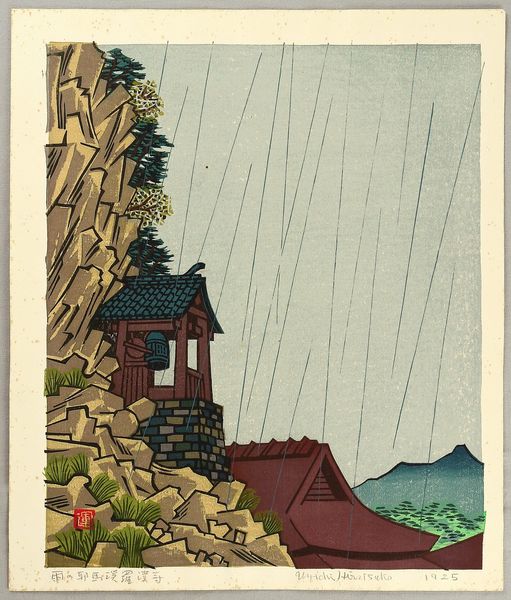
Editor: This woodblock print, titled "Autumn in Hakone Museum," was created in 1954 by Toshi Yoshida. I’m immediately struck by the blend of natural landscape and structured garden elements. It evokes such a serene feeling...what draws your eye in this piece? Curator: The interplay between the built environment and nature speaks volumes about post-war Japan and its relationship with tradition. Yoshida, working in a time of rapid modernization, revisits the ukiyo-e tradition but filters it through a contemporary lens. How do you perceive the way the museum, ostensibly a container of culture, is framed within this landscape? Editor: That's interesting...it does seem intentional. Almost like a reminder of our place in a larger context. It’s not just showcasing art *inside* but positioning art *within* a larger cultural and natural framework. Curator: Precisely. Ukiyo-e prints often depicted scenes of leisure and everyday life, making them accessible to a wide audience. Here, though, what societal narratives do you think Yoshida might be exploring by representing this very manicured space of culture, available primarily to those who could afford it? Editor: I guess it is prompting a consideration of access and privilege, something I hadn’t picked up on initially. It's interesting to consider how the image might be read differently depending on the viewer’s position in society. Curator: Indeed. Yoshida doesn’t shy away from subtly weaving in these tensions, prompting viewers to consider the complex relationship between art, nature, and the social order. It really asks: who gets to experience this carefully constructed idea of 'nature'? Editor: I see! I was so focused on the aesthetic beauty, but understanding the cultural context really deepens my appreciation. Thanks for making me think about the public role of art! Curator: My pleasure! Looking closer unveils just how potent art can be when considered within its socio-historical backdrop.
Comments
No comments
Be the first to comment and join the conversation on the ultimate creative platform.
 Collect
 React
React Comment
More like this