Copyright: Unichi Hiratsuka,Fair Use
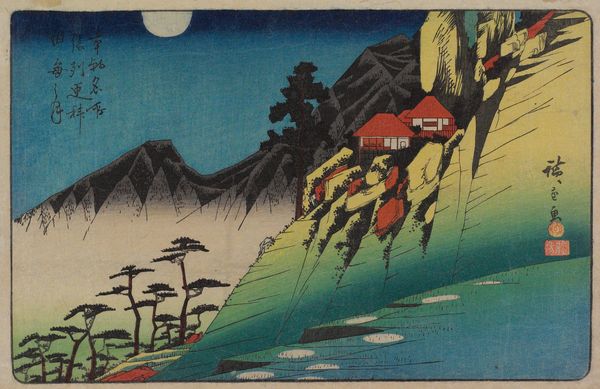
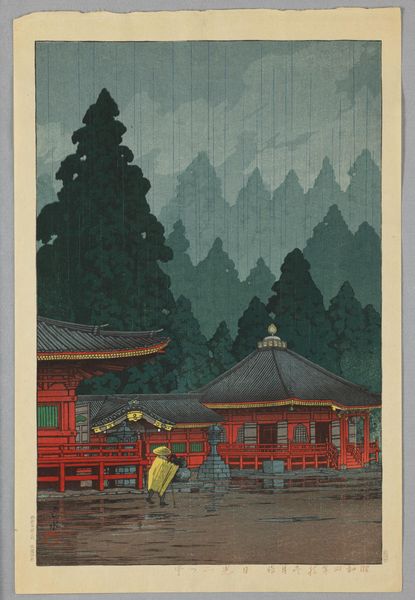
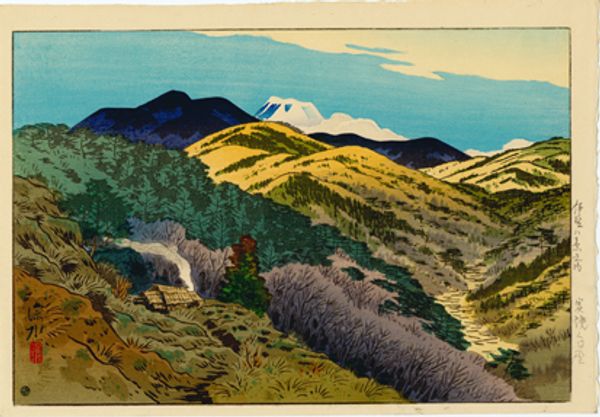
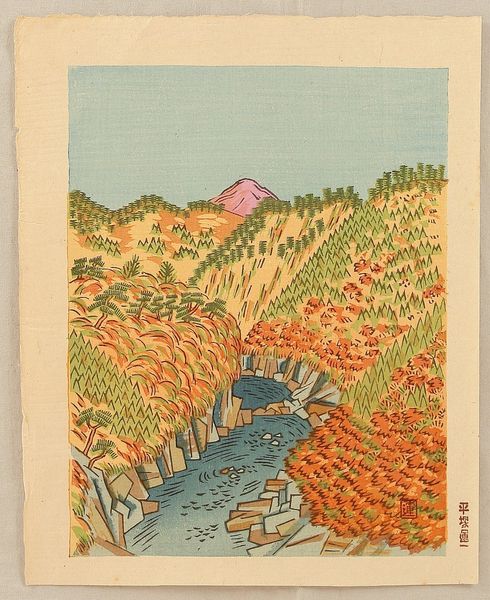
Editor: This mixed-media print from 1925 is titled *Rakan Temple at Yabakei* and was created by Unichi Hiratsuka. It feels so grounded and peaceful to me, even with the falling rain. I am curious about your interpretation, especially with the temple seeming so deliberately placed within the natural landscape. What stands out to you? Curator: This woodblock print presents a compelling dialogue between nature, culture, and faith through its depiction of the Rakan Temple. What role do you think weather plays in the context of spirituality in this piece? Editor: Hmmm… The rain, even though it can represent cleansing, also brings challenges. Perhaps this temple's placement reflects resilience against the natural environment? Curator: Precisely. The composition emphasizes the temple's integration with the natural elements of the steep, rocky terrain. Hiratsuka's work emerges in the Shin-Hanga movement, moving away from strictly traditional Ukiyo-e techniques. Look at the individual character in the rocks, not smooth and stylized as older prints, but angular and distinct, almost brutalist. Editor: That's a really interesting connection. You're making me rethink my initial sense of peace. Curator: To take it further, consider the role that tourism played in shaping the reception of prints like this in the early 20th century. How might we read this print not only as a depiction of a sacred site, but as a carefully constructed image designed for consumption by a wider audience? Editor: I hadn't considered that angle, but it makes perfect sense that such prints would have economic and public relations functions too, shaping perception of a place. Thank you for offering new ways of seeing! Curator: And thank you for providing your fresh perspective!


 Collect
More like this