About this artwork
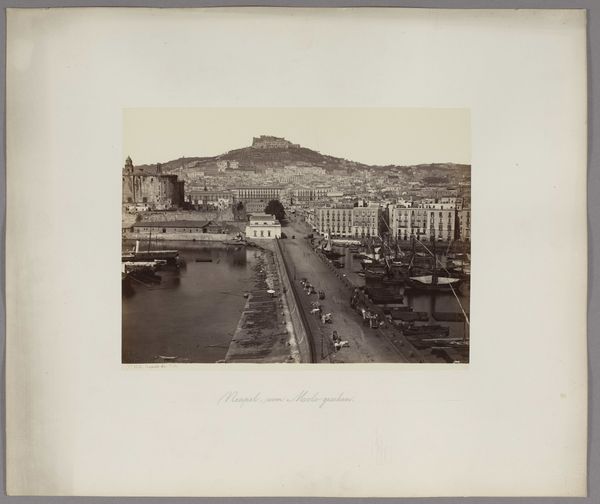
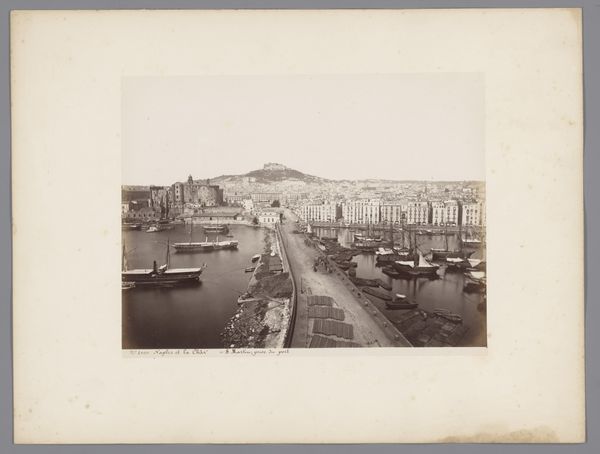
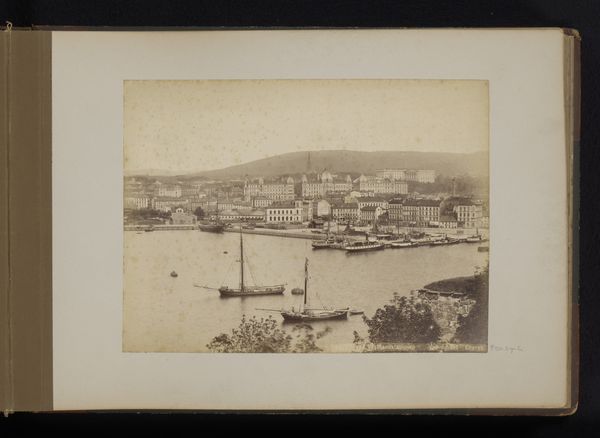
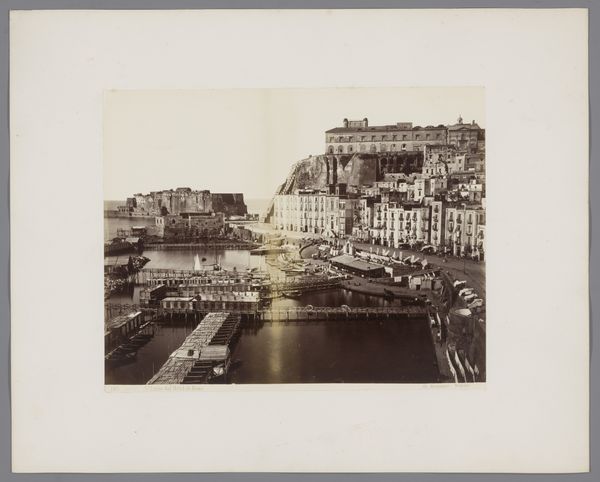
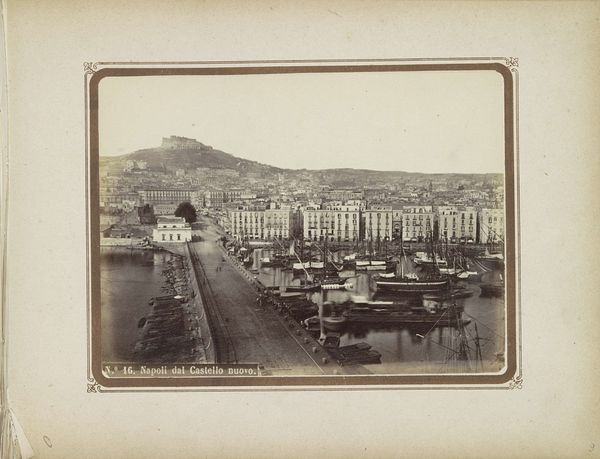
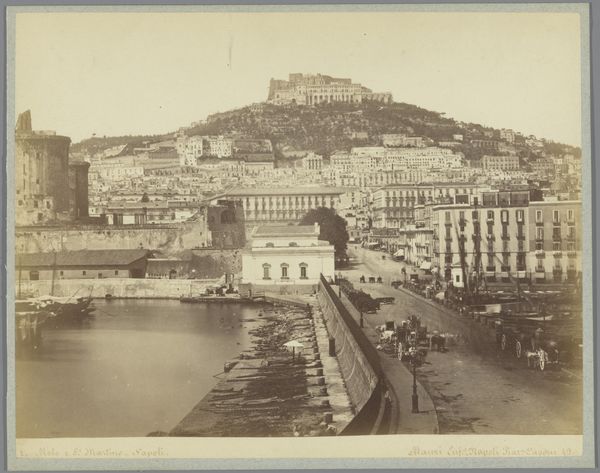
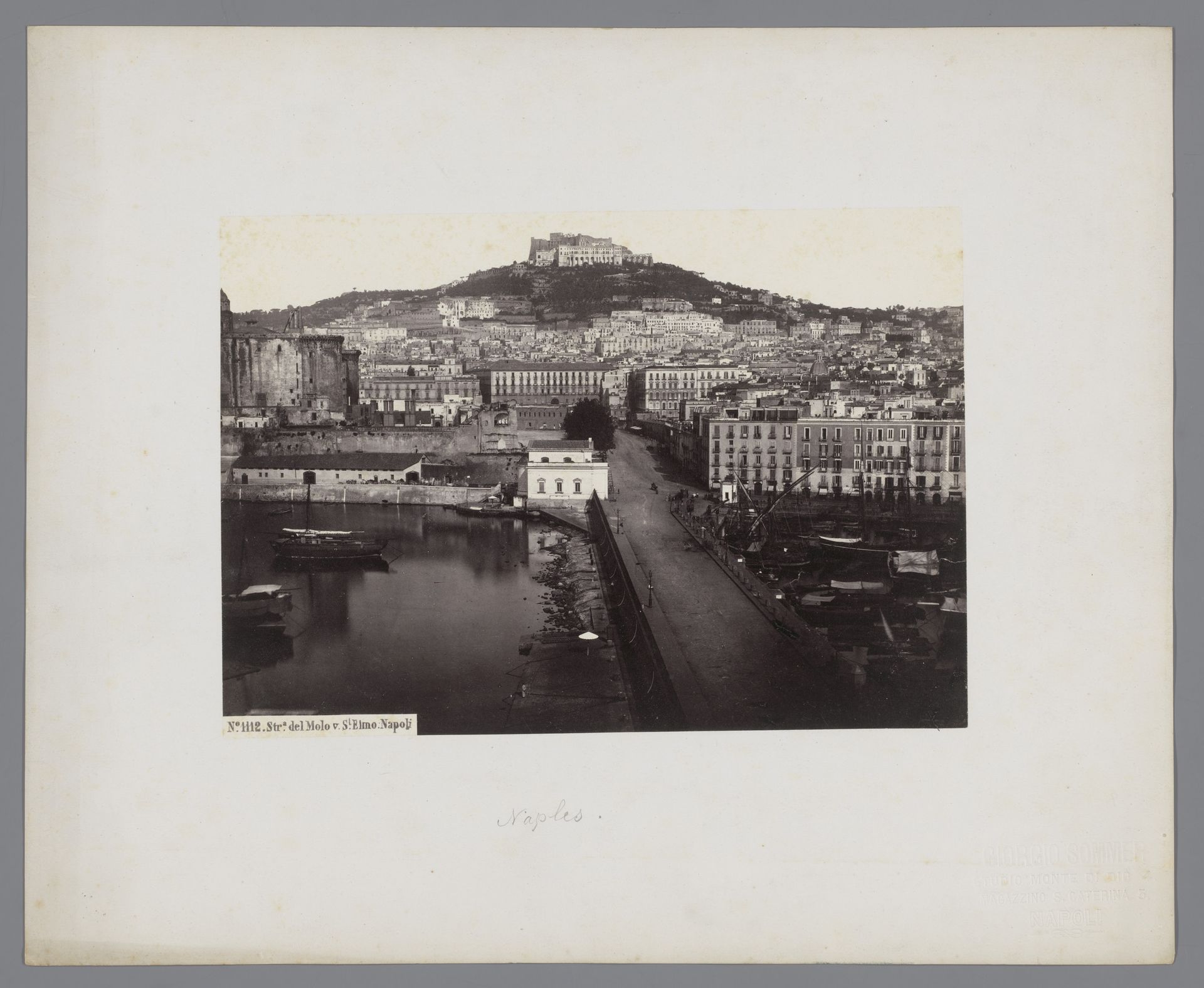
Giorgio Sommer created this photograph titled 'View of the Sant'Elmo Castle on the Vomero Mountain in Naples, Italy' using albumen silver print. The composition is structured around a stark contrast between the dark, reflective waters in the foreground and the detailed cityscape rising toward the distant castle. The use of light and shadow emphasizes the geometrical arrangement of buildings, while the diagonal thrust from the lower right to the upper left creates a dynamic tension, destabilizing the static nature of architectural photography. Sommer's choice of perspective flattens the urban space, reducing the three-dimensional city to a series of planes. This flattening effect, typical of early photography, challenges traditional notions of depth and perspective dominant in painting. The photograph invites us to consider the relationship between representation and reality, suggesting how new technologies can redefine our understanding of space and visual experience.
Gezicht op het kasteel Sant'Elmo op de berg Vomero te Napels, Italië 1890 - 1910

Giorgio Sommer
1834 - 1914Location
RijksmuseumArtwork details
- Medium
- photography, albumen-print
- Dimensions
- height 307 mm, width 377 mm
- Location
- Rijksmuseum
- Copyright
- Rijks Museum: Open Domain
Tags
landscape
photography
cityscape
albumen-print
realism
Comments
No comments
About this artwork
Giorgio Sommer created this photograph titled 'View of the Sant'Elmo Castle on the Vomero Mountain in Naples, Italy' using albumen silver print. The composition is structured around a stark contrast between the dark, reflective waters in the foreground and the detailed cityscape rising toward the distant castle. The use of light and shadow emphasizes the geometrical arrangement of buildings, while the diagonal thrust from the lower right to the upper left creates a dynamic tension, destabilizing the static nature of architectural photography. Sommer's choice of perspective flattens the urban space, reducing the three-dimensional city to a series of planes. This flattening effect, typical of early photography, challenges traditional notions of depth and perspective dominant in painting. The photograph invites us to consider the relationship between representation and reality, suggesting how new technologies can redefine our understanding of space and visual experience.
Comments
No comments