About this artwork
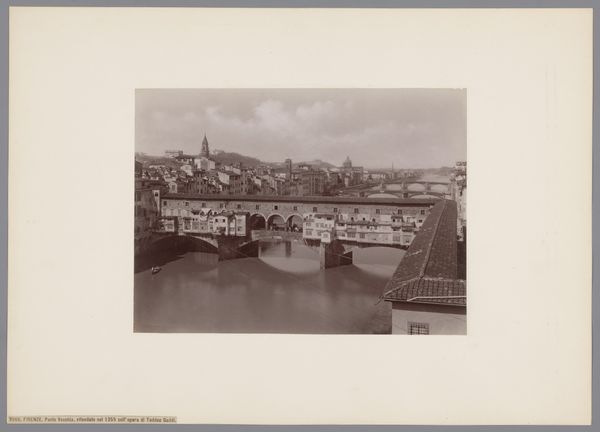
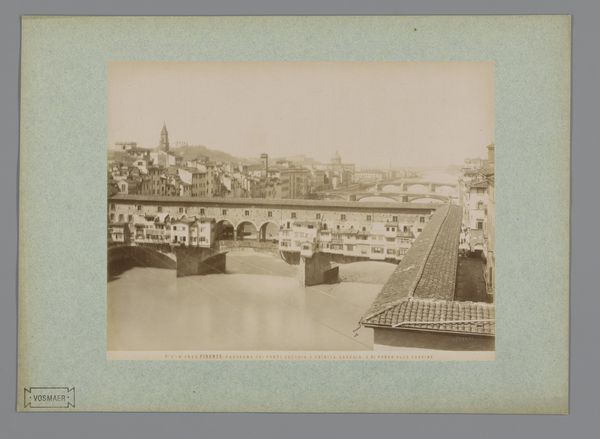
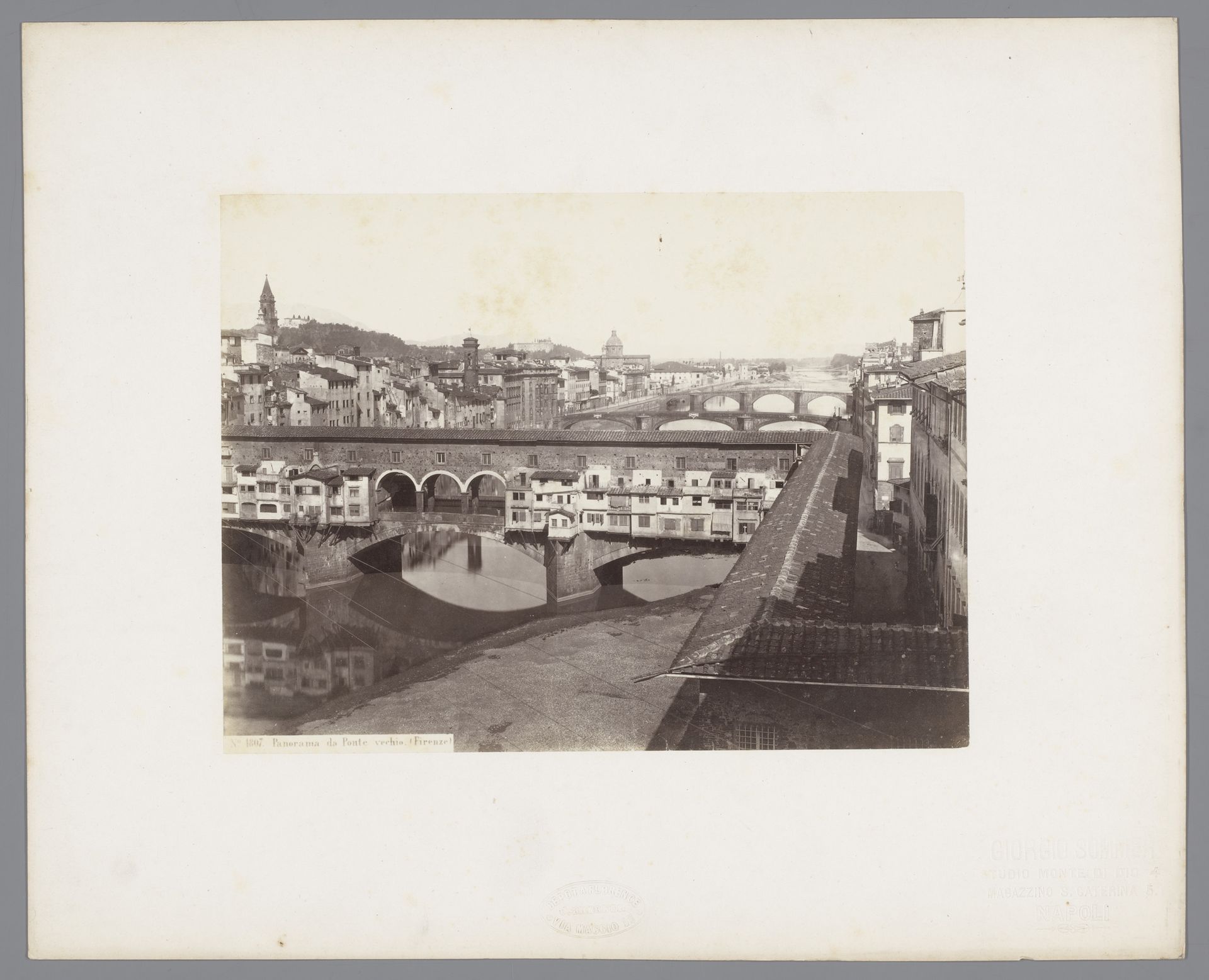
This photograph of the Ponte Vecchio in Florence, Italy, was taken by Giorgio Sommer using the albumen print process. Derived from egg whites, albumen was a key ingredient in early photographic printing. The process involved coating paper with albumen and then sensitizing it with silver nitrate, before being exposed to light using a negative. The subtle sepia tones and smooth surface are characteristic of albumen prints, reflecting the period's aesthetic preferences and technical capabilities. Photography in this era demanded considerable manual skill, from preparing the chemicals to carefully controlling the exposure and development times. Sommer's work captures not only the famous bridge but also the burgeoning tourist industry that shaped the economy of cities like Florence. His photographs were often sold as souvenirs to wealthy travelers, turning cityscapes into commodities and linking artistic creation with commercial enterprise. By understanding the materials and processes involved, we can appreciate how photography itself became a trade, blurring the lines between art, craft, and commerce.
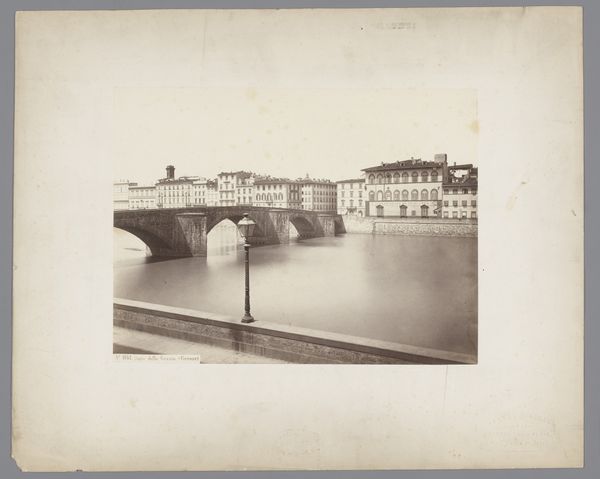
Gezicht op de Arno en de Ponte Vecchio te Florence, Italië
1857 - 1914

Giorgio Sommer
1834 - 1914Location
RijksmuseumArtwork details
- Medium
- print, photography, gelatin-silver-print
- Dimensions
- height 305 mm, width 377 mm
- Location
- Rijksmuseum
- Copyright
- Rijks Museum: Open Domain
Tags
Comments
Share your thoughts
About this artwork
This photograph of the Ponte Vecchio in Florence, Italy, was taken by Giorgio Sommer using the albumen print process. Derived from egg whites, albumen was a key ingredient in early photographic printing. The process involved coating paper with albumen and then sensitizing it with silver nitrate, before being exposed to light using a negative. The subtle sepia tones and smooth surface are characteristic of albumen prints, reflecting the period's aesthetic preferences and technical capabilities. Photography in this era demanded considerable manual skill, from preparing the chemicals to carefully controlling the exposure and development times. Sommer's work captures not only the famous bridge but also the burgeoning tourist industry that shaped the economy of cities like Florence. His photographs were often sold as souvenirs to wealthy travelers, turning cityscapes into commodities and linking artistic creation with commercial enterprise. By understanding the materials and processes involved, we can appreciate how photography itself became a trade, blurring the lines between art, craft, and commerce.
Comments
Share your thoughts