About this artwork
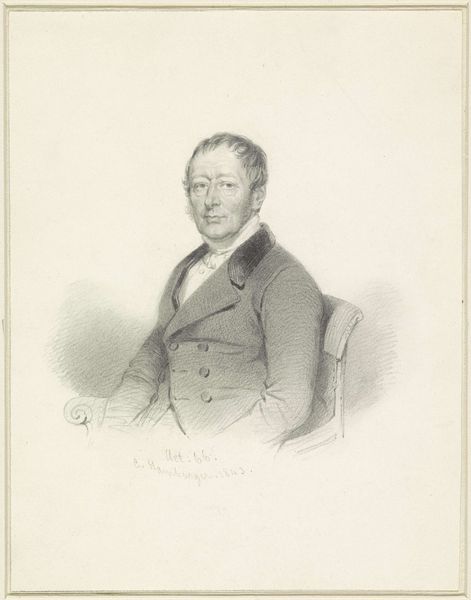
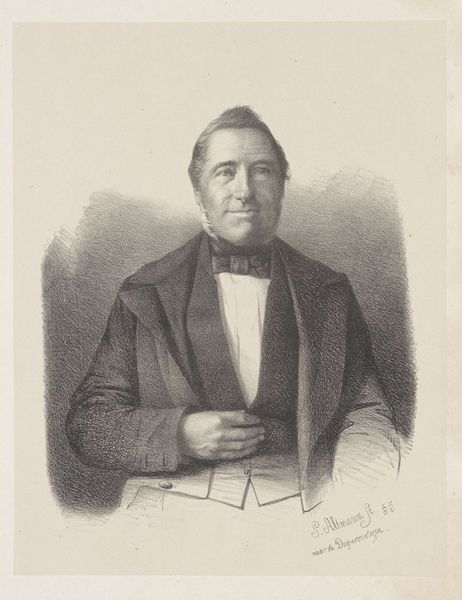
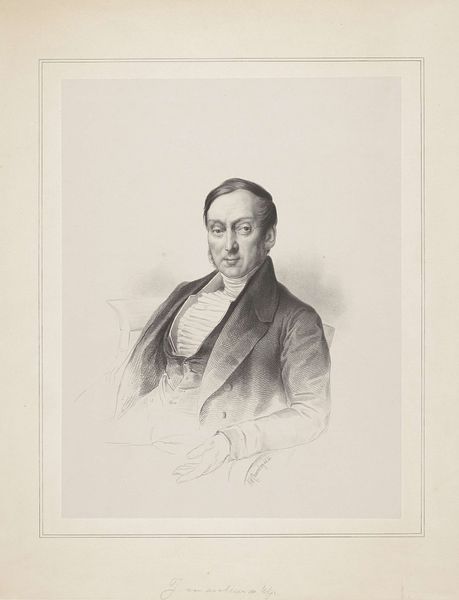
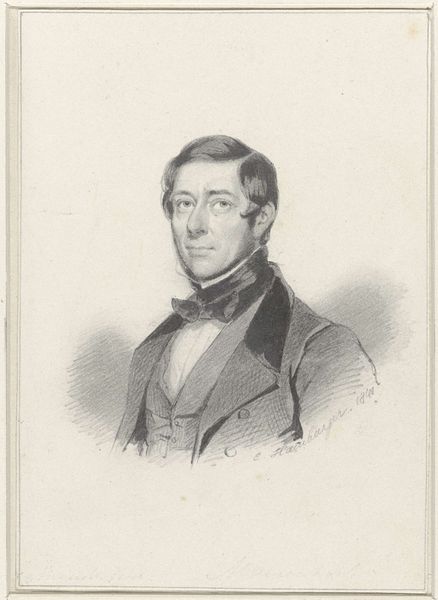
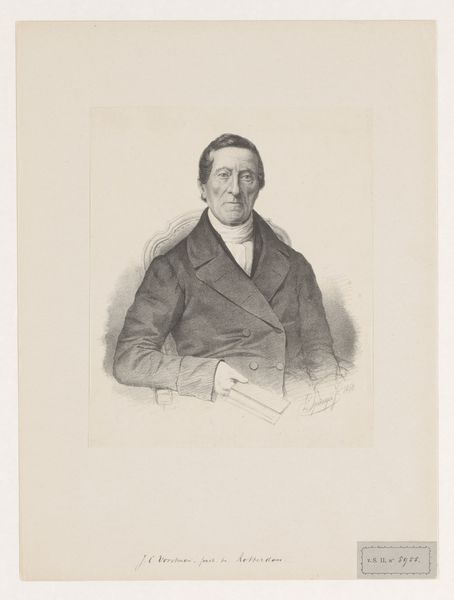
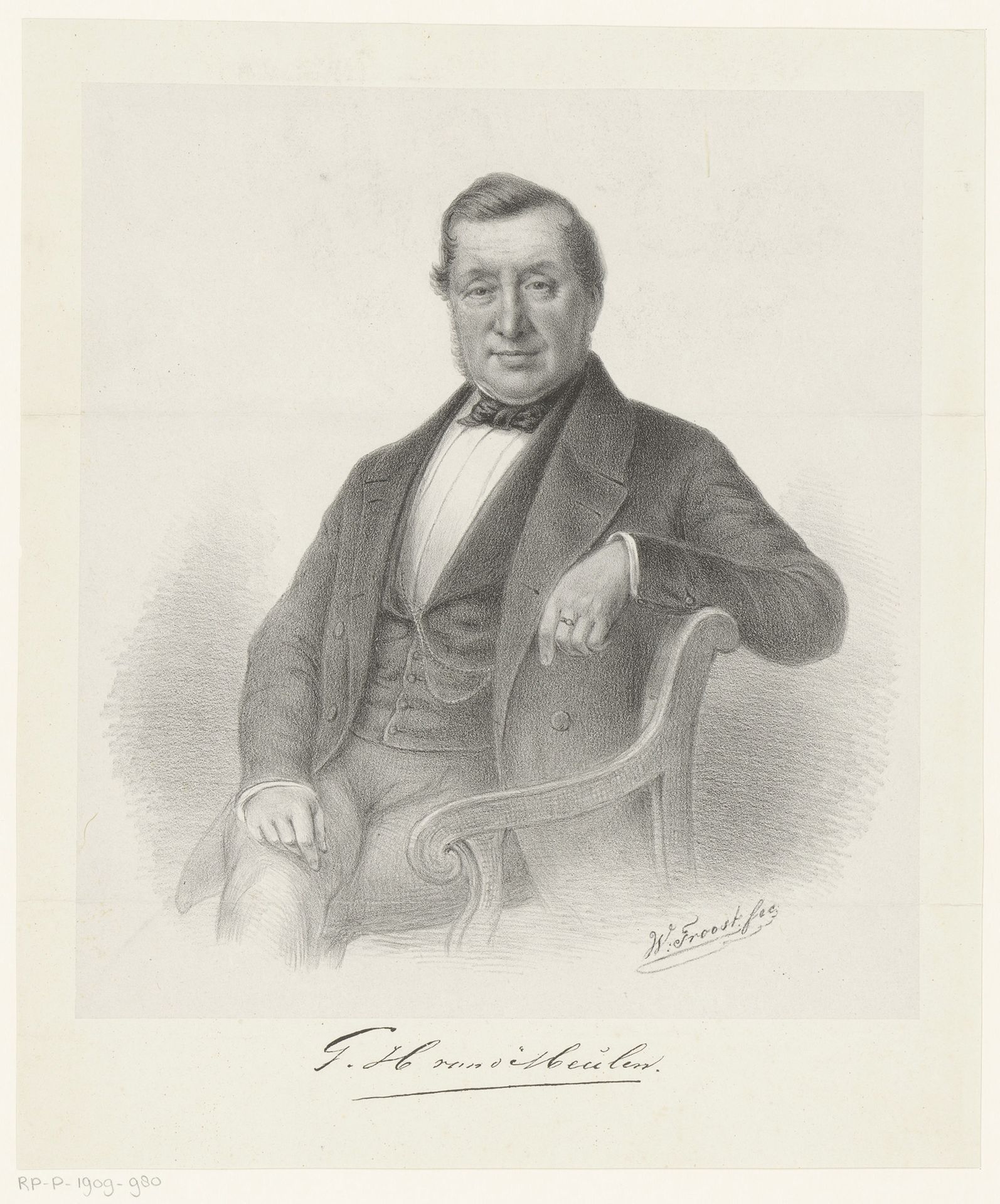
Editor: Here we have Willem Troost's "Portret van G.H. van der Meulen," made sometime between 1822 and 1893. It’s a pencil drawing, and something about the soft shading gives it this really calm, almost contemplative mood. What do you see in this portrait? Curator: Well, consider the chair. Its curves cradle the sitter, but it’s also a kind of throne. The way he casually drapes his arm suggests power, but it's a relaxed power, a burgher perhaps, confident in his place. Do you notice anything in the shading? Editor: I guess the shading creates a sort of gentle light? Not harsh or anything. Curator: Exactly. That light feels symbolic. Think about the historical context. This was a period of emerging bourgeois society. Portraiture shifted. What earlier sitters used symbols of noble status, men like van der Meulen displayed qualities and symbols suggesting trustworthiness, wisdom, worldliness – and wealth, of course. Look at the subtle rendering of his ring; it signals status in a way that's less overtly boastful. Editor: So, he’s kind of signaling wealth and trustworthiness, but doing it subtly? The contrast between light and dark could hint at the complexity of this individual. Curator: Precisely. It encapsulates that 19th-century fascination with representing interiority. Through understated symbols, it alludes to moral qualities rather than simply declaring them. Is that making sense? Editor: Yes, it is. Seeing how something as simple as shading becomes tied to status through symbolism is very intriguing. Thanks! Curator: It also suggests, of course, how even the subtlest choices can reflect shifts in culture, and can affect how we view ourselves. Thank you!

Artwork details
- Medium
- drawing, pencil
- Dimensions
- height 318 mm, width 269 mm
- Location
- Rijksmuseum
- Copyright
- Rijks Museum: Open Domain
Tags
portrait
pencil drawn
drawing
pencil sketch
pencil drawing
pencil
portrait drawing
pencil work
academic-art
realism
Comments
No comments
About this artwork
Editor: Here we have Willem Troost's "Portret van G.H. van der Meulen," made sometime between 1822 and 1893. It’s a pencil drawing, and something about the soft shading gives it this really calm, almost contemplative mood. What do you see in this portrait? Curator: Well, consider the chair. Its curves cradle the sitter, but it’s also a kind of throne. The way he casually drapes his arm suggests power, but it's a relaxed power, a burgher perhaps, confident in his place. Do you notice anything in the shading? Editor: I guess the shading creates a sort of gentle light? Not harsh or anything. Curator: Exactly. That light feels symbolic. Think about the historical context. This was a period of emerging bourgeois society. Portraiture shifted. What earlier sitters used symbols of noble status, men like van der Meulen displayed qualities and symbols suggesting trustworthiness, wisdom, worldliness – and wealth, of course. Look at the subtle rendering of his ring; it signals status in a way that's less overtly boastful. Editor: So, he’s kind of signaling wealth and trustworthiness, but doing it subtly? The contrast between light and dark could hint at the complexity of this individual. Curator: Precisely. It encapsulates that 19th-century fascination with representing interiority. Through understated symbols, it alludes to moral qualities rather than simply declaring them. Is that making sense? Editor: Yes, it is. Seeing how something as simple as shading becomes tied to status through symbolism is very intriguing. Thanks! Curator: It also suggests, of course, how even the subtlest choices can reflect shifts in culture, and can affect how we view ourselves. Thank you!
Comments
No comments