About this artwork
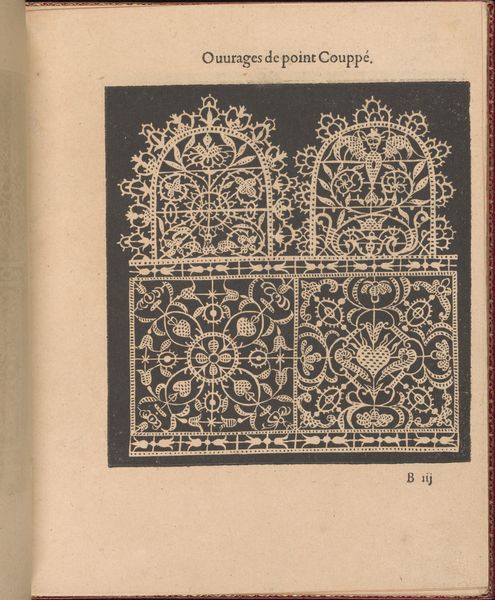
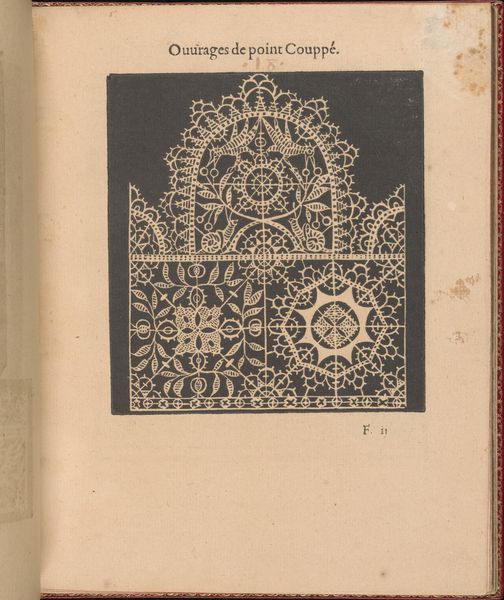
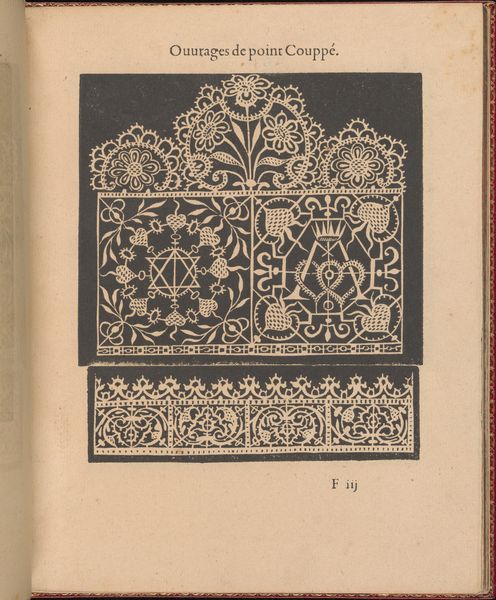
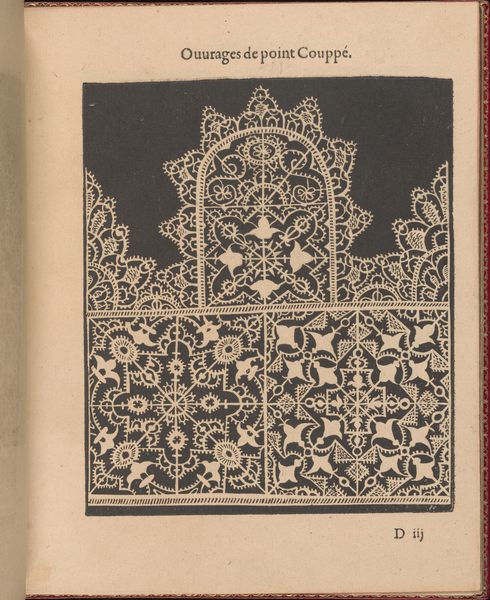
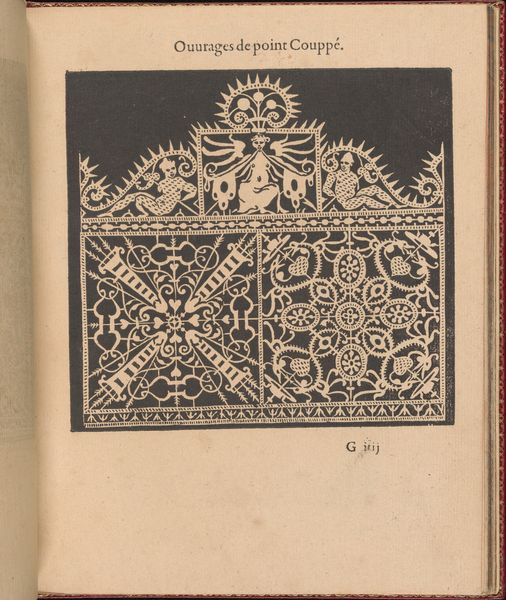
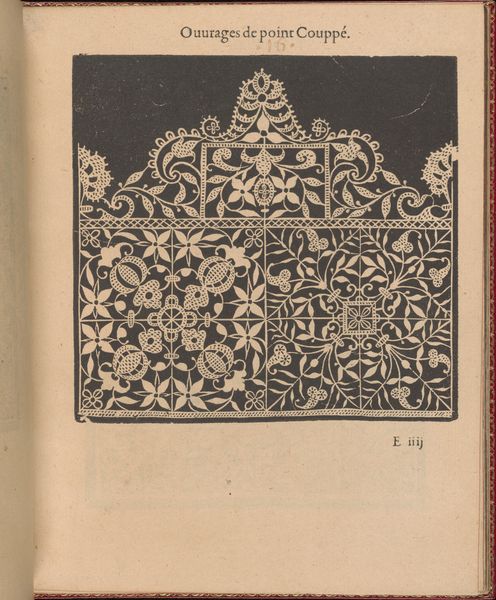
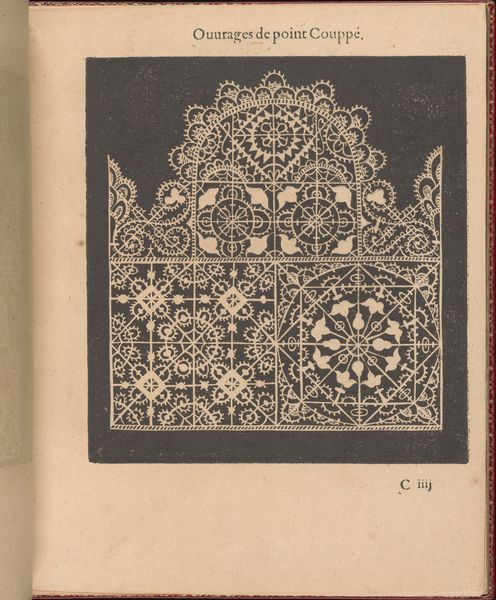
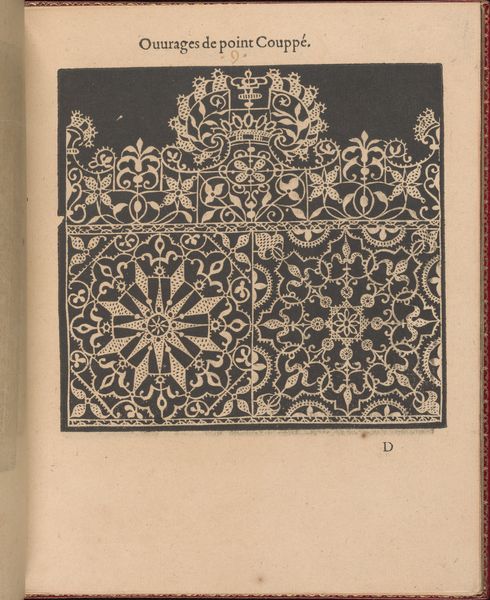
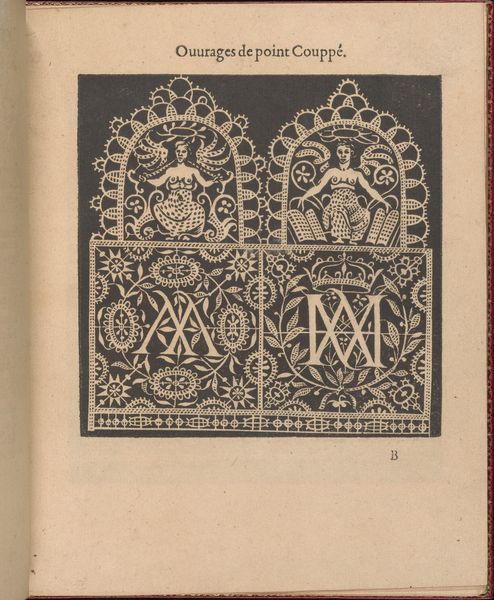
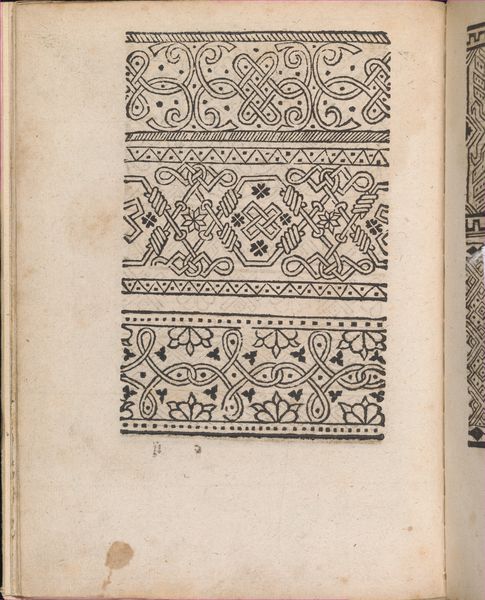
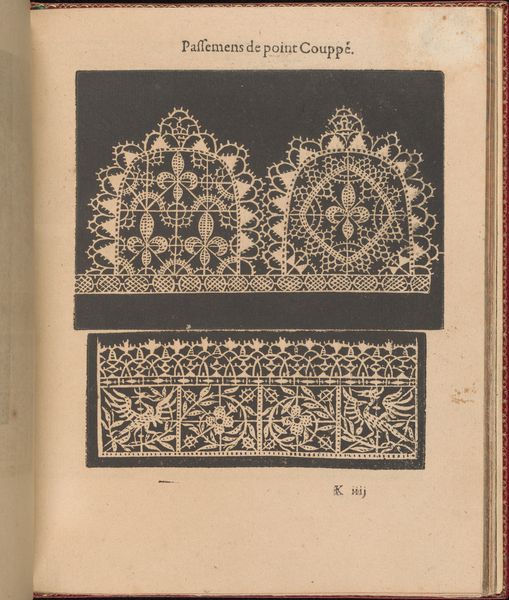
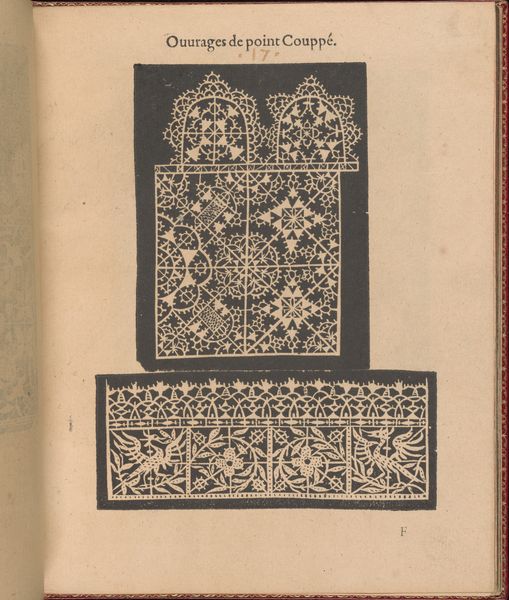
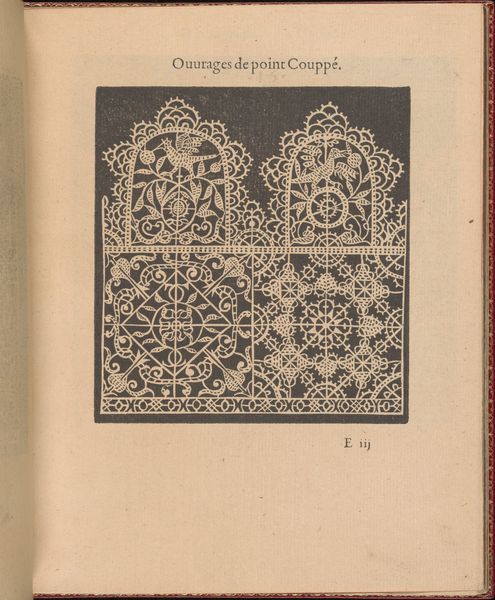
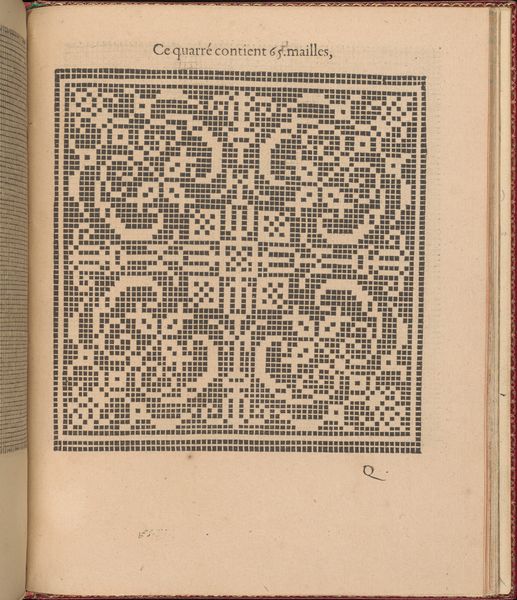
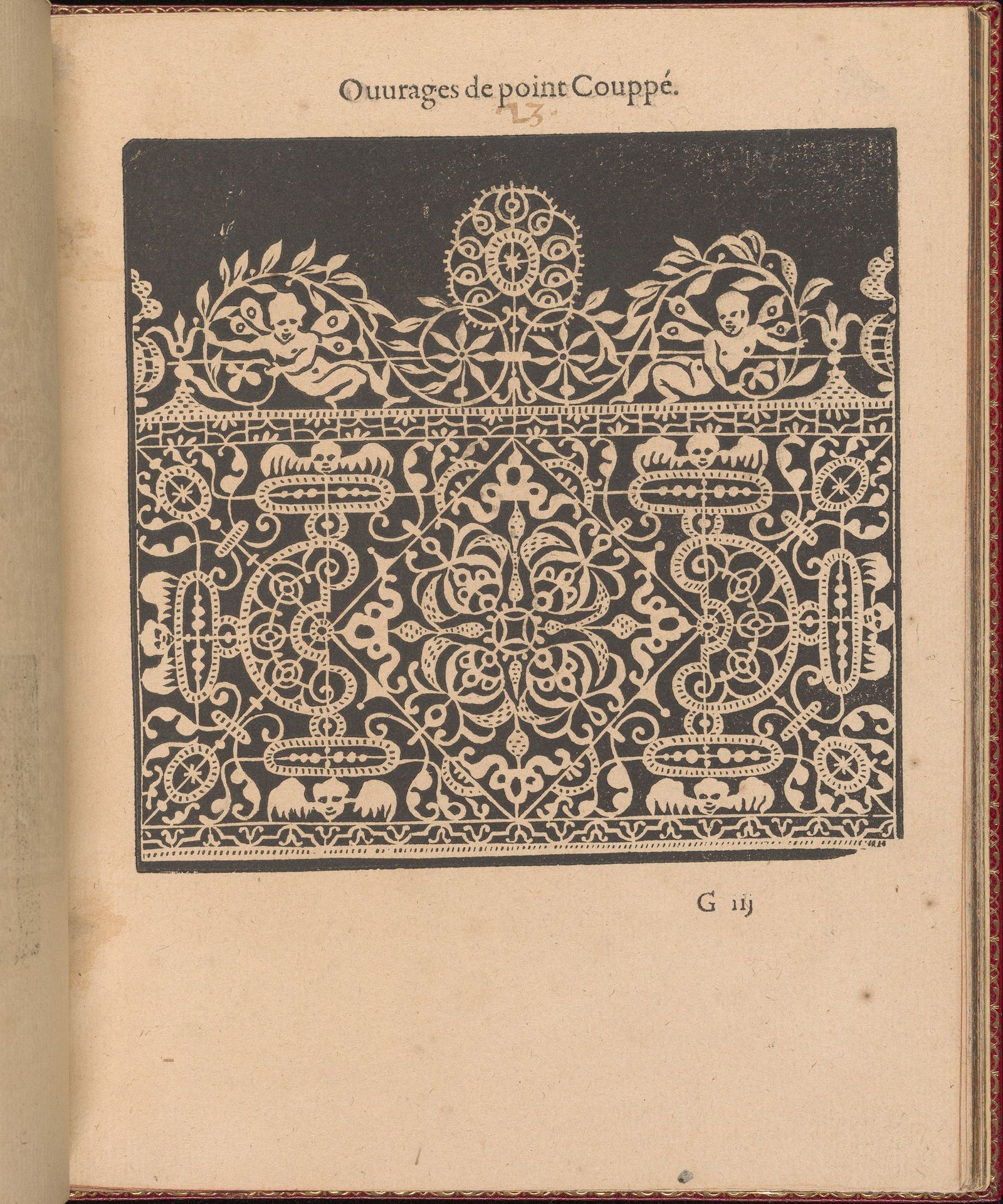
This is an instructional engraving, made in the late 16th century by Federico de Vinciolo. It illustrates needle lace patterns, or *point coupé*, using line and hatching. The design's impact relies on the precise, repetitive work involved in lace making, reflecting the period’s labor-intensive luxury goods production. The stark contrast between the black background and white pattern emphasizes the intricate, hand-executed details. The image displays a rich decorative vocabulary with stylized figures, leaves, and geometric shapes, and conveys the dense texture of needle lace. The engraving shows the techniques needed to produce luxury goods, connecting it to broader issues of labor, skill, and the rising demand for fashionable textiles in the Renaissance. Lace making was painstaking, but also offered economic opportunities, especially for women. By elevating a craft like lace making through detailed visual instruction, Vinciolo bridges the gap between art, craft, and the socioeconomic realities of his time.
Les Singuliers et Nouveaux Portraicts... page 27 (recto) 1588

Federico de Vinciolo
1582 - 1599
The Metropolitan Museum of Art
Metropolitan Museum of Art, New York, NYArtwork details
- Medium
- drawing, print, intaglio, engraving
- Dimensions
- Overall: 8 1/16 x 6 5/16 in. (20.5 x 16 cm)
- Location
- Metropolitan Museum of Art, New York, NY
- Copyright
- Public Domain
Tags
drawing
intaglio
11_renaissance
geometric
decorative-art
engraving
Comments
No comments
About this artwork
This is an instructional engraving, made in the late 16th century by Federico de Vinciolo. It illustrates needle lace patterns, or *point coupé*, using line and hatching. The design's impact relies on the precise, repetitive work involved in lace making, reflecting the period’s labor-intensive luxury goods production. The stark contrast between the black background and white pattern emphasizes the intricate, hand-executed details. The image displays a rich decorative vocabulary with stylized figures, leaves, and geometric shapes, and conveys the dense texture of needle lace. The engraving shows the techniques needed to produce luxury goods, connecting it to broader issues of labor, skill, and the rising demand for fashionable textiles in the Renaissance. Lace making was painstaking, but also offered economic opportunities, especially for women. By elevating a craft like lace making through detailed visual instruction, Vinciolo bridges the gap between art, craft, and the socioeconomic realities of his time.
Comments
No comments