About this artwork
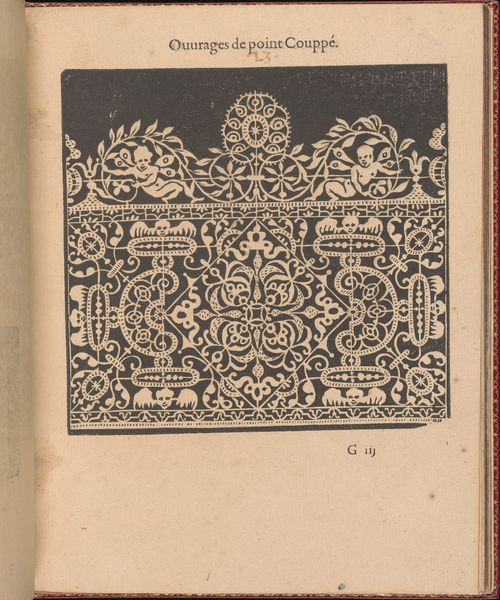
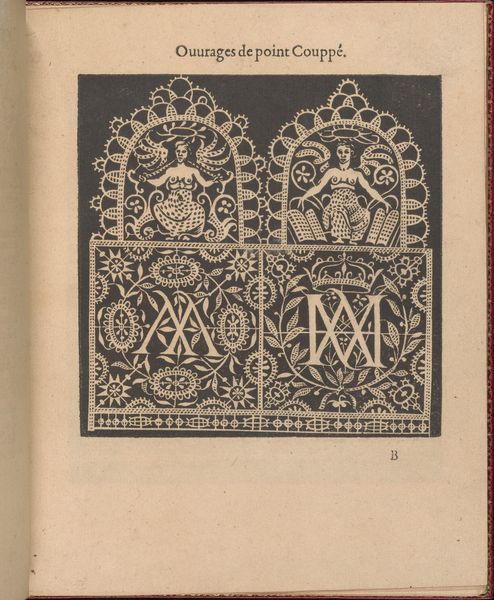
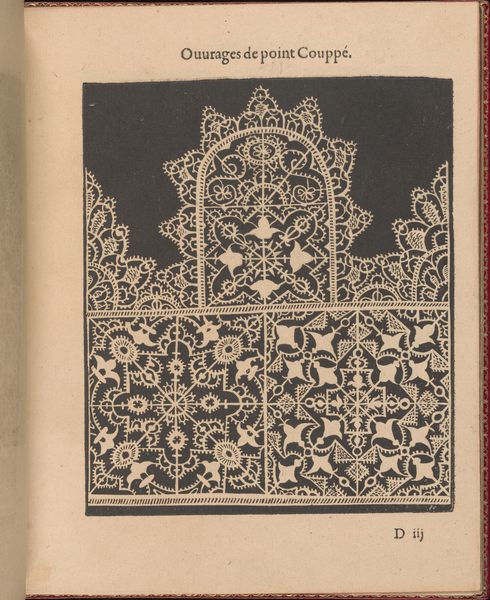
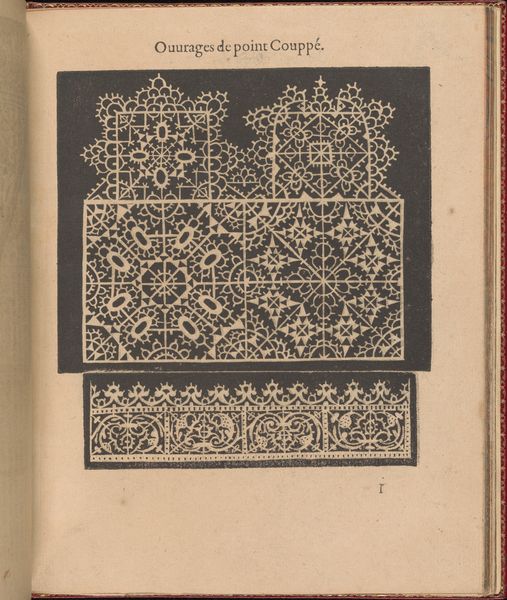
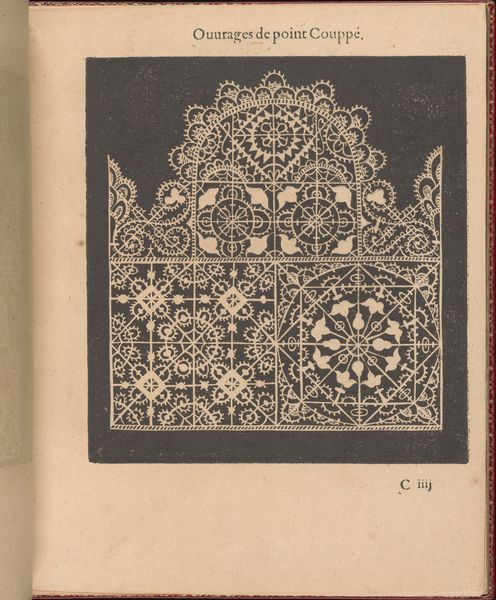
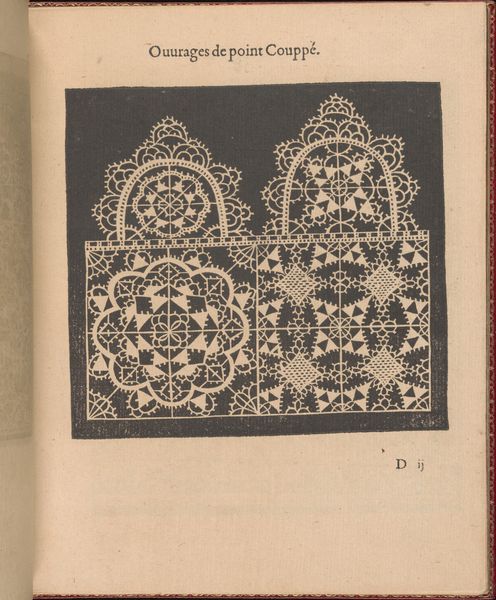
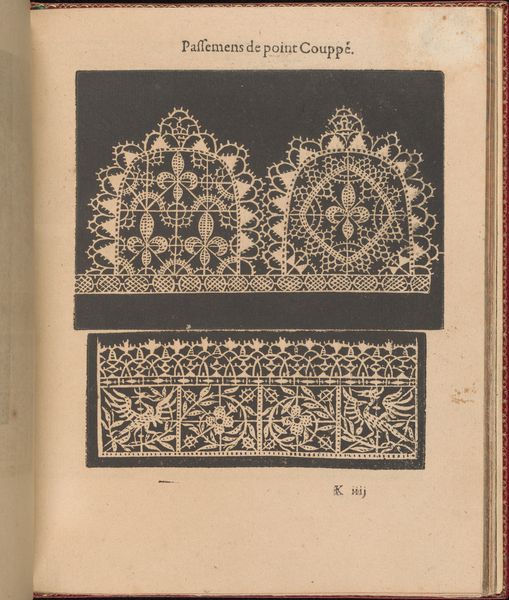
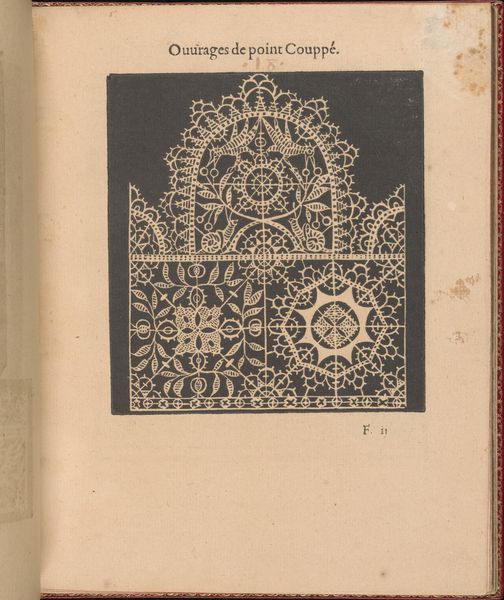
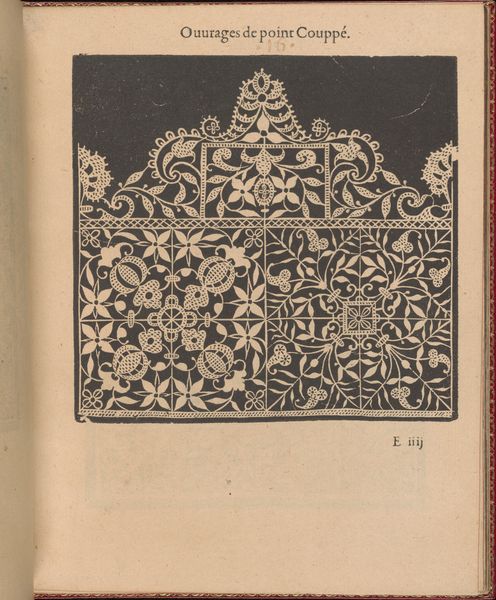
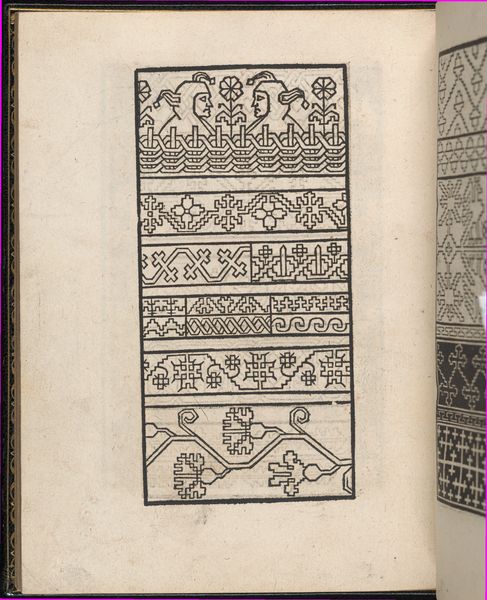
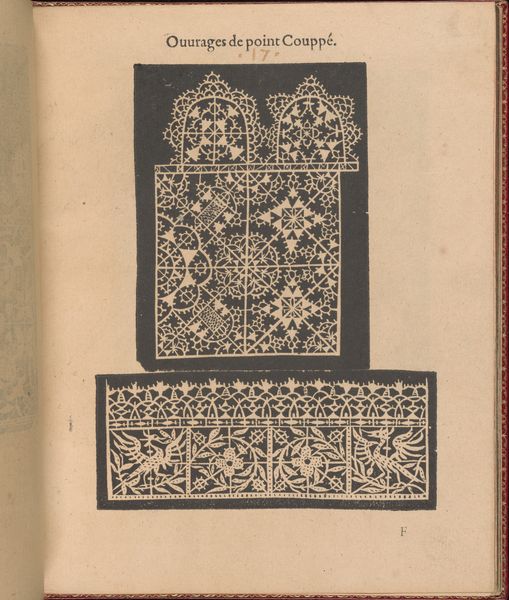
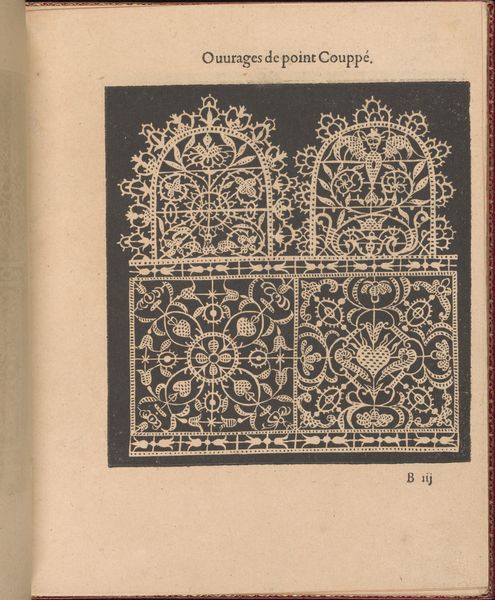
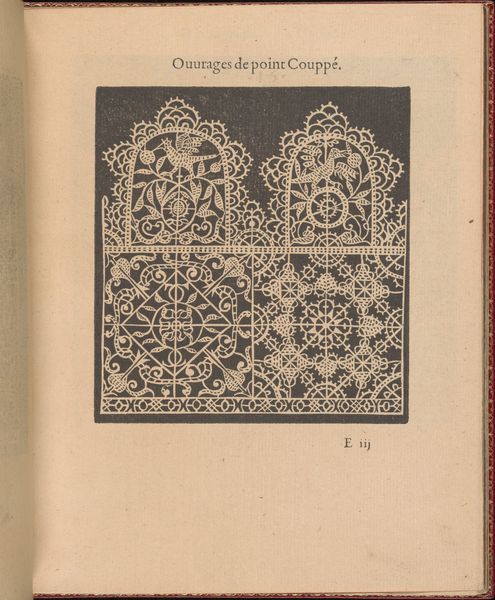
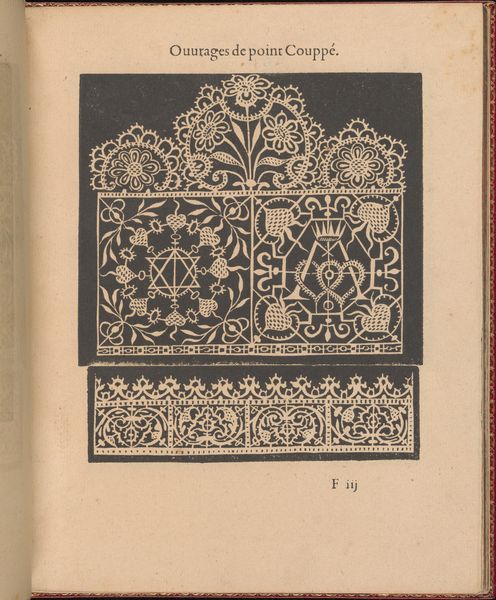
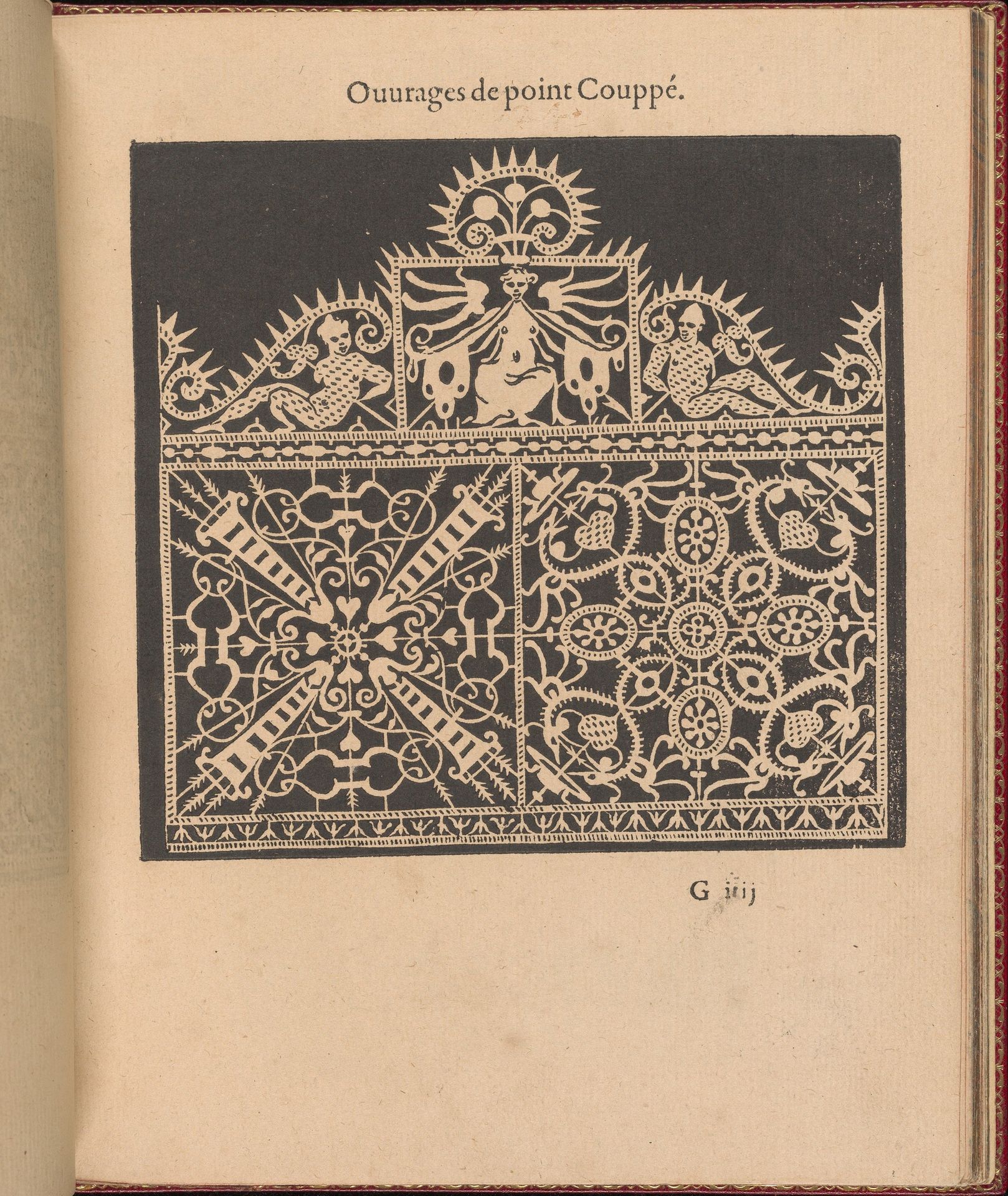
This is a page from "Les Singuliers et Nouveaux Portraicts...", a book of lace patterns made in late 16th century France by Federico de Vinciolo. These intricate designs were intended to be used as guides for the creation of "point coupé" lace, a popular and fashionable embellishment for clothing and home décor at the time. The image creates meaning through its stylized floral motifs, geometric shapes, and fantastical creatures that reflect the cultural aesthetics of the Renaissance period. France, during this time, was experiencing economic growth, which lead to a rise in luxury goods and elaborate fashion. Lace was used by both the aristocracy and the emerging bourgeoisie, thus signifying social status. Manuals such as this served the purpose of instructing needle workers in the making of lace. By studying sources like inventories, fashion plates, and extant examples of lace, we can better understand the social and economic context in which Vinciolo's designs were created and consumed. Art is a product of its time and place, deeply intertwined with social and institutional forces.
Les Singuliers et Nouveaux Portraicts... page 28 (recto) 1588

Federico de Vinciolo
1582 - 1599
The Metropolitan Museum of Art
Metropolitan Museum of Art, New York, NYArtwork details
- Medium
- drawing, graphic-art, print, ink, woodcut
- Dimensions
- Overall: 8 1/16 x 6 5/16 in. (20.5 x 16 cm)
- Location
- Metropolitan Museum of Art, New York, NY
- Copyright
- Public Domain
Tags
drawing
graphic-art
medieval
pen drawing
personal sketchbook
ink
geometric
woodcut
Comments
No comments
About this artwork
This is a page from "Les Singuliers et Nouveaux Portraicts...", a book of lace patterns made in late 16th century France by Federico de Vinciolo. These intricate designs were intended to be used as guides for the creation of "point coupé" lace, a popular and fashionable embellishment for clothing and home décor at the time. The image creates meaning through its stylized floral motifs, geometric shapes, and fantastical creatures that reflect the cultural aesthetics of the Renaissance period. France, during this time, was experiencing economic growth, which lead to a rise in luxury goods and elaborate fashion. Lace was used by both the aristocracy and the emerging bourgeoisie, thus signifying social status. Manuals such as this served the purpose of instructing needle workers in the making of lace. By studying sources like inventories, fashion plates, and extant examples of lace, we can better understand the social and economic context in which Vinciolo's designs were created and consumed. Art is a product of its time and place, deeply intertwined with social and institutional forces.
Comments
No comments