About this artwork
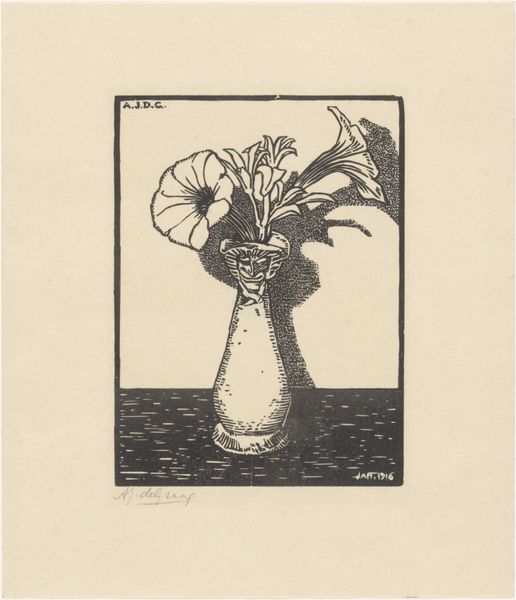
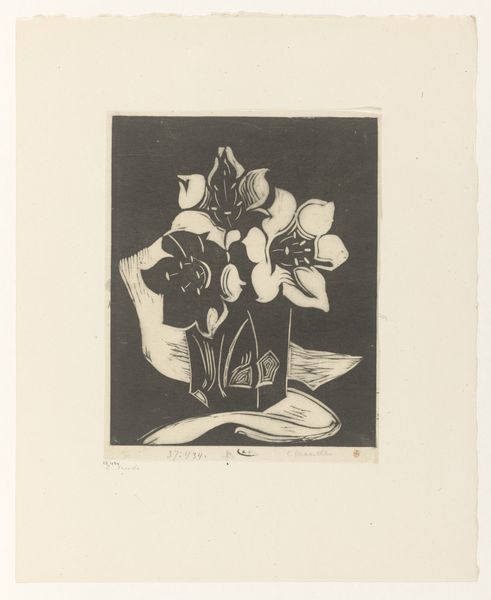
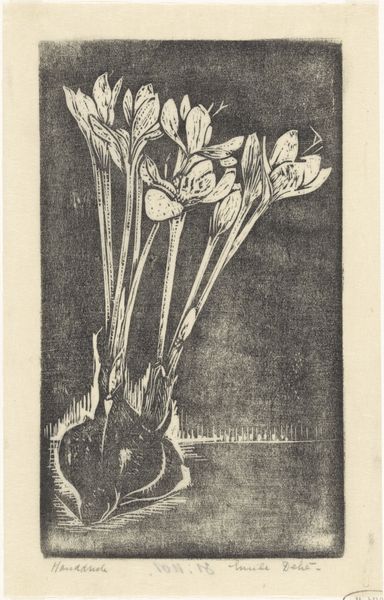
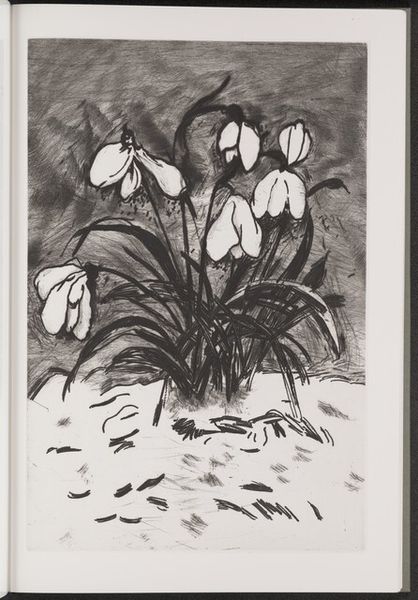
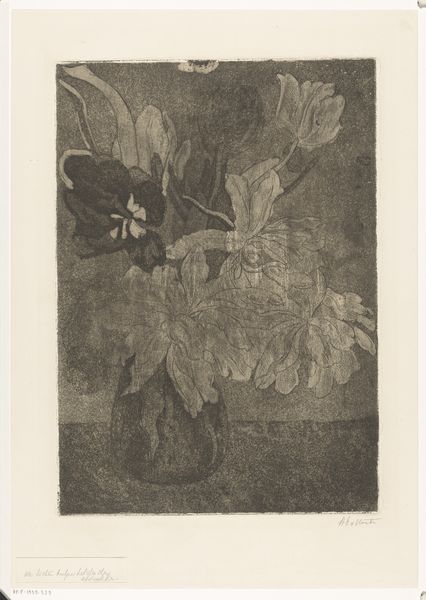
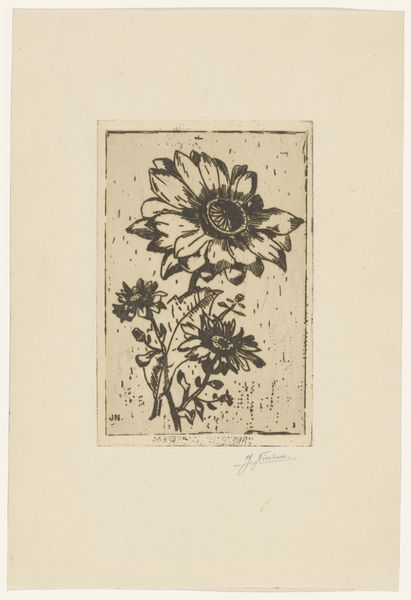
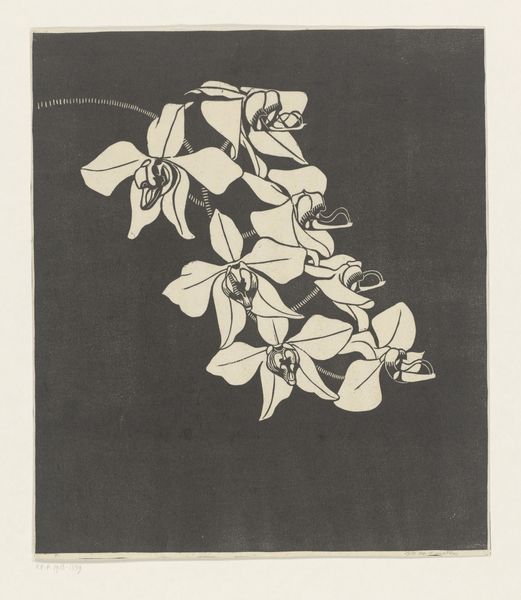
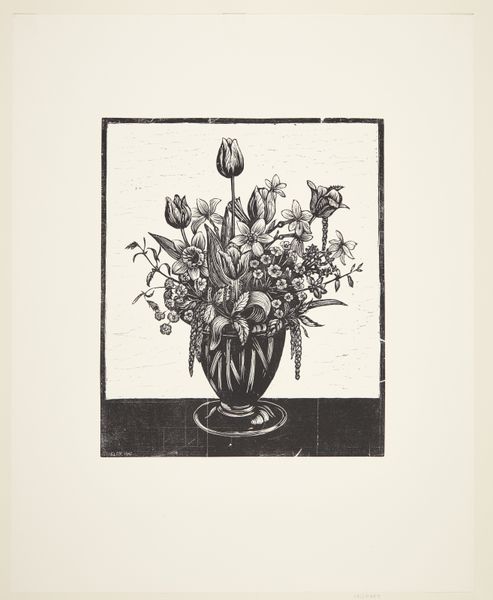
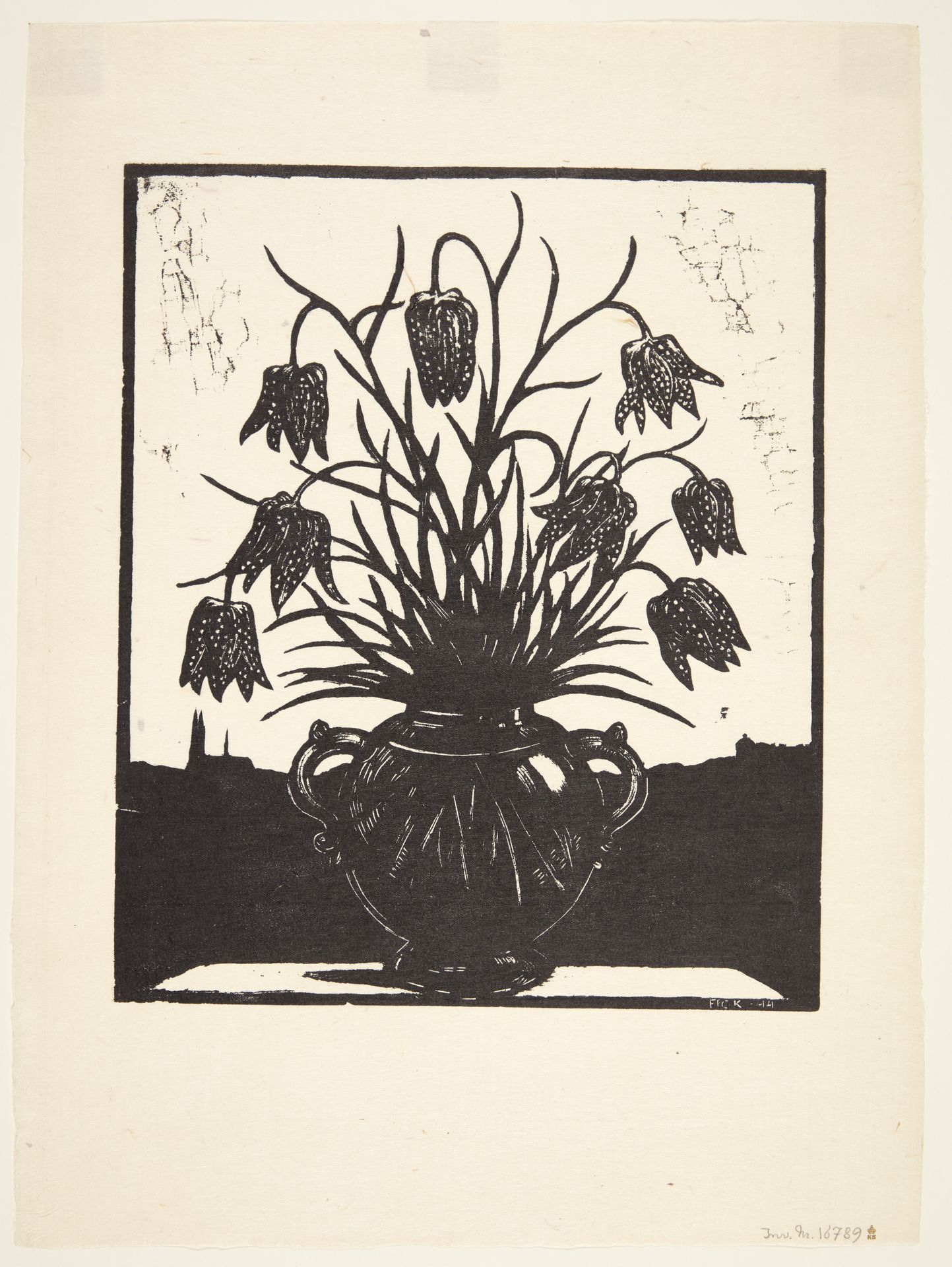
"Kungsängsliljor i en vase" or "Fritillaries in a Vase," is a black and white woodcut print by Siri Magnus-Lagercrantz. As a female artist working in the early 20th century, Magnus-Lagercrantz navigated a world where women’s artistic contributions were often marginalized. Trained at the Academy of Fine Arts, she excelled in portraiture and landscapes, but also embraced printmaking, a medium that allowed for wider dissemination of her work. The Kungsängslilja, or fritillary flower, in this piece could be understood as a metaphor for resilience and quiet beauty. The strong contrast between the black and white emphasizes the starkness and simplicity of the scene. The choice of the vase, and the flowers, speaks to the domestic sphere, historically associated with women’s work, yet elevated here into a subject of artistic merit. It asks us to reflect on the value we place on these everyday elements of life, and how they intersect with the artist's own experiences.
"Kungsängsliljor i en vase"
1930


Artwork details
- Medium
- print, woodcut
- Dimensions
- 293 mm (height) x 246 mm (width) (billedmål)
- Location
- SMK - Statens Museum for Kunst
Tags
Comments
Share your thoughts
About this artwork
"Kungsängsliljor i en vase" or "Fritillaries in a Vase," is a black and white woodcut print by Siri Magnus-Lagercrantz. As a female artist working in the early 20th century, Magnus-Lagercrantz navigated a world where women’s artistic contributions were often marginalized. Trained at the Academy of Fine Arts, she excelled in portraiture and landscapes, but also embraced printmaking, a medium that allowed for wider dissemination of her work. The Kungsängslilja, or fritillary flower, in this piece could be understood as a metaphor for resilience and quiet beauty. The strong contrast between the black and white emphasizes the starkness and simplicity of the scene. The choice of the vase, and the flowers, speaks to the domestic sphere, historically associated with women’s work, yet elevated here into a subject of artistic merit. It asks us to reflect on the value we place on these everyday elements of life, and how they intersect with the artist's own experiences.
Comments
Share your thoughts