1984
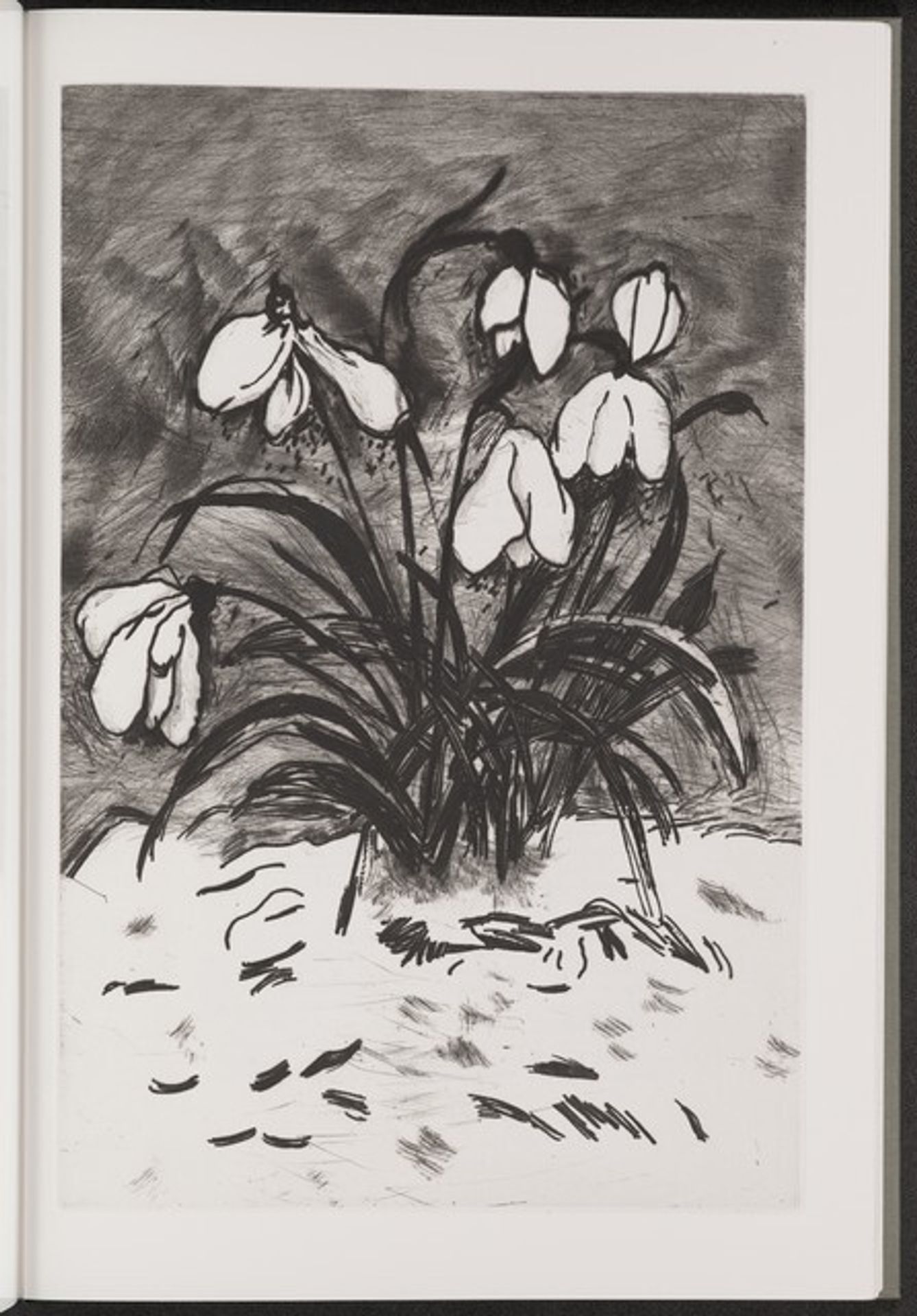
Snowdrop


Listen to curator's interpretation
Curatorial notes
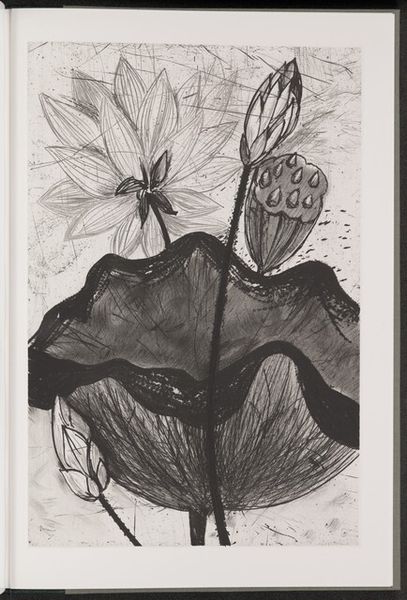
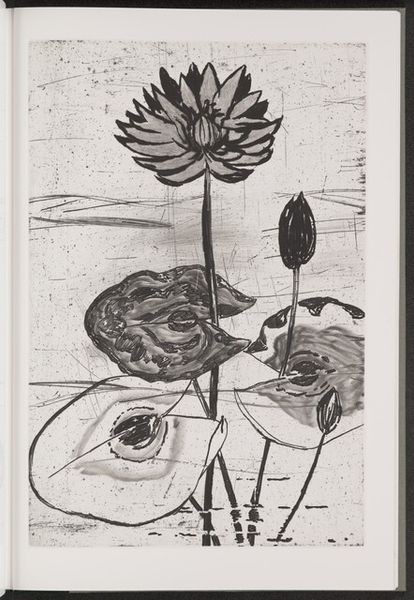
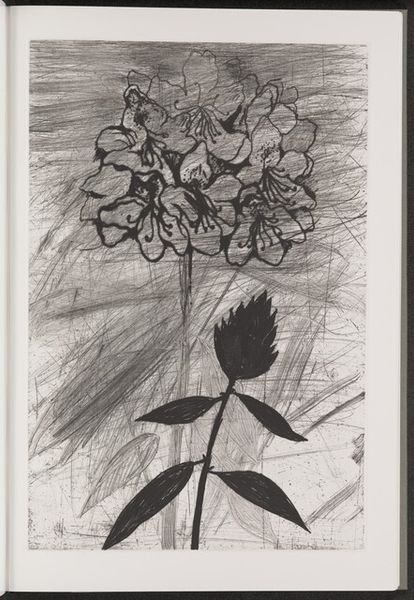
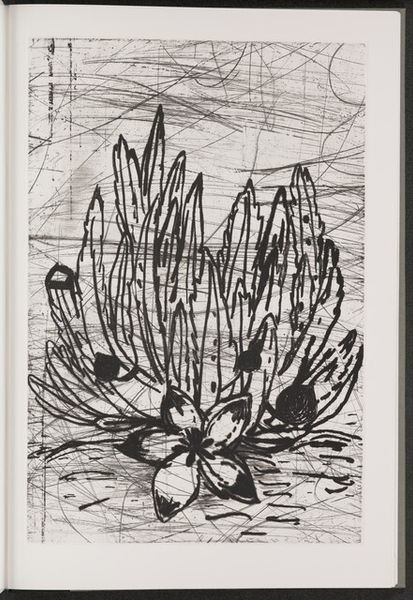
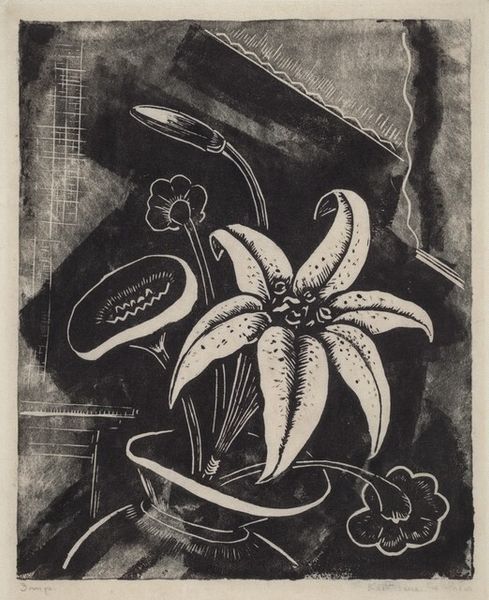
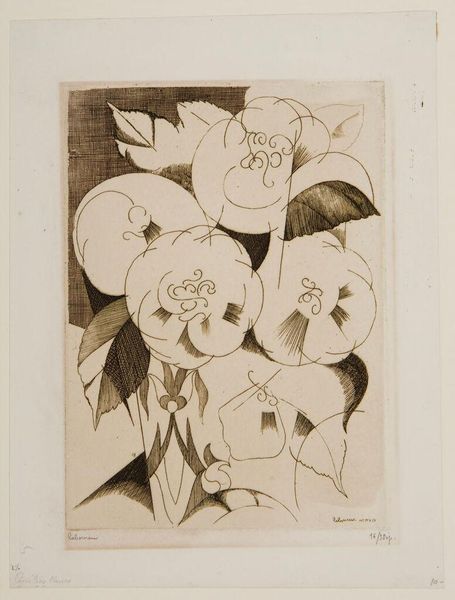
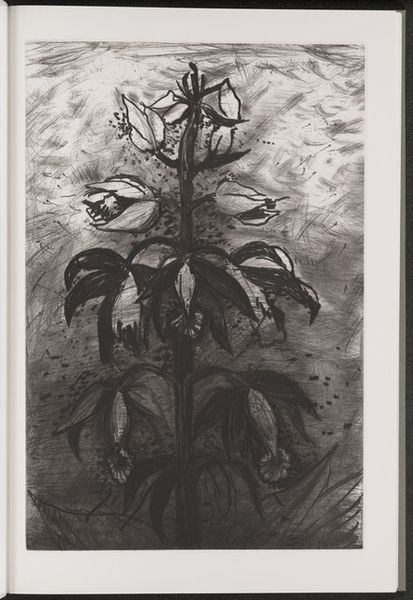
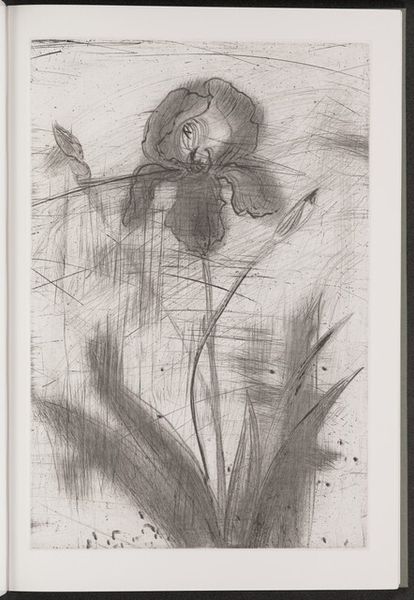
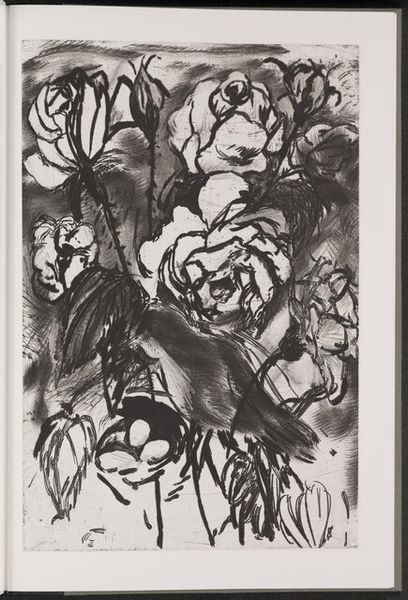
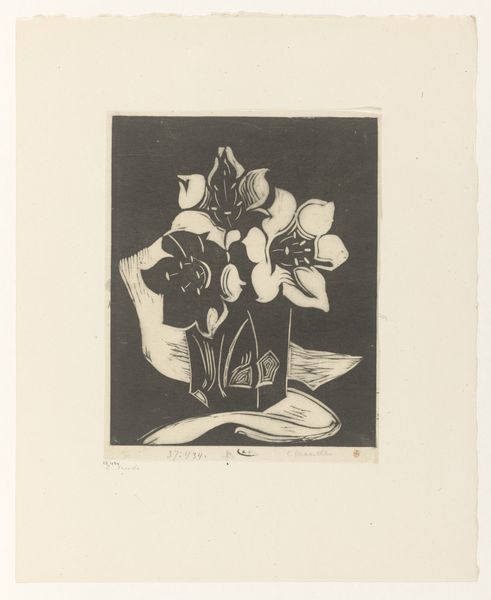
Editor: Jim Dine’s etching and ink print, *Snowdrop*, created in 1984, feels both delicate and a bit rough around the edges, if that makes sense. The dark background almost swallows the white flowers. What do you see in this piece? Curator: What immediately captures my attention are the snowdrops themselves. They have historically served as a potent symbol, often tied to concepts of hope and resilience in the face of winter's bleakness. Spring flowers represent overcoming. Dine created this in 1984 – a decade facing environmental and socio-political anxieties. Editor: That’s interesting! So the flower becomes more than just a flower… Curator: Precisely. Consider the act of naming – ‘snowdrop’. Language connects this imagery to purity and perhaps a poignant acknowledgement of fragility amidst a world moving into what some considered to be a darker period. Does that symbolic association resonate with you as you view this? Editor: I think so. Now that you mention it, seeing it as a sign of hope, of something persevering through hardship, does change how I perceive the work. Especially knowing the time period. It’s like the flower has a voice. Curator: Visual symbols often act as a cultural language. Even the deliberate choice of etching and ink, with their inherent qualities of contrast and texture, contributes to a symbolic dialogue here, adding layers of meaning. Editor: That gives me a lot to think about. It’s amazing how much history and meaning can be packed into such a seemingly simple image. Curator: Indeed. It underscores art's ability to function as a carrier of cultural memory. It also is fascinating to witness how differently artworks can resonate across different viewers.