About this artwork
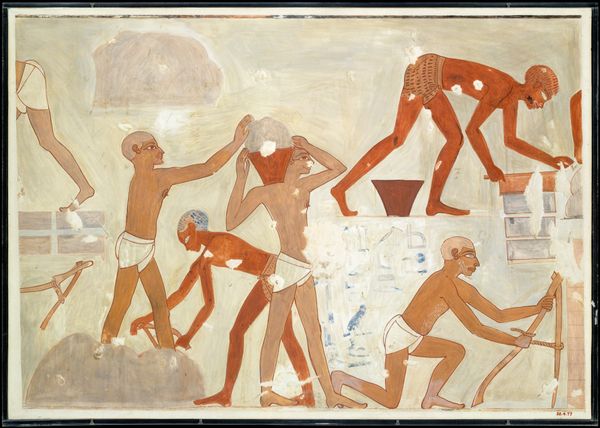
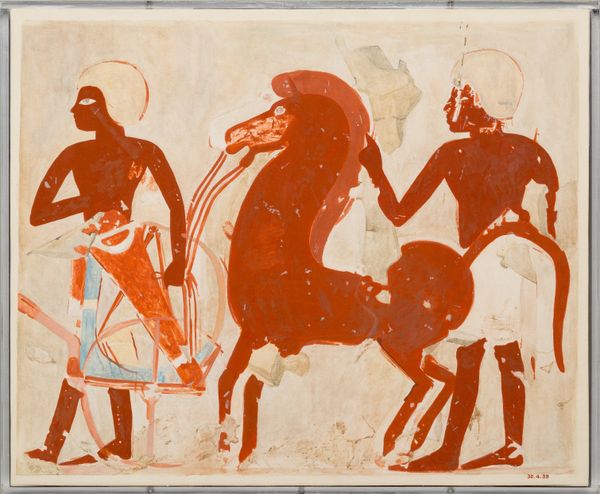
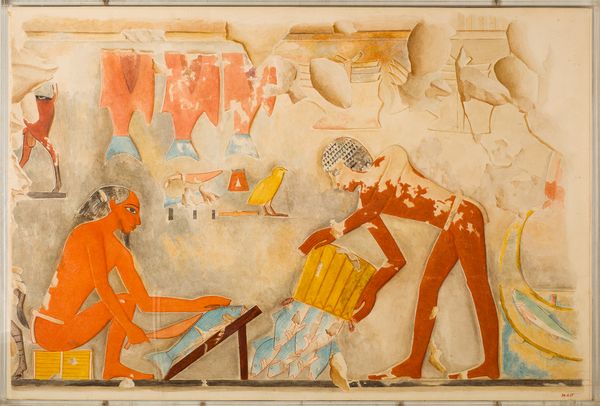
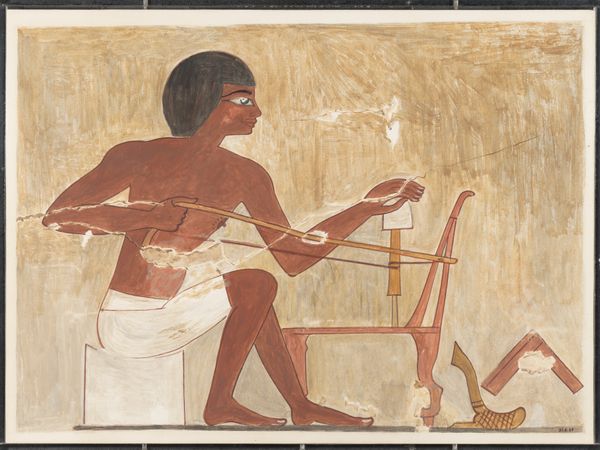
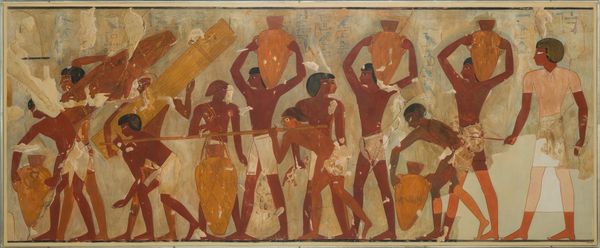
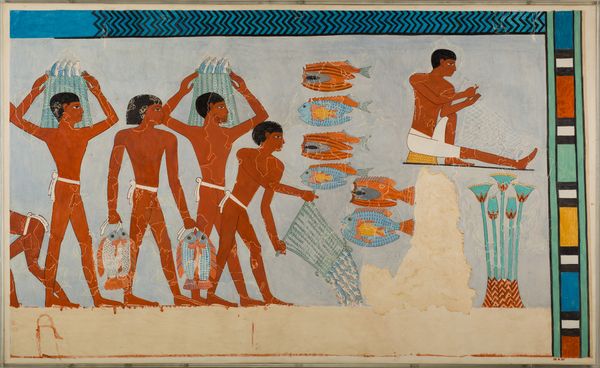
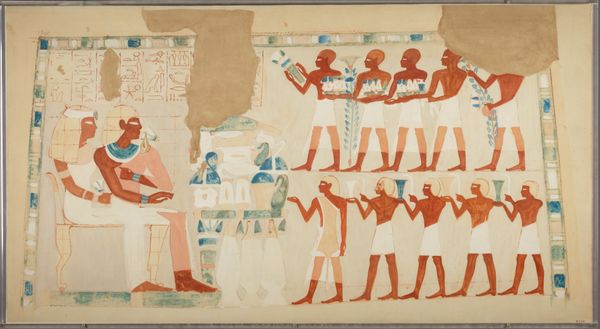
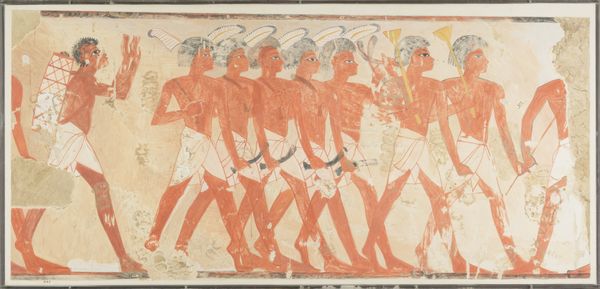
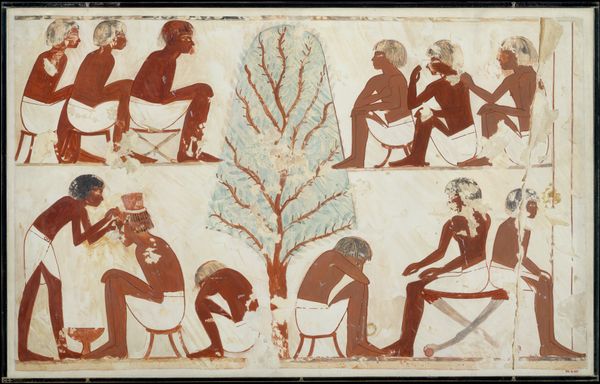
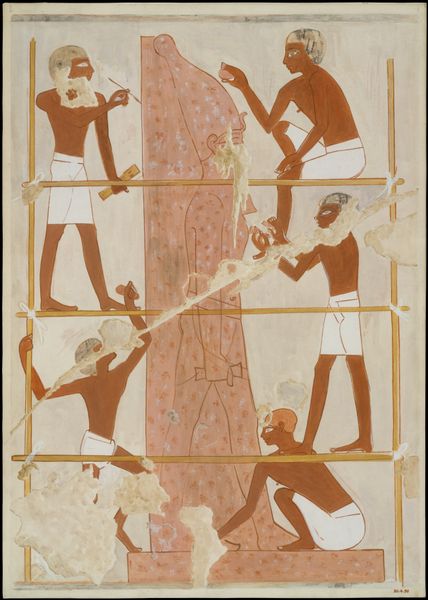
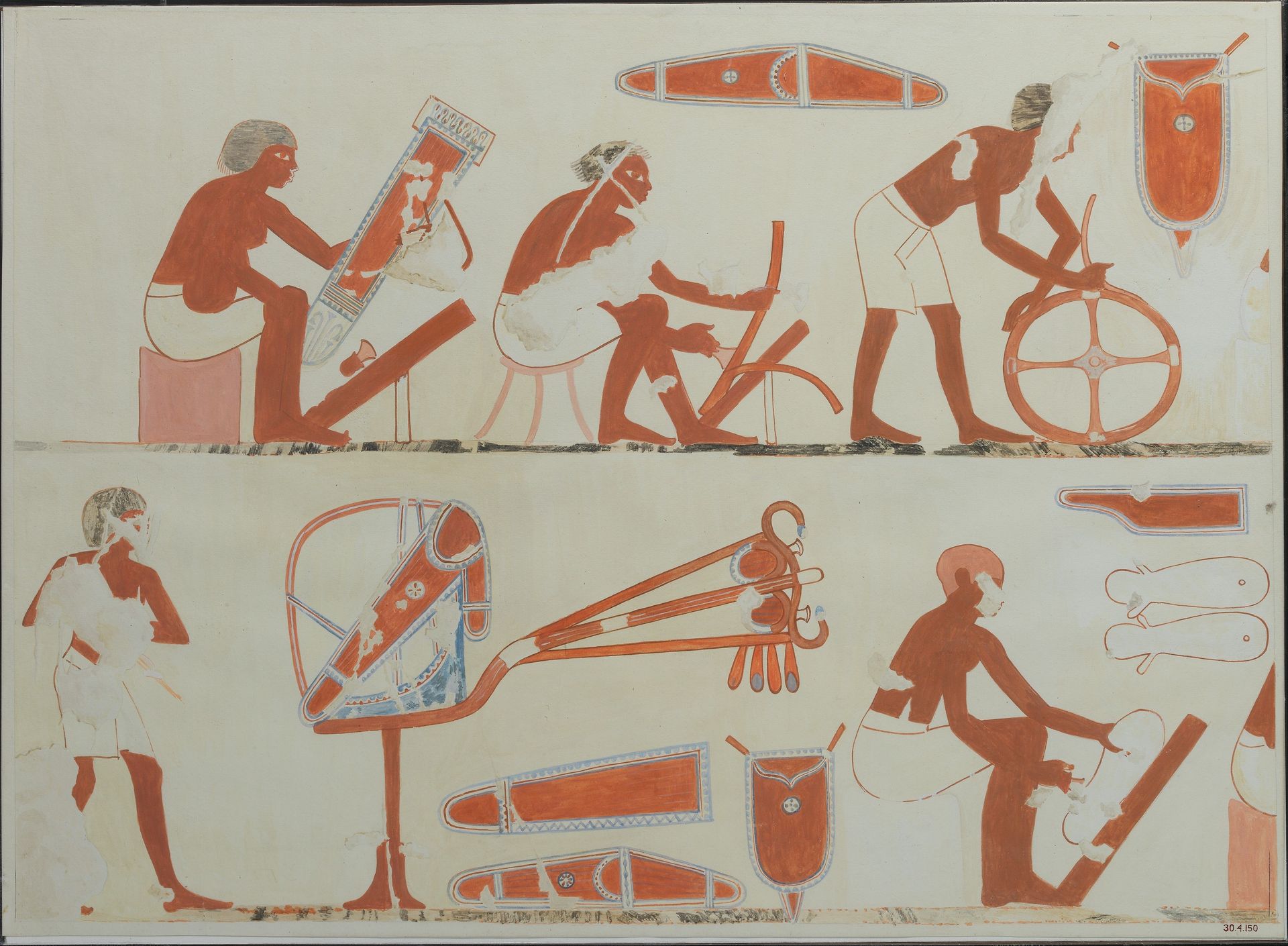
Nina de Garis Davies created this watercolor facsimile of ‘Wood and Leather Craftsmen, Tomb of Hapu’. In ancient Egypt, woodworking and leather crafting were highly skilled trades, essential for creating furniture, tools, weapons, and ceremonial objects. Here, we see the distinct processes involved: cutting, shaping, and assembling wood, alongside the preparation and stitching of leather. The image highlights the workers' engagement with their materials, using hand-operated tools, which speaks to a tradition deeply rooted in manual skill and knowledge. These processes reflect not only the functional aspects of production but also the social context of labor. The repetitive nature of the tasks would have demanded both precision and endurance. Such scenes remind us of the rich histories embedded in everyday objects, and of the artistry involved in their making. This image provides a glimpse into a culture where craft was integral to both daily life and the ceremonial sphere.
Wood and Leather Craftsmen, Tomb of Hapu
1400 BC

Nina de Garis Davies
1881 - 1965
The Metropolitan Museum of Art
Metropolitan Museum of Art, New York, NYArtwork details
- Medium
- painting, fresco
- Dimensions
- facsimile: H. 50 cm (19 11/16 in); w. 69 cm (27 3/16 in) In frame: H. 53.3 cm (21 in); W. 72.1 cm (28 3/8 in); Th. 1.9 cm (3/4 in) scale 1:1
- Location
- Metropolitan Museum of Art, New York, NY
- Copyright
- Public Domain
Tags
Comments
Share your thoughts
About this artwork
Nina de Garis Davies created this watercolor facsimile of ‘Wood and Leather Craftsmen, Tomb of Hapu’. In ancient Egypt, woodworking and leather crafting were highly skilled trades, essential for creating furniture, tools, weapons, and ceremonial objects. Here, we see the distinct processes involved: cutting, shaping, and assembling wood, alongside the preparation and stitching of leather. The image highlights the workers' engagement with their materials, using hand-operated tools, which speaks to a tradition deeply rooted in manual skill and knowledge. These processes reflect not only the functional aspects of production but also the social context of labor. The repetitive nature of the tasks would have demanded both precision and endurance. Such scenes remind us of the rich histories embedded in everyday objects, and of the artistry involved in their making. This image provides a glimpse into a culture where craft was integral to both daily life and the ceremonial sphere.
Comments
Share your thoughts