About this artwork
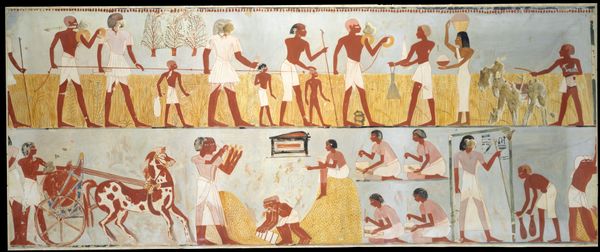
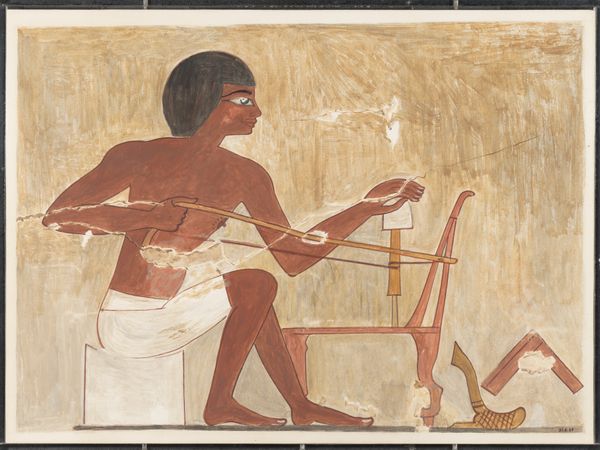
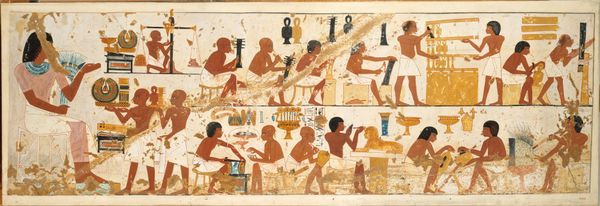
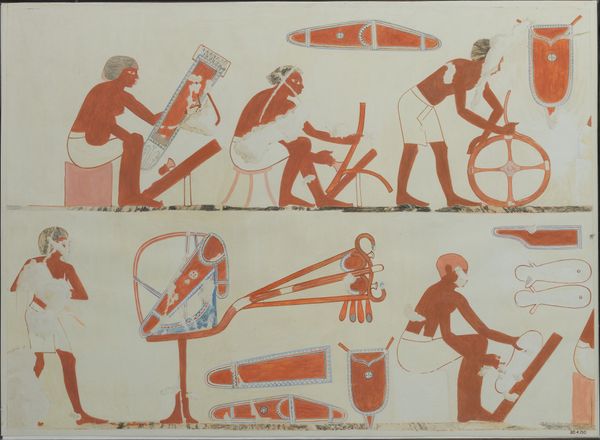
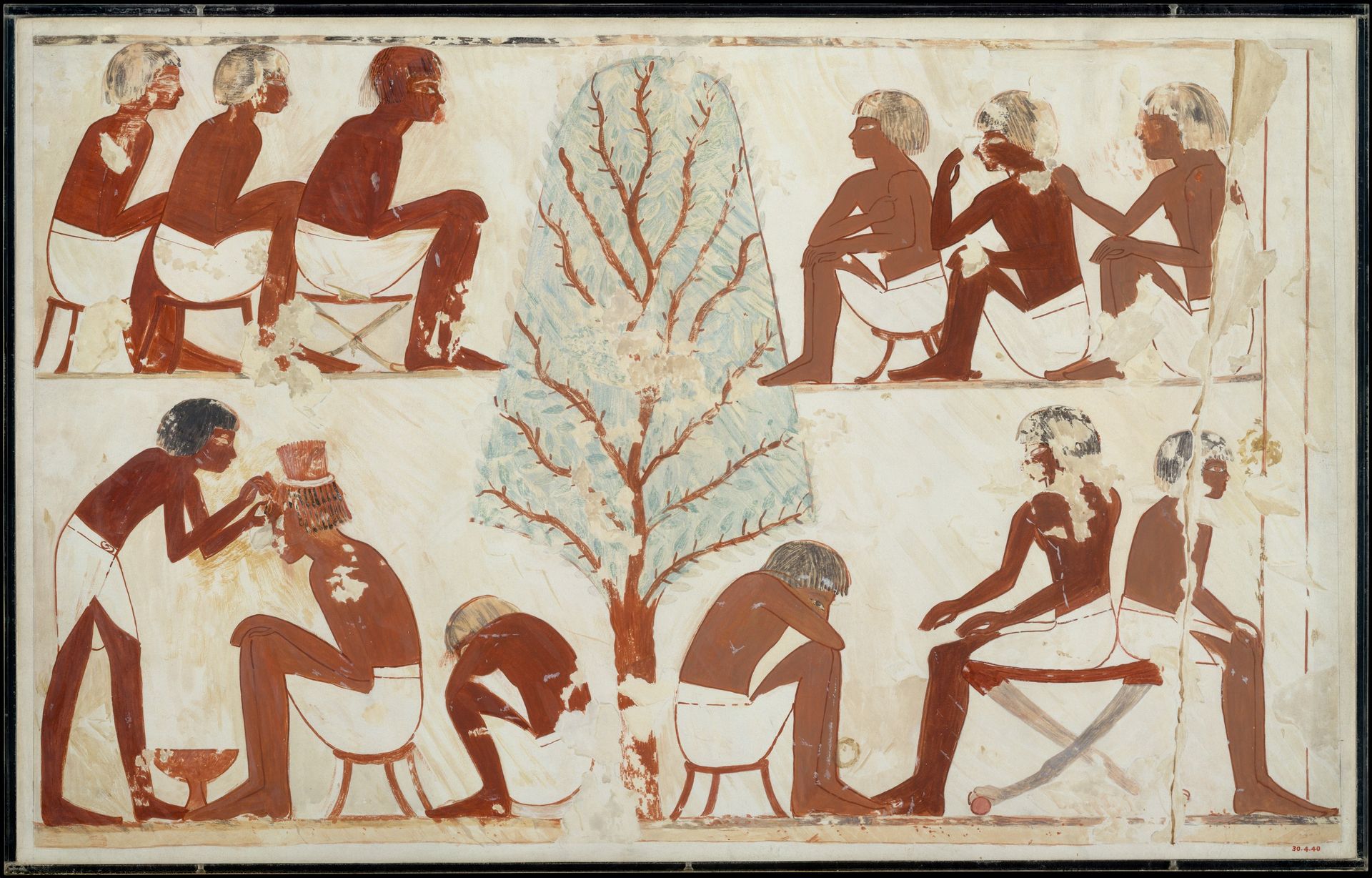
Nina de Garis Davies created this facsimile of Barbering in the Tomb of Userhat, capturing a scene from ancient Egyptian life. The act of grooming and hair care is central, symbolizing not merely vanity but order, status, and ritual purity. Consider the tree in the center. In ancient Egypt, trees were powerful symbols of life, rebirth, and the connection between the earthly and divine realms. We see trees depicted on sarcophagi and in temple reliefs, each time acting as a potent symbol of regeneration and continuity. The very act of attending to one's appearance takes on a spiritual dimension. Across millennia and cultures, the impulse to groom and adorn reflects a deep-seated human desire for control over chaos, a way to assert identity, and perhaps a subconscious appeal to the gods. The image engages us on a profound level, reminding us of the timeless rituals that connect us to our ancestors.
Barbering, Tomb of Userhat
1427 BC

Nina de Garis Davies
1881 - 1965
The Metropolitan Museum of Art
Metropolitan Museum of Art, New York, NYArtwork details
- Medium
- fresco
- Dimensions
- facsimile: h. 45 cm (17 11/16 in); w. 73 cm (28 3/4 in) scale 1:1 framed: h. 48.6 cm (19 1/8 in); w. 76.2 cm (30 in)
- Location
- Metropolitan Museum of Art, New York, NY
- Copyright
- Public Domain
Tags
Comments
Share your thoughts
About this artwork
Nina de Garis Davies created this facsimile of Barbering in the Tomb of Userhat, capturing a scene from ancient Egyptian life. The act of grooming and hair care is central, symbolizing not merely vanity but order, status, and ritual purity. Consider the tree in the center. In ancient Egypt, trees were powerful symbols of life, rebirth, and the connection between the earthly and divine realms. We see trees depicted on sarcophagi and in temple reliefs, each time acting as a potent symbol of regeneration and continuity. The very act of attending to one's appearance takes on a spiritual dimension. Across millennia and cultures, the impulse to groom and adorn reflects a deep-seated human desire for control over chaos, a way to assert identity, and perhaps a subconscious appeal to the gods. The image engages us on a profound level, reminding us of the timeless rituals that connect us to our ancestors.
Comments
Share your thoughts