About this artwork
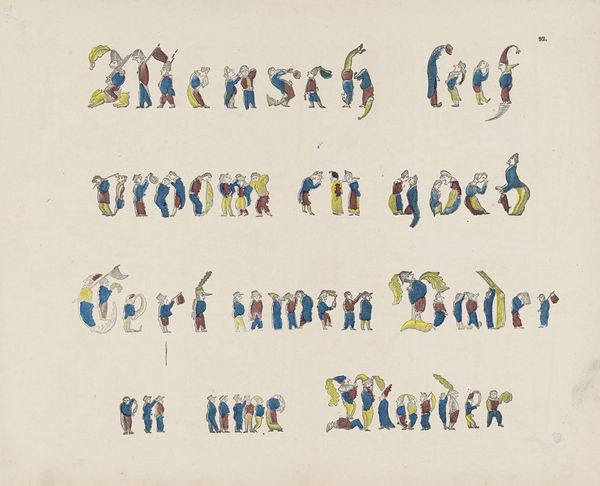
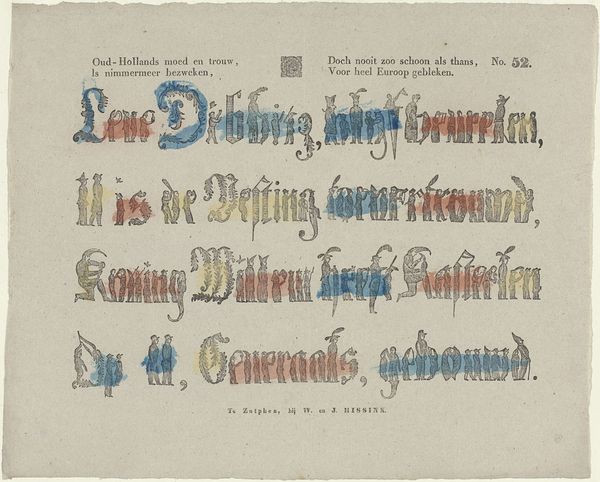
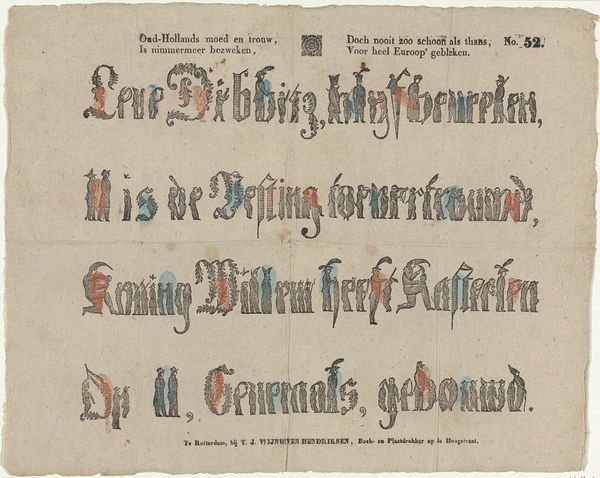
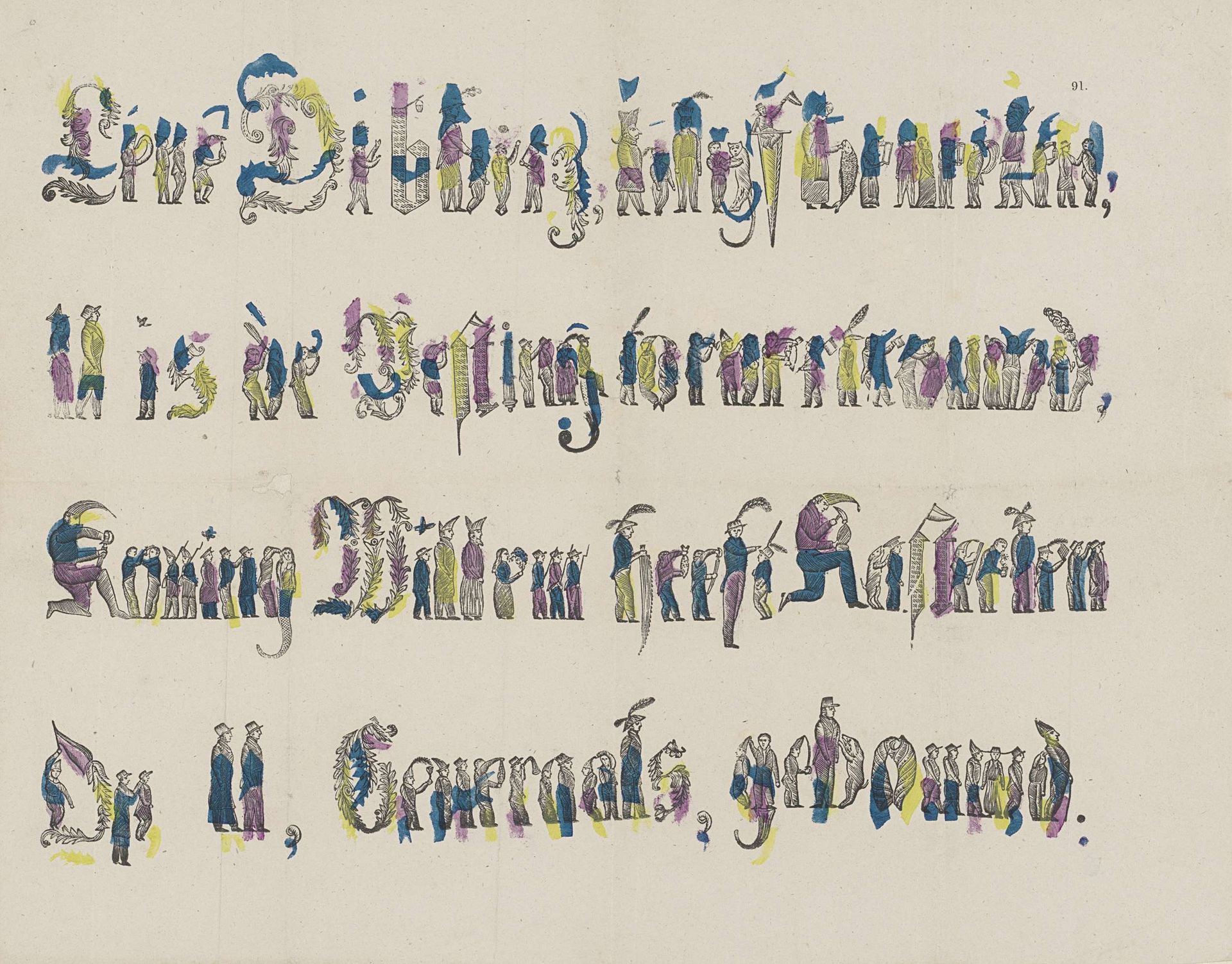
This artwork was made by Lutkie & Cranenburg as an illustrated text, sometime in the early 19th century. The text, in Dutch, is formed by a crowd of tiny figures, some in military dress, and some civilians. The image creates meaning through visual codes, cultural references, and historical associations. This was a time of great social upheaval and war in Europe, and the Netherlands was no exception. The House of Orange had only recently been restored to power after a period of French rule, so this artwork likely makes reference to that. The text is a patriotic call to arms, urging citizens to defend their nation, and to trust in their King and Generals. The figures who form the letters and words, remind us of the social conditions that shaped artistic production, and encourage us to remember that the meaning of art is contingent on social and institutional context. The Rijksmuseum archive can tell us more.
Leve Dibbitz, blijf binnen u is de vesting toevertrouwd koning Willem heeft kastelen op u, generaals, gebouwd
1848 - 1881

Lutkie & Cranenburg
@lutkiecranenburgLocation
RijksmuseumArtwork details
- Medium
- drawing, graphic-art, print, typography, ink, pen
- Dimensions
- height 316 mm, width 394 mm
- Location
- Rijksmuseum
- Copyright
- Rijks Museum: Open Domain
Tags
Comments
Share your thoughts
About this artwork
This artwork was made by Lutkie & Cranenburg as an illustrated text, sometime in the early 19th century. The text, in Dutch, is formed by a crowd of tiny figures, some in military dress, and some civilians. The image creates meaning through visual codes, cultural references, and historical associations. This was a time of great social upheaval and war in Europe, and the Netherlands was no exception. The House of Orange had only recently been restored to power after a period of French rule, so this artwork likely makes reference to that. The text is a patriotic call to arms, urging citizens to defend their nation, and to trust in their King and Generals. The figures who form the letters and words, remind us of the social conditions that shaped artistic production, and encourage us to remember that the meaning of art is contingent on social and institutional context. The Rijksmuseum archive can tell us more.
Comments
Share your thoughts