About this artwork
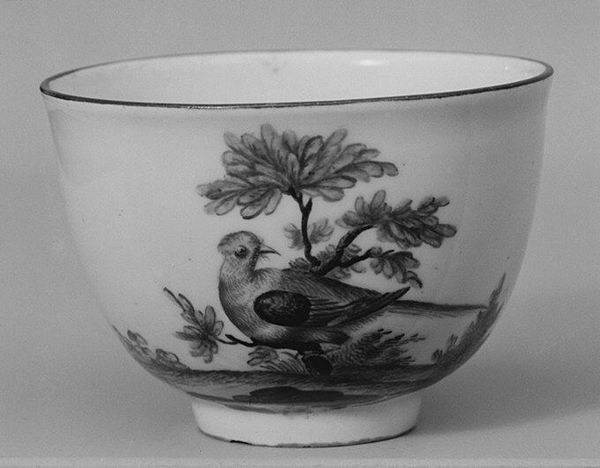
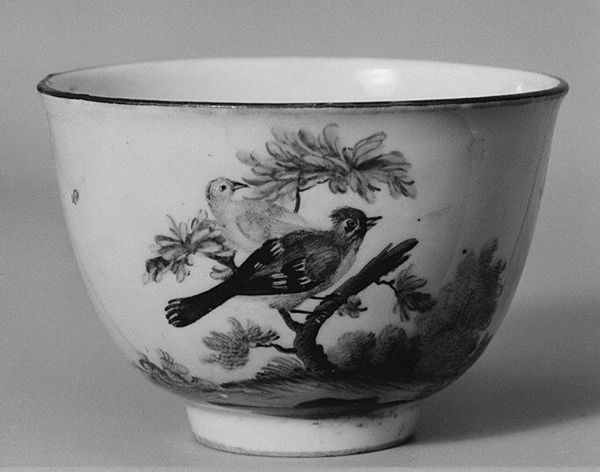
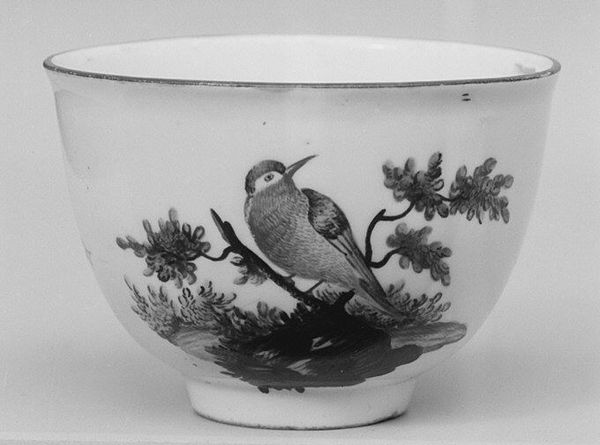
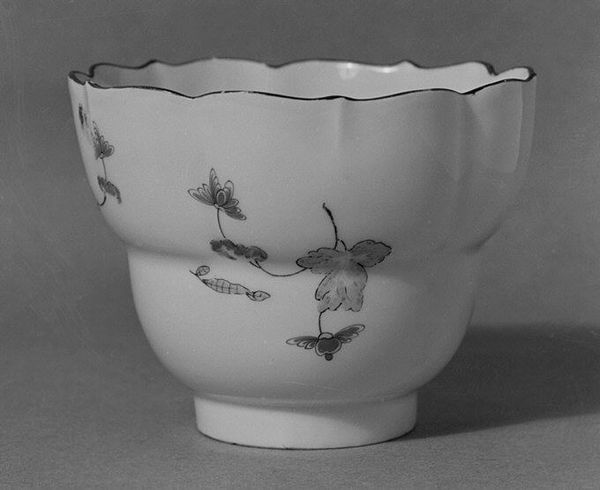
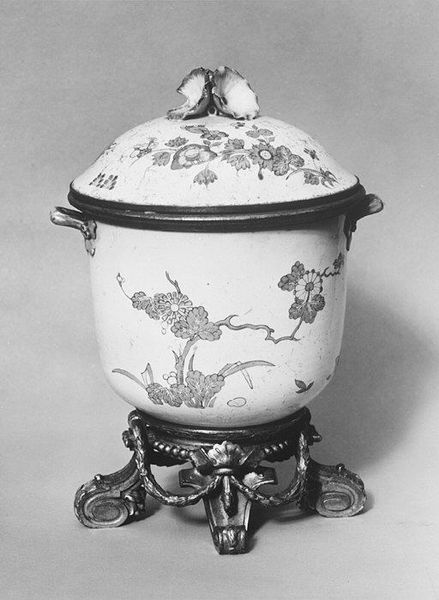
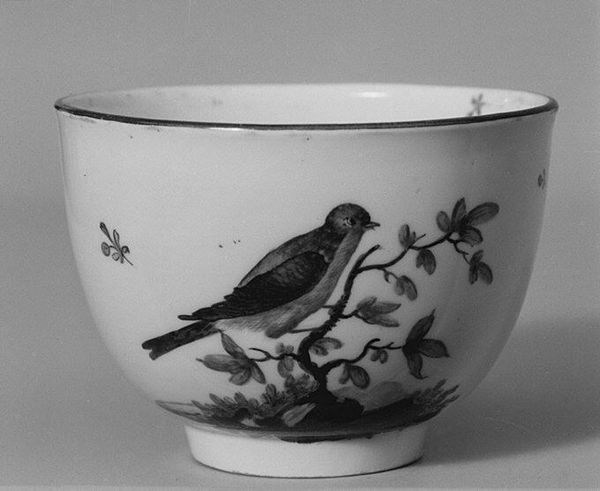
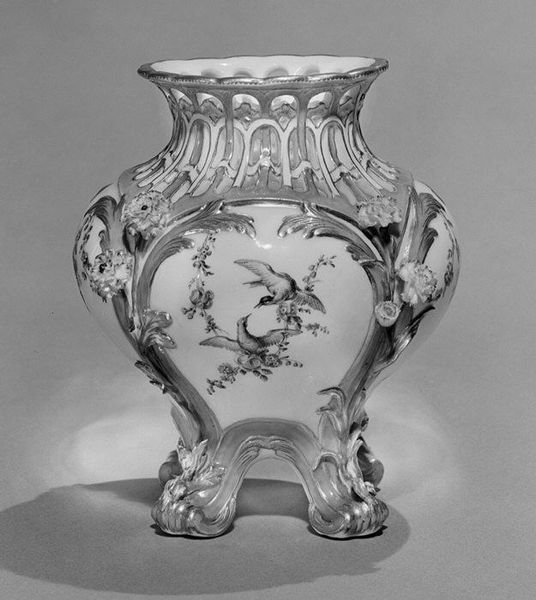
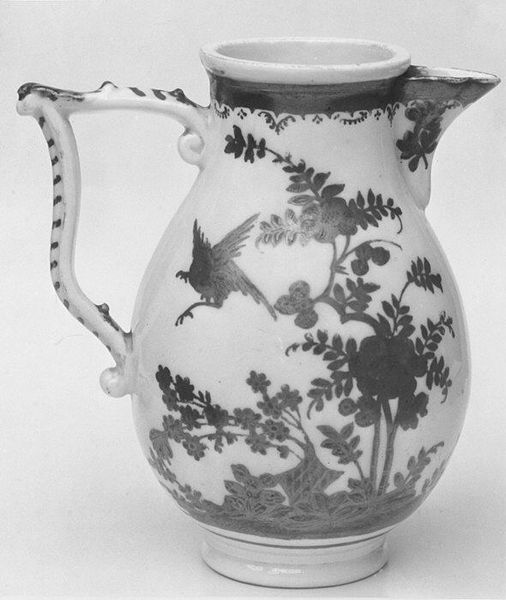
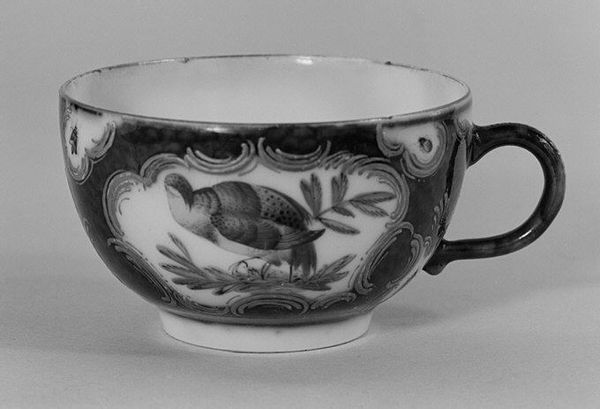
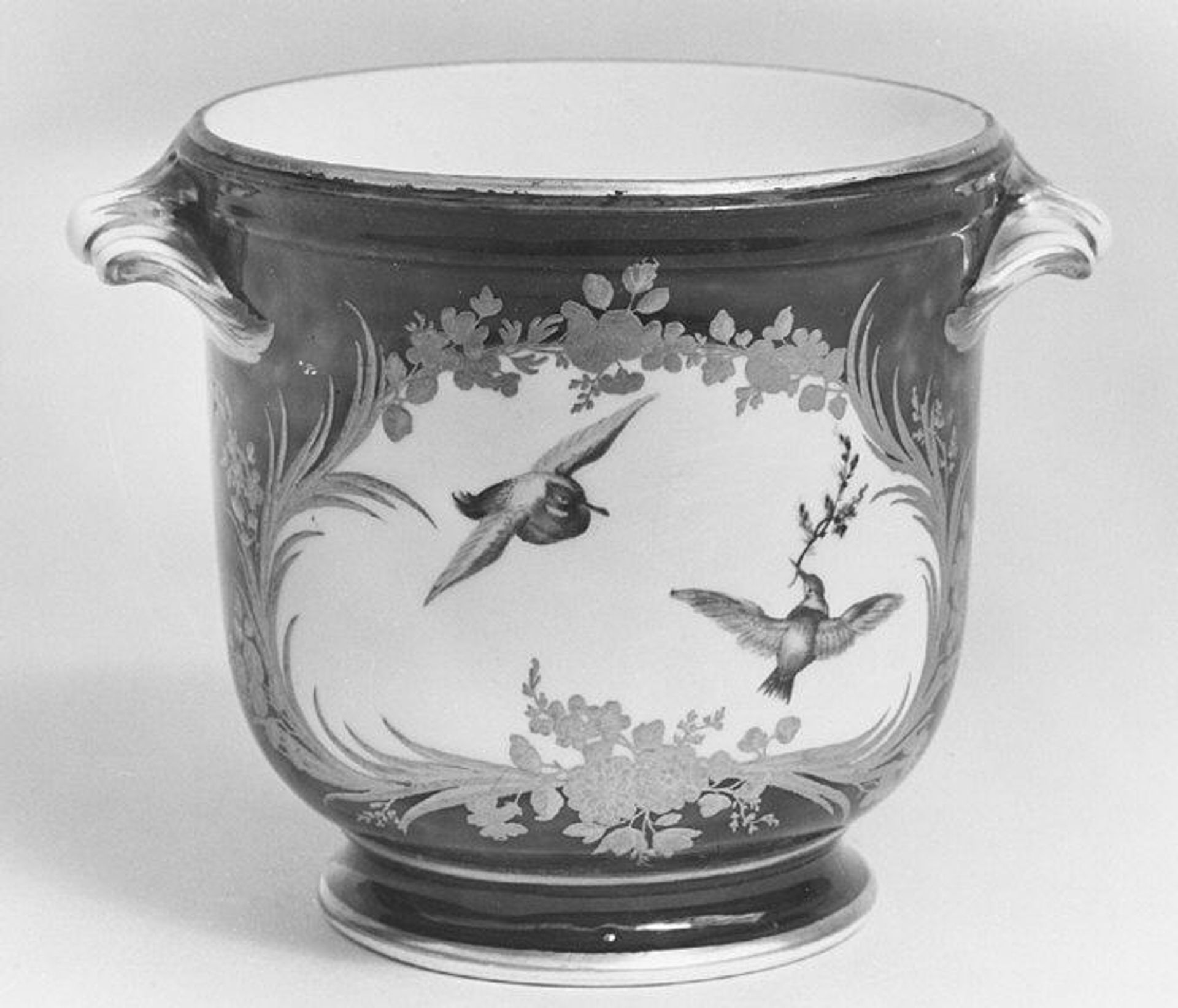
Curator: Let's examine this “Wine glass cooler (seau à verre)” created around 1754 by the Vincennes Manufactory, currently residing here at The Metropolitan Museum of Art. What strikes you immediately about it? Editor: It’s…precious. Incredibly delicate in its details, even from here. The Rococo style is just overflowing with ornamentation and it really reflects its period. Curator: Indeed. We see classic Rococo features in its asymmetry and the elegant interplay between line and form. It's crafted from soft-paste porcelain and embellished with delicate birds and floral designs. Notice how the birds occupy a central field framed by these lighter curvilinear motifs. Editor: It's difficult to ignore that it is porcelain, and the mastery that entails. Consider the physical labor involved in sourcing, processing, and firing the material itself. That porcelain, itself, was something akin to treasure. It’s not merely decorative, but rather speaks to its own means of production and also the era’s values about material. Curator: A perceptive point. The specific placement of those birds within the framed reserves, enclosed by rich color fields, directs the viewer’s eye and encourages an aesthetic contemplation independent of function. Editor: But the function matters immensely! The contrast between something as elevated as Rococo porcelain and this extremely banal service item used at dinner. These two elements coming together highlights social norms. This would have served a direct material purpose in the facilitation of aristocratic consumption. Curator: Interesting...though I would say, its visual characteristics create a balanced and harmonious unity which really speaks to the artistic ambitions of the Vincennes Manufactory at the time. Its structure elevates its functionality. Editor: Well, regardless, examining both aspects sheds some new light on this interesting porcelain cooler. Curator: Agreed, that's precisely what makes studying art so captivating: these layers of material context that give unique insight.
Wine glass cooler (seau à verre) 1754

Vincennes Manufactory
1740 - 1756
The Metropolitan Museum of Art
Metropolitan Museum of Art, New York, NYArtwork details
- Medium
- ceramic, porcelain, sculpture
- Dimensions
- Height: 4 5/8 in. (11.7 cm)
- Location
- Metropolitan Museum of Art, New York, NY
- Copyright
- Public Domain
Tags
ceramic
bird
flower
porcelain
sculpture
decorative-art
rococo
Comments
No comments
About this artwork
Curator: Let's examine this “Wine glass cooler (seau à verre)” created around 1754 by the Vincennes Manufactory, currently residing here at The Metropolitan Museum of Art. What strikes you immediately about it? Editor: It’s…precious. Incredibly delicate in its details, even from here. The Rococo style is just overflowing with ornamentation and it really reflects its period. Curator: Indeed. We see classic Rococo features in its asymmetry and the elegant interplay between line and form. It's crafted from soft-paste porcelain and embellished with delicate birds and floral designs. Notice how the birds occupy a central field framed by these lighter curvilinear motifs. Editor: It's difficult to ignore that it is porcelain, and the mastery that entails. Consider the physical labor involved in sourcing, processing, and firing the material itself. That porcelain, itself, was something akin to treasure. It’s not merely decorative, but rather speaks to its own means of production and also the era’s values about material. Curator: A perceptive point. The specific placement of those birds within the framed reserves, enclosed by rich color fields, directs the viewer’s eye and encourages an aesthetic contemplation independent of function. Editor: But the function matters immensely! The contrast between something as elevated as Rococo porcelain and this extremely banal service item used at dinner. These two elements coming together highlights social norms. This would have served a direct material purpose in the facilitation of aristocratic consumption. Curator: Interesting...though I would say, its visual characteristics create a balanced and harmonious unity which really speaks to the artistic ambitions of the Vincennes Manufactory at the time. Its structure elevates its functionality. Editor: Well, regardless, examining both aspects sheds some new light on this interesting porcelain cooler. Curator: Agreed, that's precisely what makes studying art so captivating: these layers of material context that give unique insight.
Comments
No comments