About this artwork
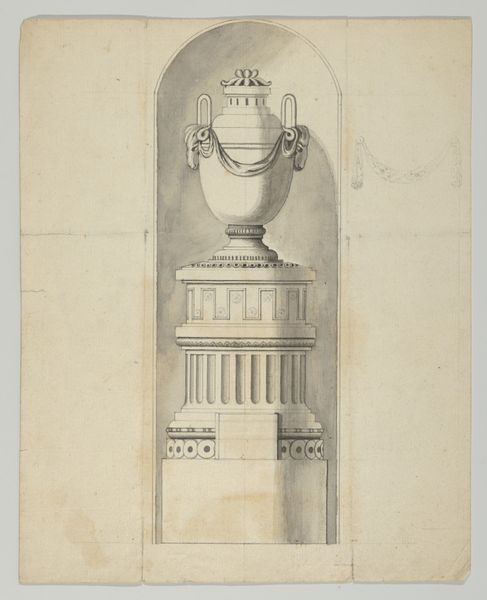
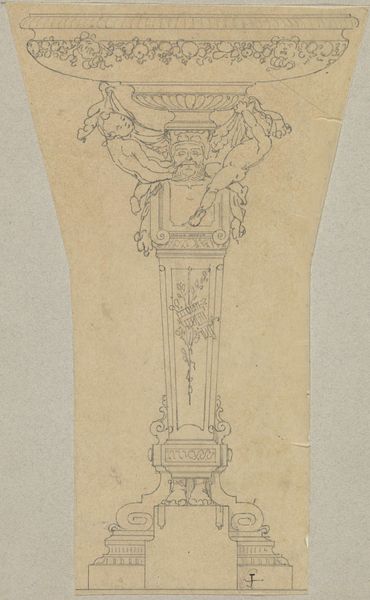
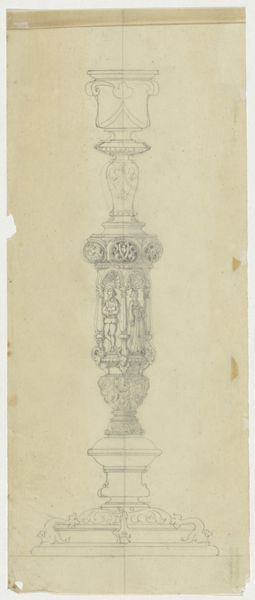
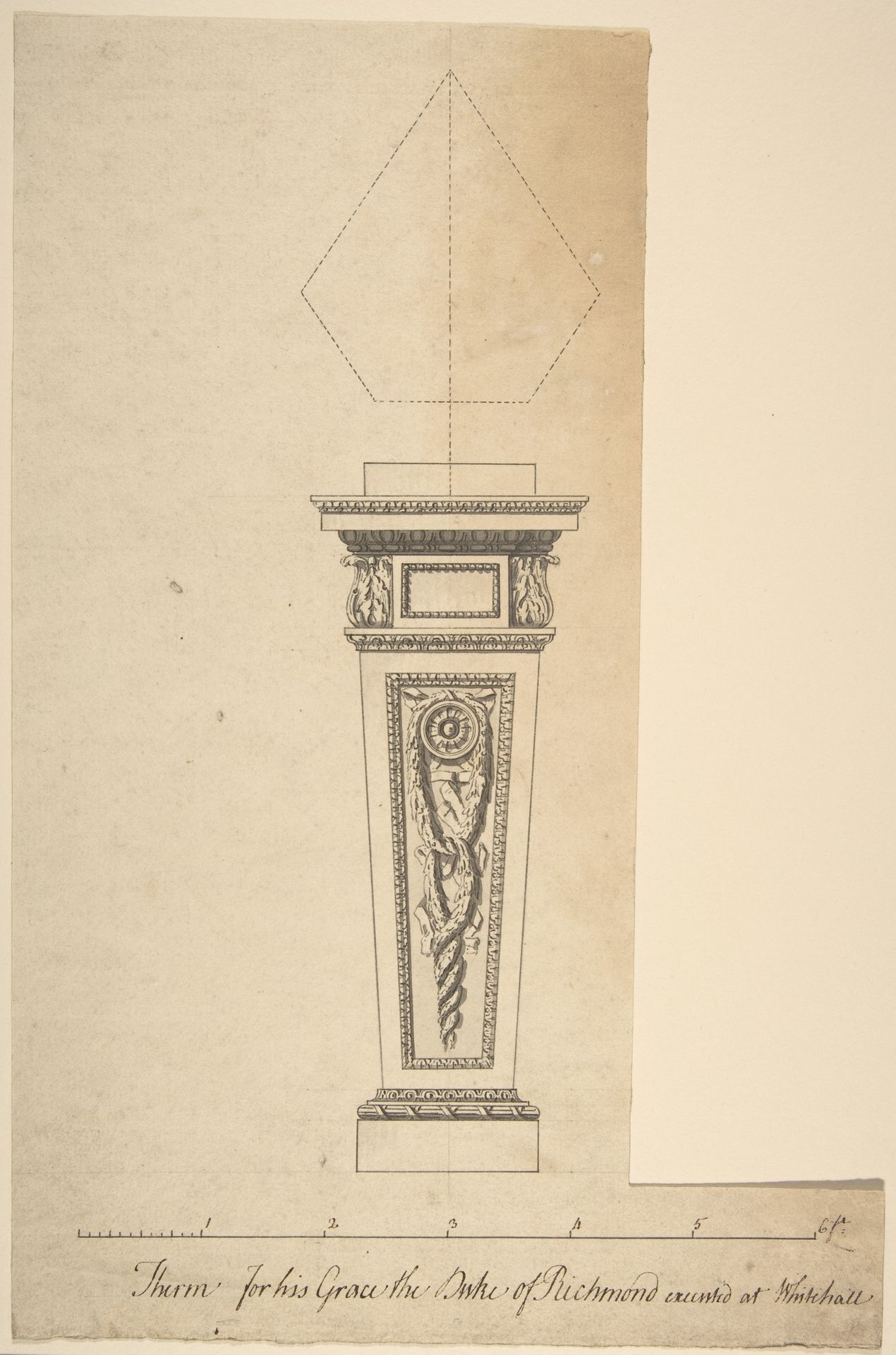
Sir William Chambers made this design for a pedestal, likely on paper with ink, for Richmond House in Whitehall, London. The drawing depicts a pedestal adorned with classical motifs, meticulously rendered with precise lines and attention to detail. But this isn't just a drawing. It’s a portal into the 18th century, when design was a rarefied skill, and the built environment a projection of power. Chambers, a leading architect of his day, would have relied on skilled draftsmen to realize this vision, each line representing hours of labor. And think of the stone carvers, who would translate this drawing into three dimensions. Their expertise was essential. Consider this design in the context of its time, the design reflects the hierarchical structure of society and the value placed on skilled labor. By appreciating the material, making, and the socio-economic context, we recognize the design's full significance, blurring the lines between art, craft, and social history.
Design for a Pedestal, for Richmond House, Whitehall, London 1755 - 1765

Sir William Chambers
1723 - 1796
The Metropolitan Museum of Art
Metropolitan Museum of Art, New York, NYArtwork details
- Medium
- drawing, print, pencil, architecture
- Dimensions
- sheet: 12 13/16 x 8 7/16 in. (32.6 x 21.5 cm)
- Location
- Metropolitan Museum of Art, New York, NY
- Copyright
- Public Domain
Tags
drawing
neoclacissism
pencil sketch
geometric
pencil
architecture
Comments
No comments
About this artwork
Sir William Chambers made this design for a pedestal, likely on paper with ink, for Richmond House in Whitehall, London. The drawing depicts a pedestal adorned with classical motifs, meticulously rendered with precise lines and attention to detail. But this isn't just a drawing. It’s a portal into the 18th century, when design was a rarefied skill, and the built environment a projection of power. Chambers, a leading architect of his day, would have relied on skilled draftsmen to realize this vision, each line representing hours of labor. And think of the stone carvers, who would translate this drawing into three dimensions. Their expertise was essential. Consider this design in the context of its time, the design reflects the hierarchical structure of society and the value placed on skilled labor. By appreciating the material, making, and the socio-economic context, we recognize the design's full significance, blurring the lines between art, craft, and social history.
Comments
No comments