1832
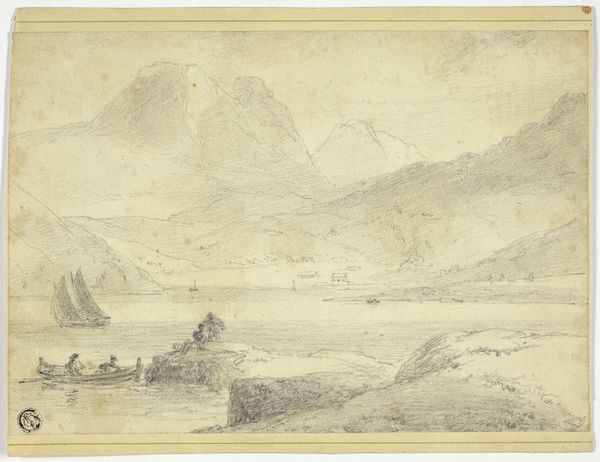
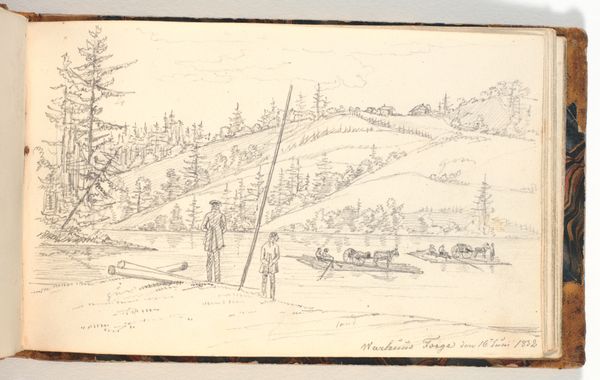
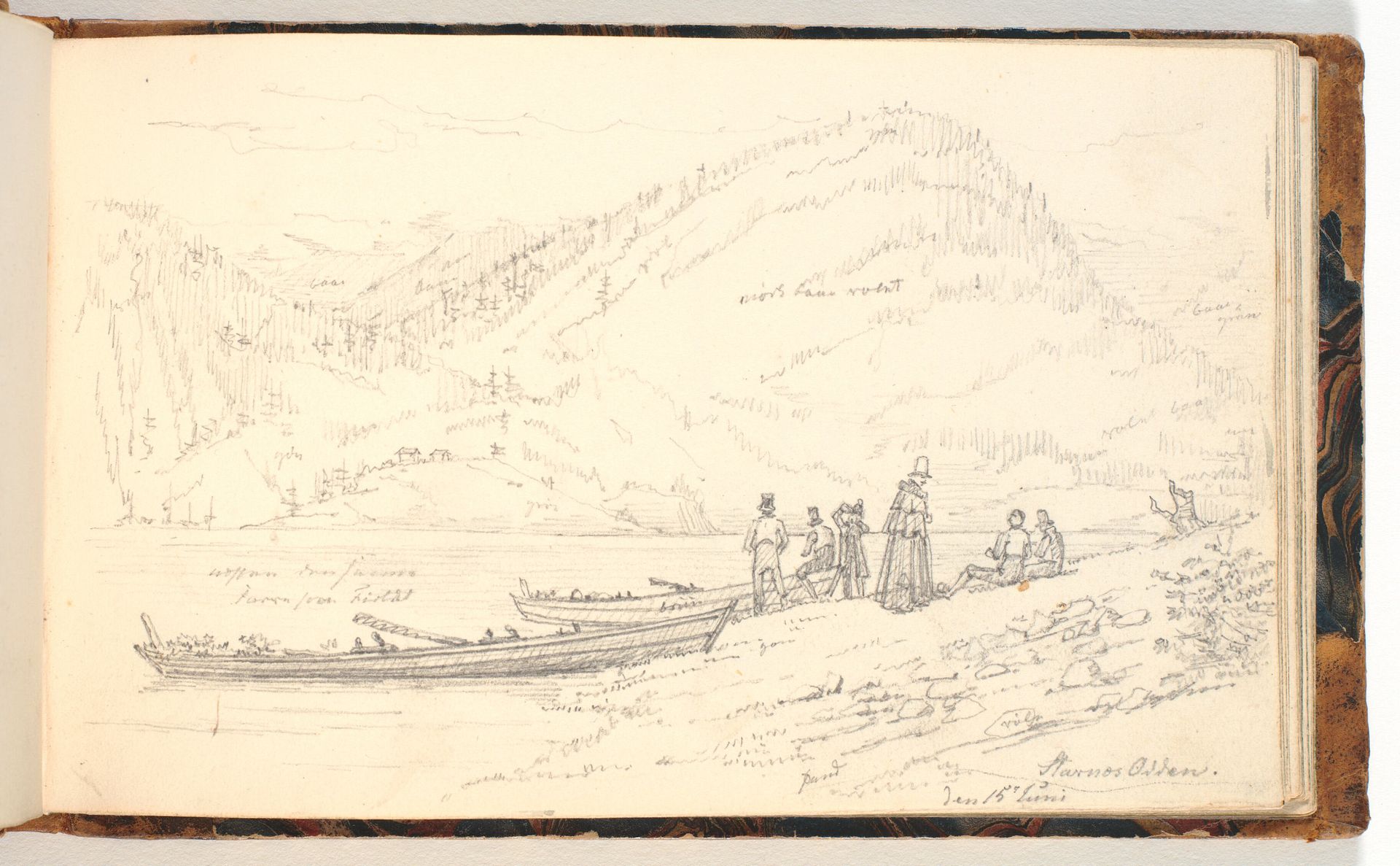
Fjordlandskab med figurer


Listen to curator's interpretation
Curatorial notes
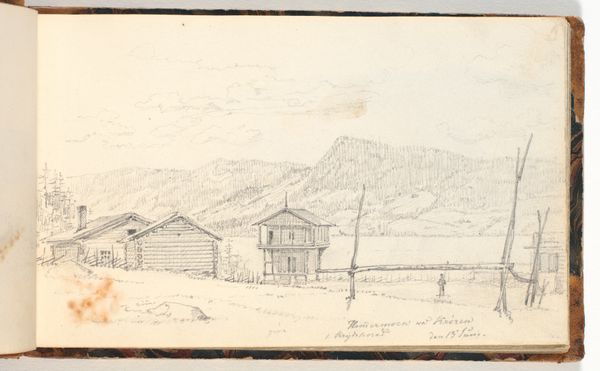
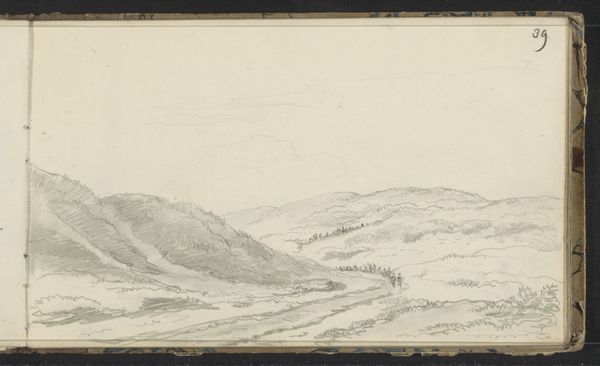
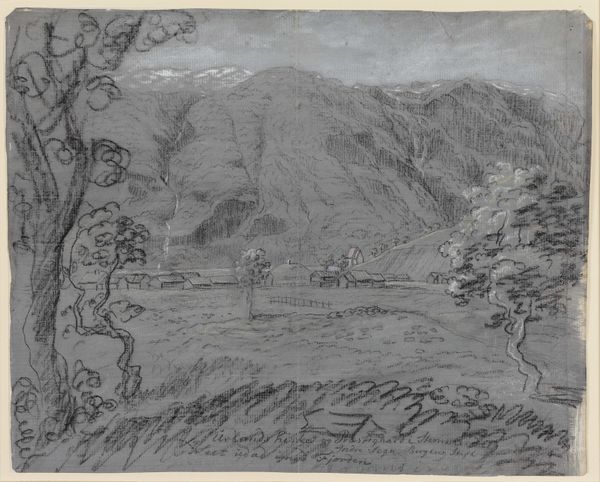
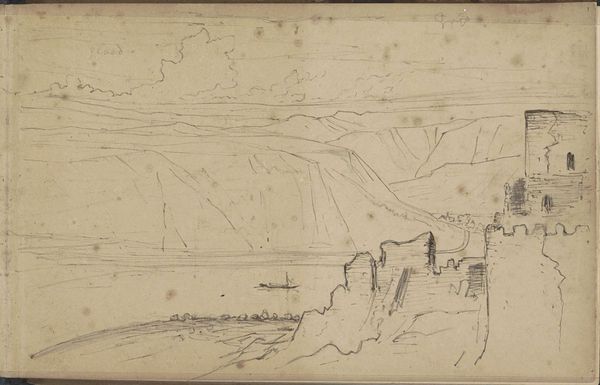
Editor: This drawing, "Fjordlandskab med figurer" or "Fjord Landscape with Figures," was made in 1832 by Martinus Rørbye. It’s a pencil and pen sketch right out of a sketchbook! I'm really struck by how delicate and serene the whole scene is; the figures almost blend into the landscape. What do you see in this piece? Curator: It’s fascinating how Rørbye captures the essence of Romanticism – that yearning for the sublime within nature. Note how he uses the fjord itself – its stillness reflecting both the vastness of the natural world, and, perhaps, the inner worlds of the figures he depicts. Look at how they are arranged – a small cluster of individuals almost dwarfed by the immensity around them. Editor: They do seem so small, but their presence gives scale to the landscape. Are they travelers or locals, do you think? Curator: Consider their clothing. That upright figure in what seems like traditional dress seems to assert a certain rootedness to this place. But alongside, others sport more modern garb, implying a point of encounter – between the old and new, perhaps? The fjord, as a symbol, then, holds layers: a geographical feature, a mirror to the soul, and a meeting place of cultures. How does this interpretation resonate with you? Editor: That makes sense. Seeing it as a meeting place adds a whole new dimension to the work. I hadn’t considered the clothing as a marker of cultural difference. Curator: Precisely. Symbols often gain power through the dialogues they encourage across time and space. Editor: That's a perspective I hadn't thought of. It’s been insightful looking at how even simple sketches carry so much cultural weight. Curator: Indeed. Art is often less about what is depicted, and more about the stories the images evoke within us, across generations.