About this artwork
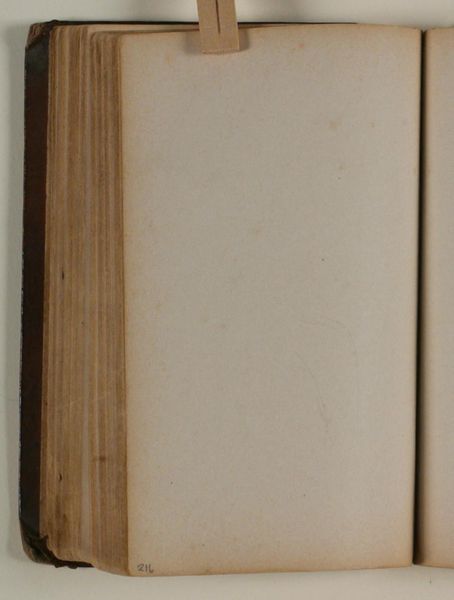
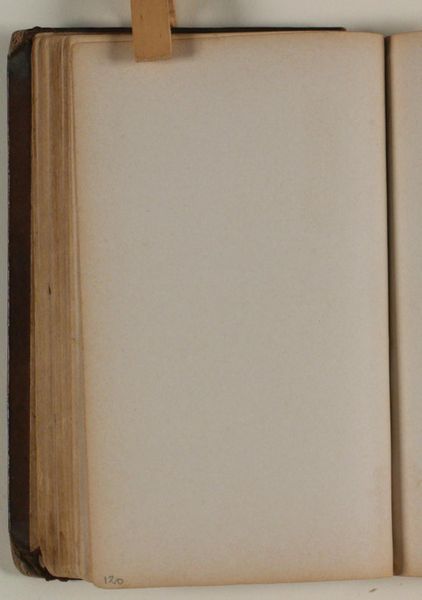
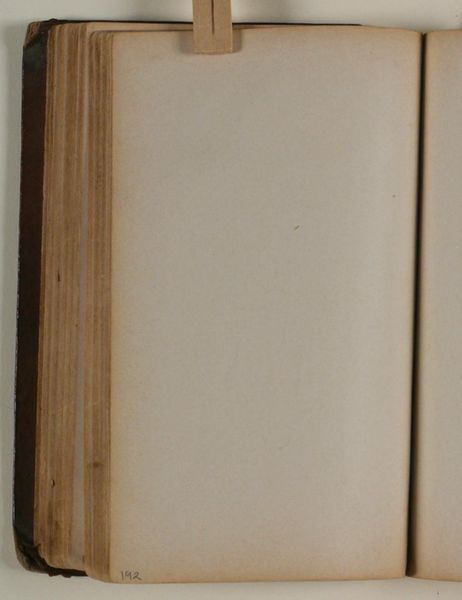
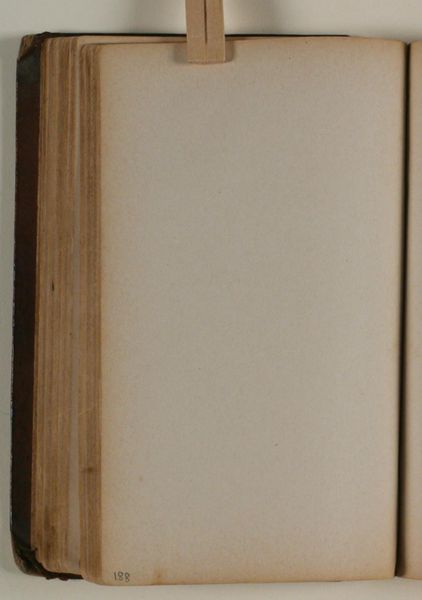
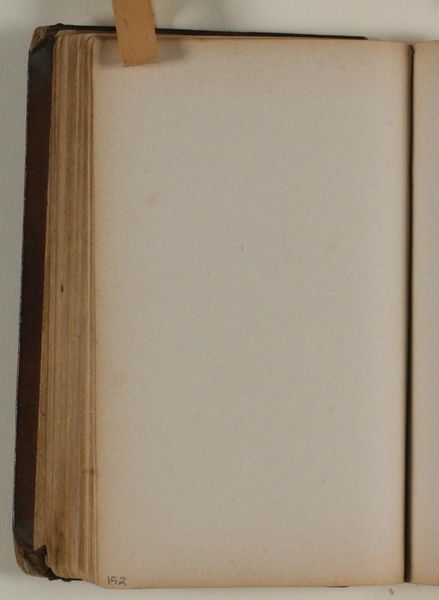
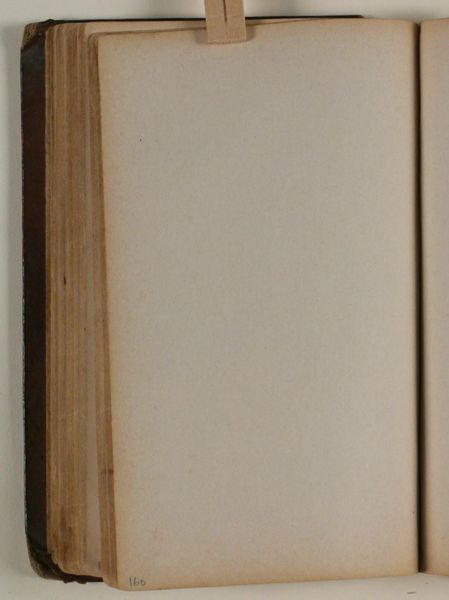
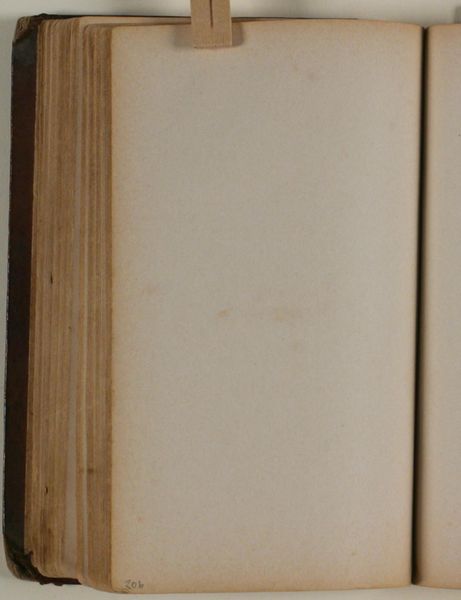
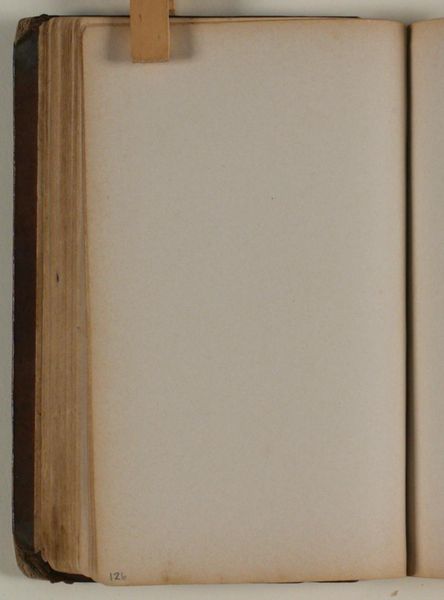
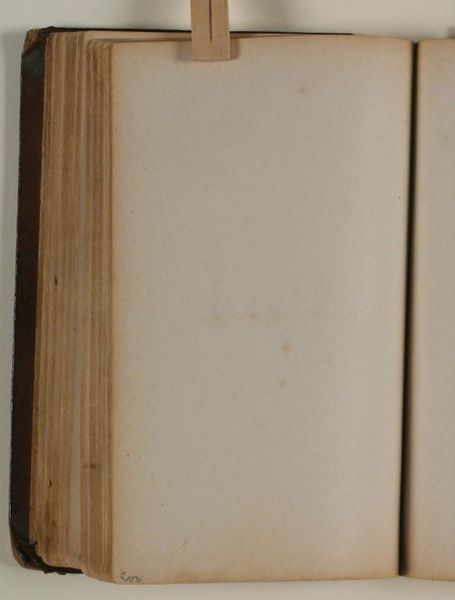
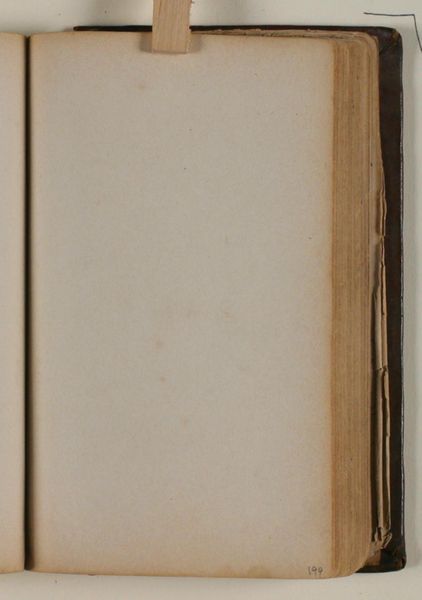
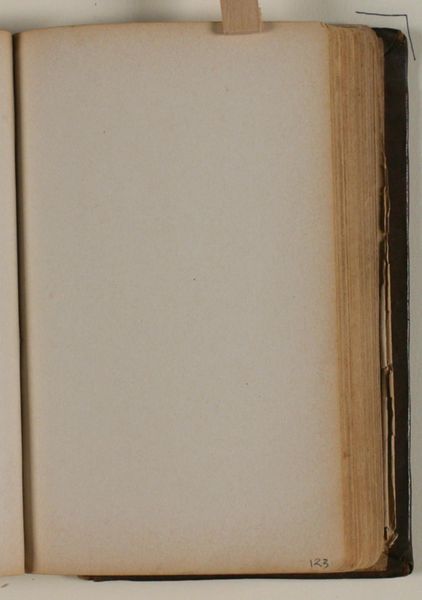
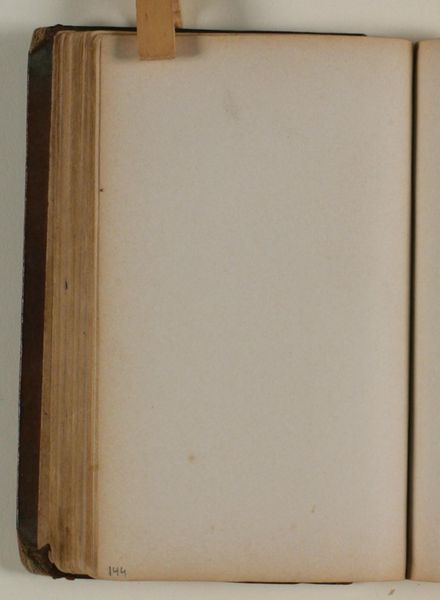
Editor: So, we’re looking at Niels Larsen Stevns' "Blank," a drawing on paper, sometime between 1864 and 1941. It's literally a blank page in an old book. I’m struck by the materiality – the aged paper, the visible binding. How do you interpret such a seemingly simple piece? Curator: I see this as an exploration of the very means of art production. Stevns forces us to confront paper as a material, not just a surface for representation. The labor involved in making that paper, the binding of the book, all point to a broader social context of material creation and consumption. Editor: Consumption? Curator: Absolutely. The book, a traditionally high-art object, now presents only a blank page. Where does its value reside? In the potential for what *could* be, or in the inherent worth of its constituent materials and the craft involved? Editor: That's interesting. So, the absence *is* the art, forcing us to think about the labor and resources behind even the simplest drawing? Curator: Precisely! And it questions the hierarchy that often elevates the ‘artist’s hand’ above the ‘mere’ maker of the materials. We might ask ourselves, whose labor is truly visible here? Editor: I never considered art from that perspective before – thinking about the whole system of production. It really changes how I view even traditionally "beautiful" pieces. Thanks for that! Curator: My pleasure. Seeing art as connected to material conditions can open up fascinating new avenues for interpretation and understanding. It helps us see past just aesthetics.
Blank
1864 - 1941


Artwork details
- Medium
- drawing, paper
- Location
- SMK - Statens Museum for Kunst
Tags
Comments
Share your thoughts
About this artwork
Editor: So, we’re looking at Niels Larsen Stevns' "Blank," a drawing on paper, sometime between 1864 and 1941. It's literally a blank page in an old book. I’m struck by the materiality – the aged paper, the visible binding. How do you interpret such a seemingly simple piece? Curator: I see this as an exploration of the very means of art production. Stevns forces us to confront paper as a material, not just a surface for representation. The labor involved in making that paper, the binding of the book, all point to a broader social context of material creation and consumption. Editor: Consumption? Curator: Absolutely. The book, a traditionally high-art object, now presents only a blank page. Where does its value reside? In the potential for what *could* be, or in the inherent worth of its constituent materials and the craft involved? Editor: That's interesting. So, the absence *is* the art, forcing us to think about the labor and resources behind even the simplest drawing? Curator: Precisely! And it questions the hierarchy that often elevates the ‘artist’s hand’ above the ‘mere’ maker of the materials. We might ask ourselves, whose labor is truly visible here? Editor: I never considered art from that perspective before – thinking about the whole system of production. It really changes how I view even traditionally "beautiful" pieces. Thanks for that! Curator: My pleasure. Seeing art as connected to material conditions can open up fascinating new avenues for interpretation and understanding. It helps us see past just aesthetics.
Comments
Share your thoughts