print, etching
#
baroque
# print
#
etching
#
figuration
#
line
#
genre-painting
#
history-painting
Dimensions: height 130 mm, width 100 mm
Copyright: Rijks Museum: Open Domain
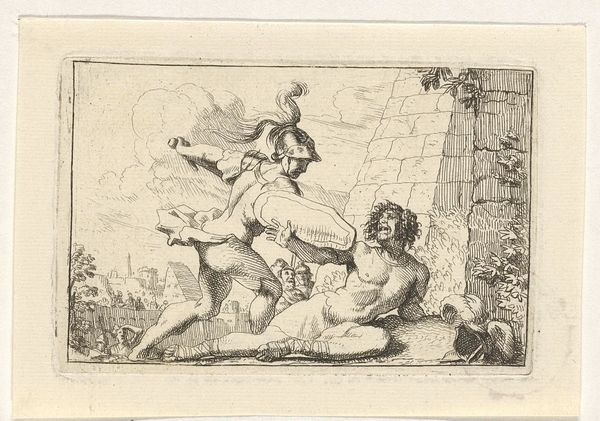
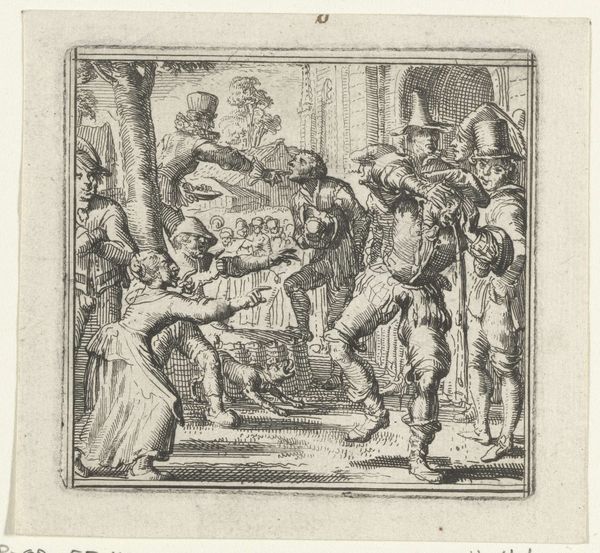
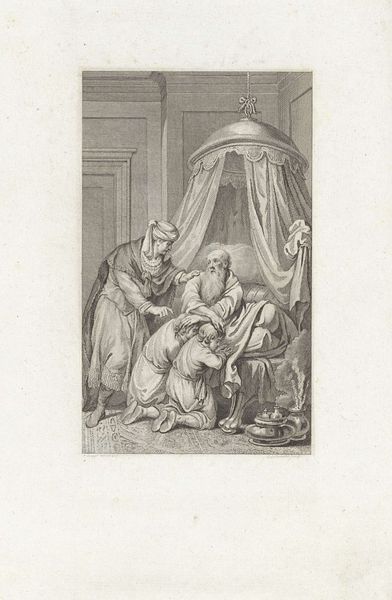
Editor: This etching, "The Prodigal Son Cast Out," made by Theodoor van Thulden sometime between 1616 and 1669, feels surprisingly dynamic despite its small scale and reliance on line. The story feels instantly recognizable even without knowing the biblical context. What resonates with you as you look at this image? Curator: I see a clash of societal expectations and individual desire, visualized through familiar archetypes. The prodigal son, almost nude, is pushed away, perhaps from a bar, judged for his excesses. He's barefoot and disheveled which suggests moral and spiritual poverty, echoing throughout time. Do you notice how the dog mimics his stance, almost mirroring his anxiety? Editor: Yes, the dog really amplifies that feeling of distress. It seems the artist is making strong use of that comparison. How would an audience of the time have understood the image compared to how we view it today? Curator: The dog may be an emblem of faithfulness but now displays aggression toward its master's actions. Contemporaries would recognize familiar elements from morality plays of that time. It shows more than simple narrative; it displays a cultural script being enacted, laden with moral judgment and illustrating societal fault lines on display and continued throughout generations. Do you notice the architectural background and the figures on the balcony? Editor: Yes, they almost create another stage in the scene. They seem more detached. So much for Christian values in a judgmental and austere Baroque age, right? Curator: Precisely. They frame the scene, perhaps representing divine judgement, or the unwavering societal gaze. These themes of transgression and judgment continue to carry potent cultural meaning, which allows art to act as a bridge, spanning both time and perception. Editor: Thinking about the dog as a mirror reflecting the son’s condition, and those distant figures adding layers of meaning – it really emphasizes the deep, continuous cultural significance this scene still carries. Curator: Absolutely, the ability to encapsulate complex ideas into readily understood imagery grants such works enduring relevance.
Comments
No comments
Be the first to comment and join the conversation on the ultimate creative platform.
 Collect
 React
React Comment
More like this