About this artwork
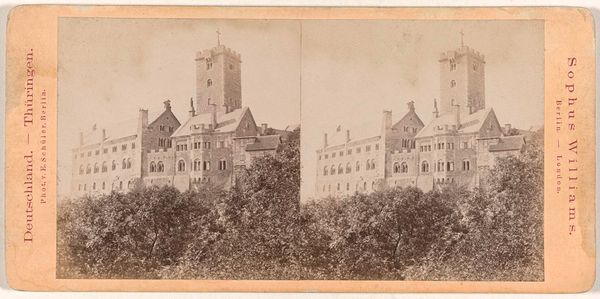
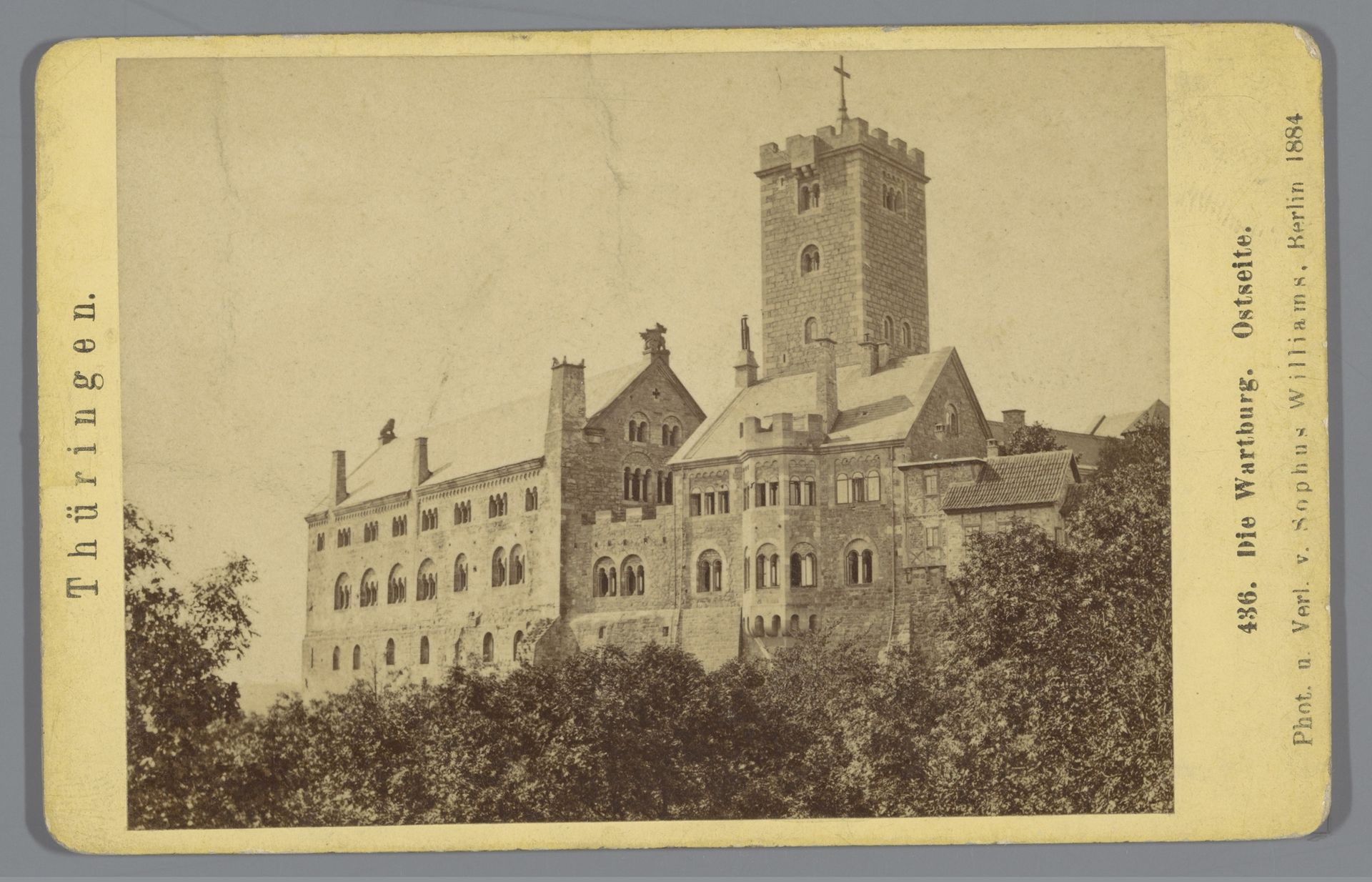
Editor: This gelatin silver print, "Oostzijde van de Wartburg in Eisenach, Duitsland" by Sophus Williams, captures the Wartburg Castle in 1884. The castle looming over the trees has such a somber and powerful feel, doesn't it? What symbols or stories do you think it evokes? Curator: Indeed. The Wartburg is not merely a structure of stone and mortar; it's a potent emblem steeped in cultural memory. Note the commanding tower topped with a cross, piercing the sky, juxtaposed against the dense, almost impenetrable foliage. Doesn’t this echo a Romantic yearning for the sublime, the spiritual reaching out from the earthly? Editor: Absolutely, the cross underscores a spiritual presence. Is there something about its location that resonates culturally? Curator: Precisely. The castle was a refuge for Martin Luther during his exile. This is where he translated the New Testament into German, a pivotal act in the Reformation. So, think of this image not just as a cityscape, but as a visual record imbued with the struggle for religious and intellectual freedom. The fortress becomes a container, if you will, holding profound, lasting ideas. Editor: It's fascinating how much history a single building can represent. Are there other aspects beyond Luther’s legacy embedded in this imagery? Curator: Reflect on how landscape photography, like this image, evolved alongside nationalist sentiments in 19th-century Europe. Doesn't this romanticized portrayal subtly reinforce a sense of German identity, associating it with strength, heritage, and the steadfastness of tradition? What do you observe? Editor: It hadn’t occurred to me that the image's focus on preservation also relates to creating a national identity. Thanks for expanding my understanding! Curator: My pleasure. Thinking of places and images as symbols connects them deeply to us and to one another, and the Wartburg in this photograph continues to exert influence today.

Artwork details
- Dimensions
- height 68 mm, width 106 mm
- Copyright
- Rijks Museum: Open Domain
Comments
No comments
About this artwork
Editor: This gelatin silver print, "Oostzijde van de Wartburg in Eisenach, Duitsland" by Sophus Williams, captures the Wartburg Castle in 1884. The castle looming over the trees has such a somber and powerful feel, doesn't it? What symbols or stories do you think it evokes? Curator: Indeed. The Wartburg is not merely a structure of stone and mortar; it's a potent emblem steeped in cultural memory. Note the commanding tower topped with a cross, piercing the sky, juxtaposed against the dense, almost impenetrable foliage. Doesn’t this echo a Romantic yearning for the sublime, the spiritual reaching out from the earthly? Editor: Absolutely, the cross underscores a spiritual presence. Is there something about its location that resonates culturally? Curator: Precisely. The castle was a refuge for Martin Luther during his exile. This is where he translated the New Testament into German, a pivotal act in the Reformation. So, think of this image not just as a cityscape, but as a visual record imbued with the struggle for religious and intellectual freedom. The fortress becomes a container, if you will, holding profound, lasting ideas. Editor: It's fascinating how much history a single building can represent. Are there other aspects beyond Luther’s legacy embedded in this imagery? Curator: Reflect on how landscape photography, like this image, evolved alongside nationalist sentiments in 19th-century Europe. Doesn't this romanticized portrayal subtly reinforce a sense of German identity, associating it with strength, heritage, and the steadfastness of tradition? What do you observe? Editor: It hadn’t occurred to me that the image's focus on preservation also relates to creating a national identity. Thanks for expanding my understanding! Curator: My pleasure. Thinking of places and images as symbols connects them deeply to us and to one another, and the Wartburg in this photograph continues to exert influence today.
Comments
No comments