About this artwork
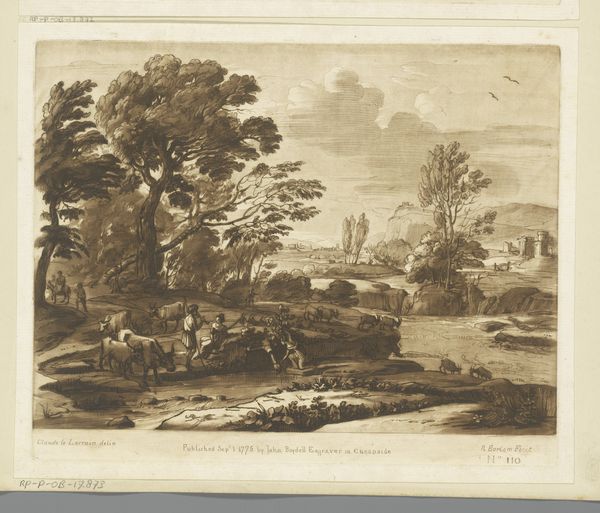
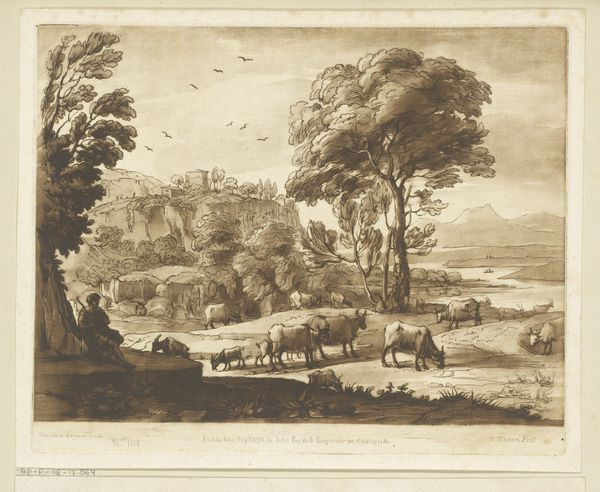
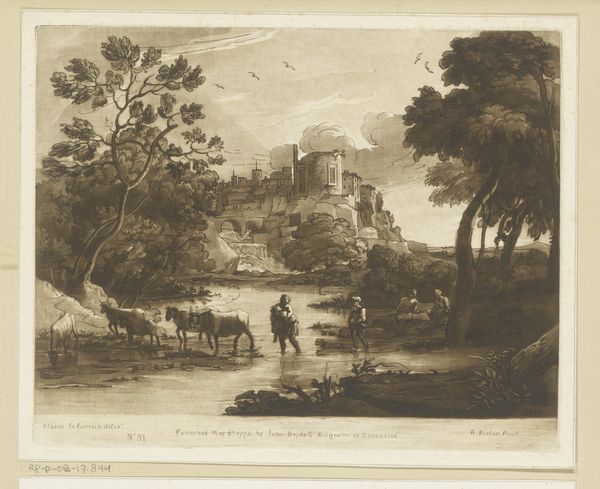
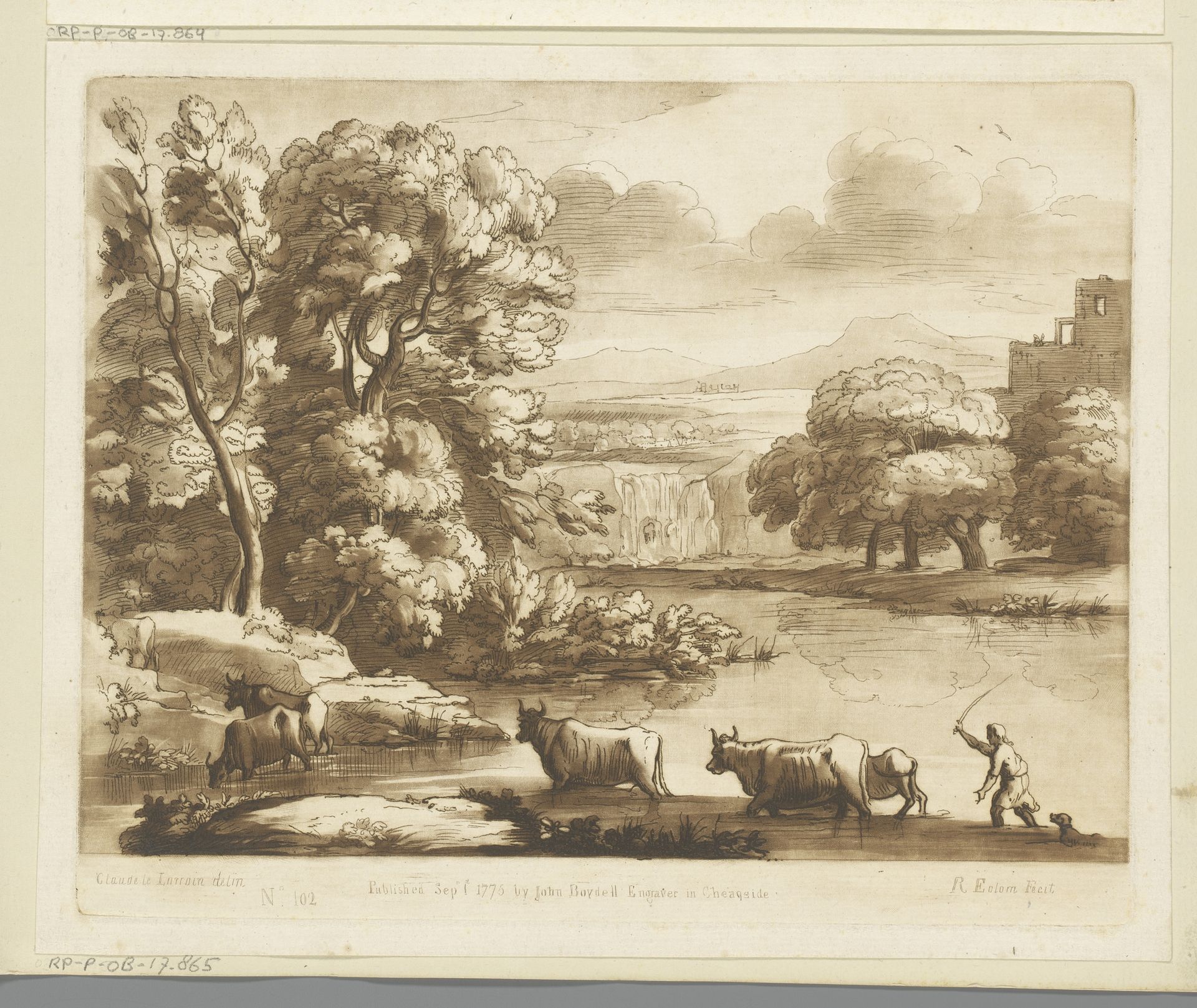
This landscape with waterfall, five oxen and a herder crossing a river was etched by Richard Earlom around 1771 in England. It’s a pastoral scene, seemingly simple, but etched within it is the transformation of the British countryside. Consider the time: the late 18th century, when agricultural practices were intensifying. Land enclosure acts were privatizing common lands, displacing rural communities and changing their traditional lifestyles. We can see in this image a kind of nostalgia for an older, idealized vision of rural life, an imagined past as the nation moved towards industrialization. Earlom's print is not just a depiction of nature; it's a commentary on the changing social landscape. It invites us to reflect on the relationship between art, history, and the social forces that shape our perception of the world around us. To understand Earlom’s art, we need to look at land records, agricultural reports, and even literature of the time, teasing out the social and institutional forces that shaped its making.
Landschap met waterval en vijf ossen en herder die een rivier oversteken Possibly 1775 - 1779

Richard Earlom
1743 - 1822Location
RijksmuseumArtwork details
- Dimensions
- height 208 mm, width 258 mm
- Location
- Rijksmuseum
- Copyright
- Rijks Museum: Open Domain
Comments
No comments
About this artwork
This landscape with waterfall, five oxen and a herder crossing a river was etched by Richard Earlom around 1771 in England. It’s a pastoral scene, seemingly simple, but etched within it is the transformation of the British countryside. Consider the time: the late 18th century, when agricultural practices were intensifying. Land enclosure acts were privatizing common lands, displacing rural communities and changing their traditional lifestyles. We can see in this image a kind of nostalgia for an older, idealized vision of rural life, an imagined past as the nation moved towards industrialization. Earlom's print is not just a depiction of nature; it's a commentary on the changing social landscape. It invites us to reflect on the relationship between art, history, and the social forces that shape our perception of the world around us. To understand Earlom’s art, we need to look at land records, agricultural reports, and even literature of the time, teasing out the social and institutional forces that shaped its making.
Comments
No comments