About this artwork
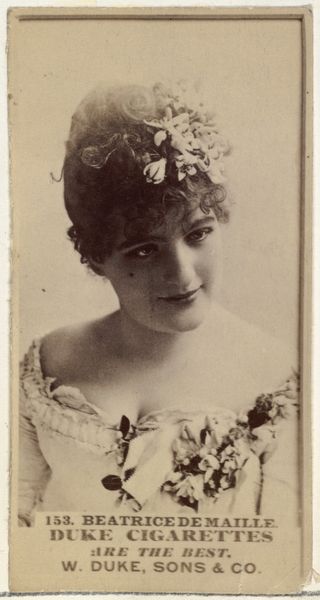
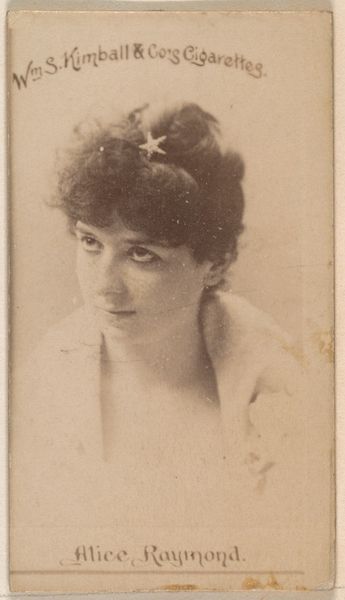
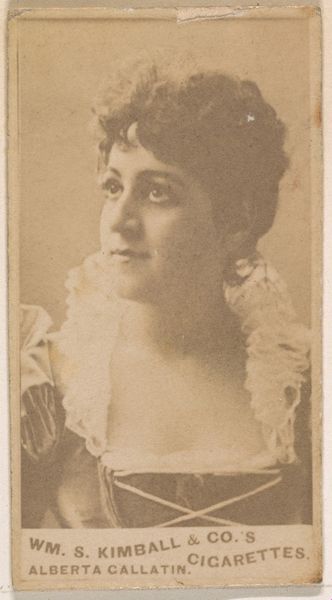
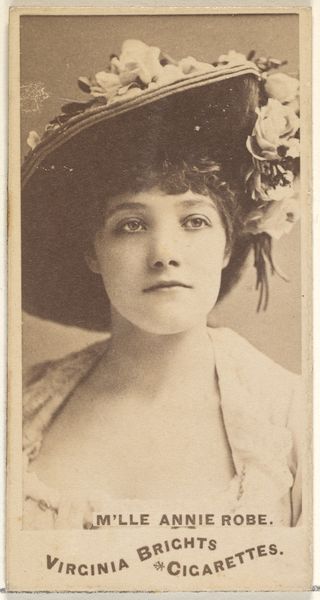
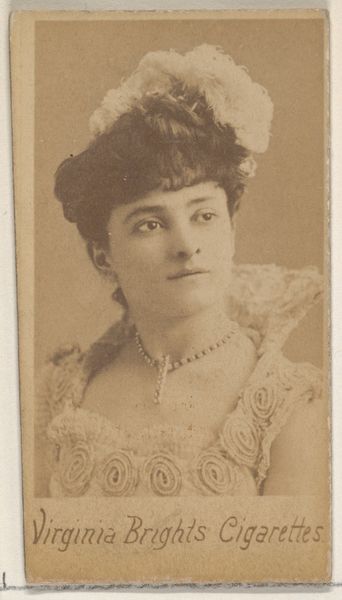
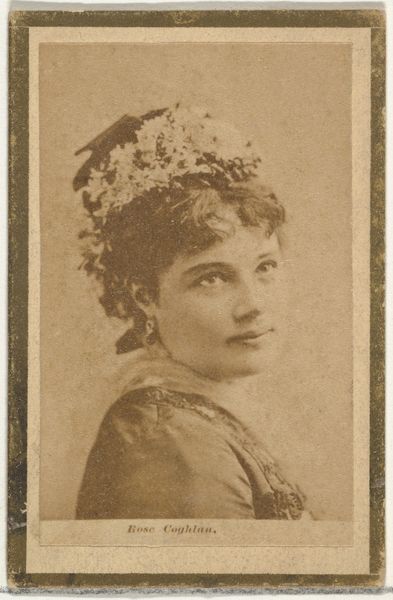
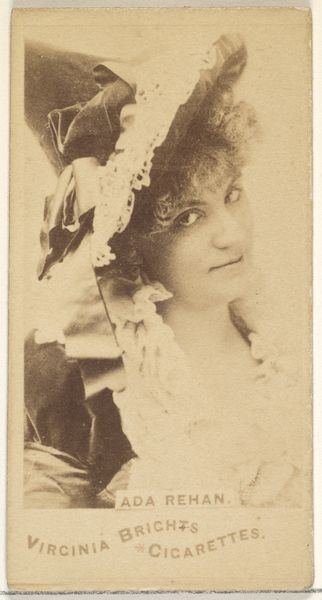
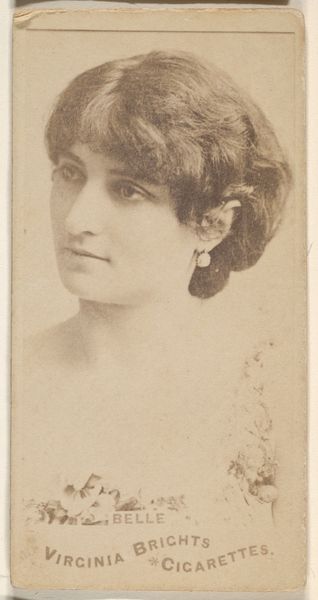
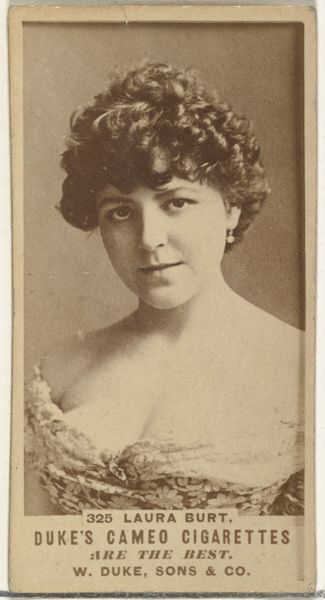
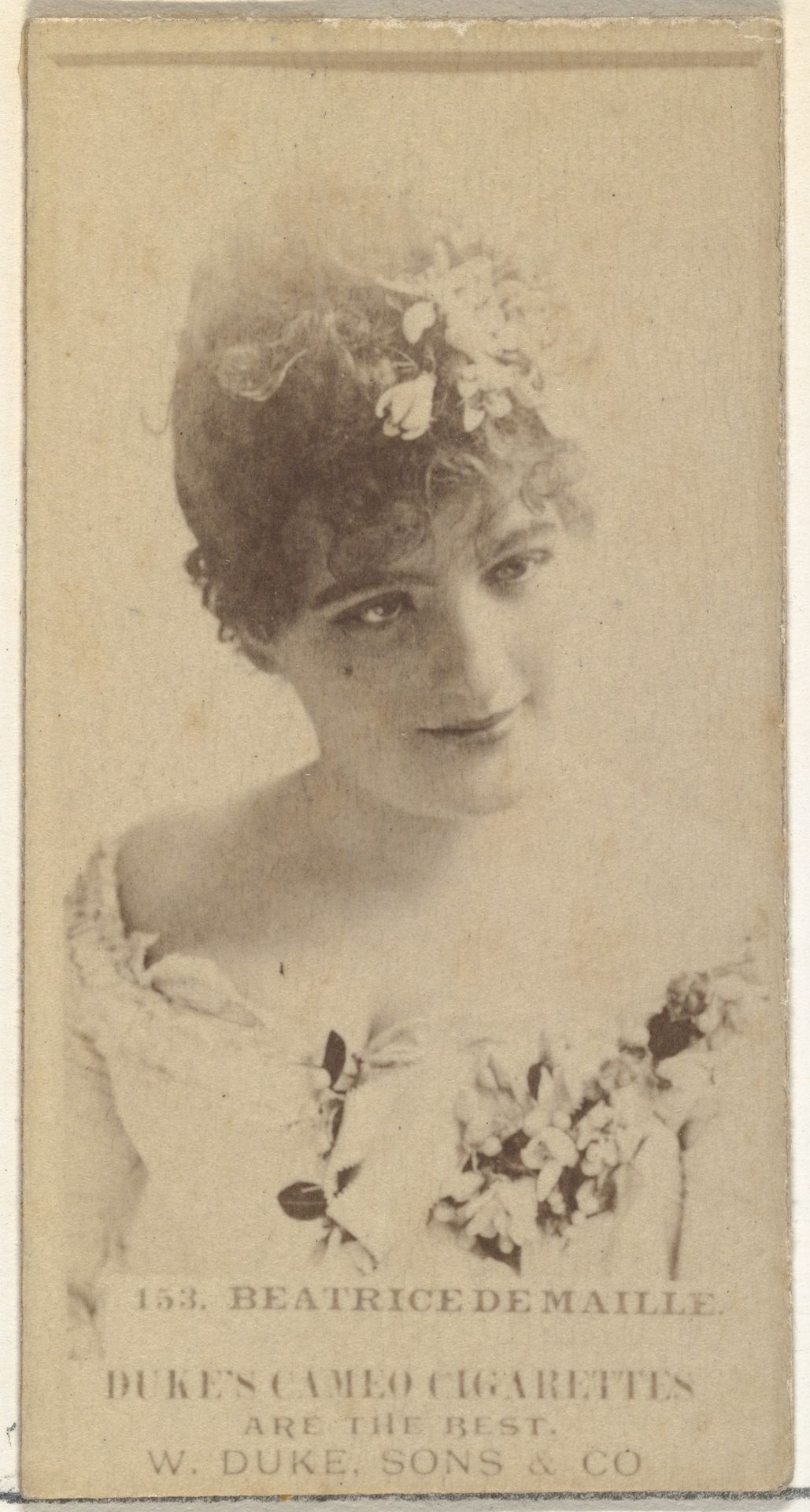
"Card Number 153, Beatrice De Maille," was produced by W. Duke, Sons & Co., likely around the turn of the century, as a promotional item for Cameo Cigarettes. Notice how the sepia tone casts a soft, almost dreamlike quality over the image. The composition is simple: a portrait, cropped closely to focus on the actress's face and upper body. Yet, the arrangement of light and shadow, combined with the delicate floral adornments, directs our gaze in particular ways. Consider the semiotics at play here. The actress, beautifully posed, becomes a signifier for the cigarette brand—evoking a sense of glamour and sophistication. The card itself functions as a cultural artifact. It speaks volumes about the marketing strategies of the time and the roles women occupied in public imagination. It invites us to consider the layers of meaning embedded in something as seemingly straightforward as a cigarette card.
Card Number 153, Beatrice De Maille, from the Actors and Actresses series (N145-5) issued by Duke Sons & Co. to promote Cameo Cigarettes 1880s

W. Duke, Sons & Co.
1870 - 1920
The Metropolitan Museum of Art
Metropolitan Museum of Art, New York, NYArtwork details
- Medium
- drawing, print, photography, albumen-print
- Dimensions
- Sheet: 2 11/16 × 1 3/8 in. (6.8 × 3.5 cm)
- Location
- Metropolitan Museum of Art, New York, NY
- Copyright
- Public Domain
Tags
portrait
drawing
figuration
photography
19th century
albumen-print
Comments
No comments
About this artwork
"Card Number 153, Beatrice De Maille," was produced by W. Duke, Sons & Co., likely around the turn of the century, as a promotional item for Cameo Cigarettes. Notice how the sepia tone casts a soft, almost dreamlike quality over the image. The composition is simple: a portrait, cropped closely to focus on the actress's face and upper body. Yet, the arrangement of light and shadow, combined with the delicate floral adornments, directs our gaze in particular ways. Consider the semiotics at play here. The actress, beautifully posed, becomes a signifier for the cigarette brand—evoking a sense of glamour and sophistication. The card itself functions as a cultural artifact. It speaks volumes about the marketing strategies of the time and the roles women occupied in public imagination. It invites us to consider the layers of meaning embedded in something as seemingly straightforward as a cigarette card.
Comments
No comments