About this artwork
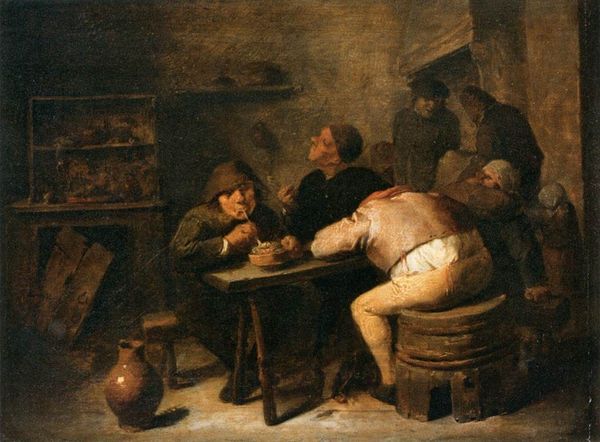
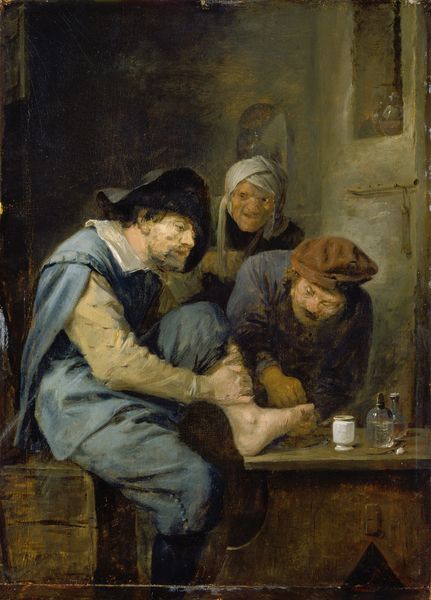
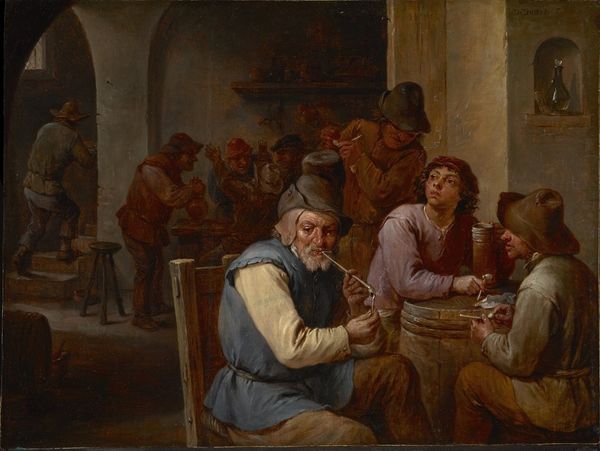
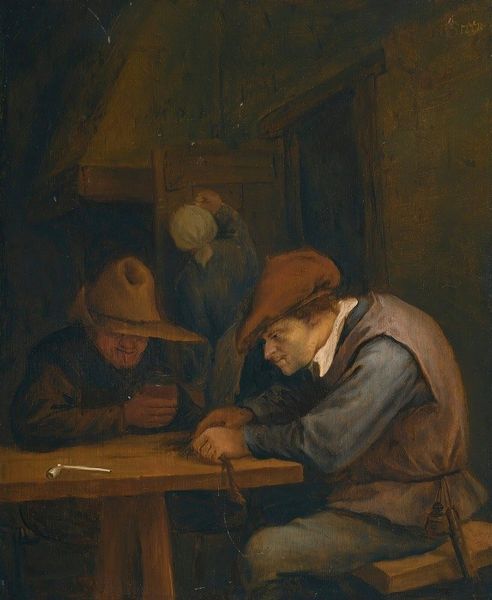
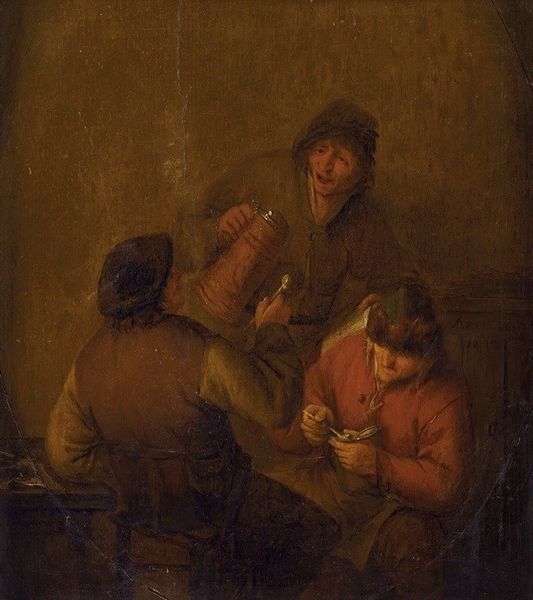
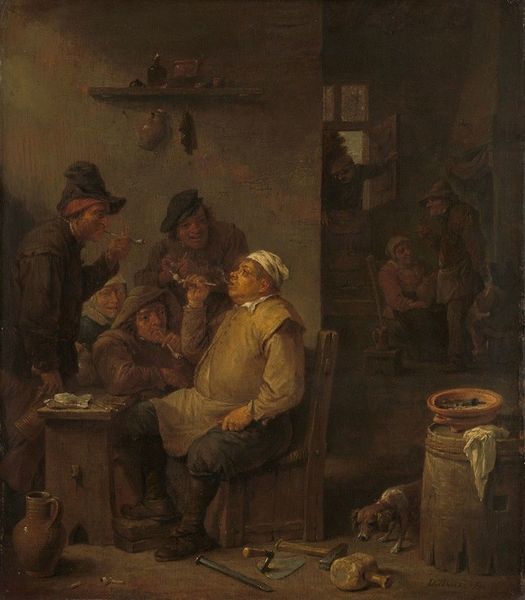
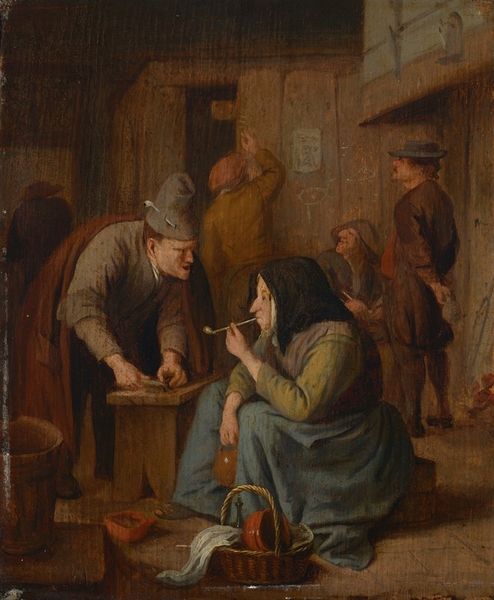
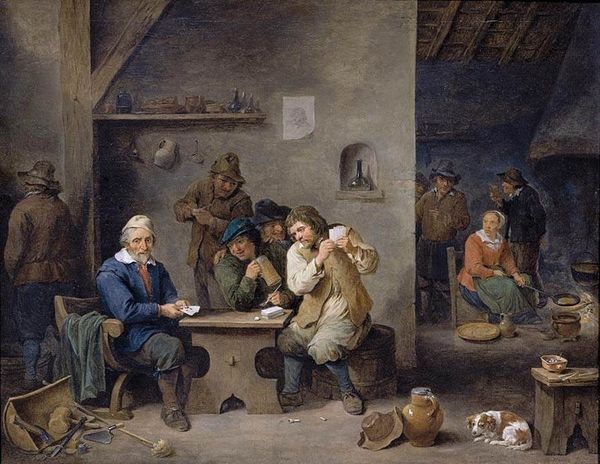
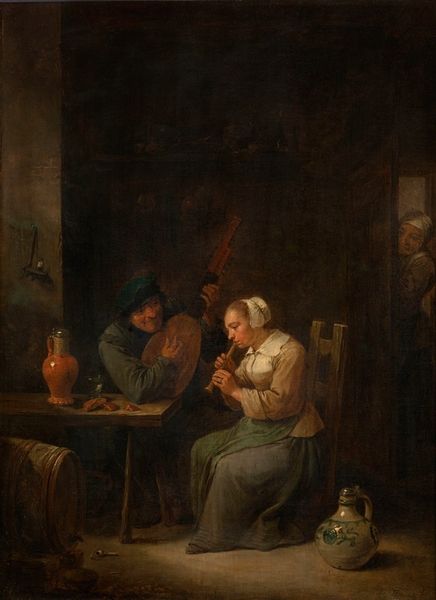
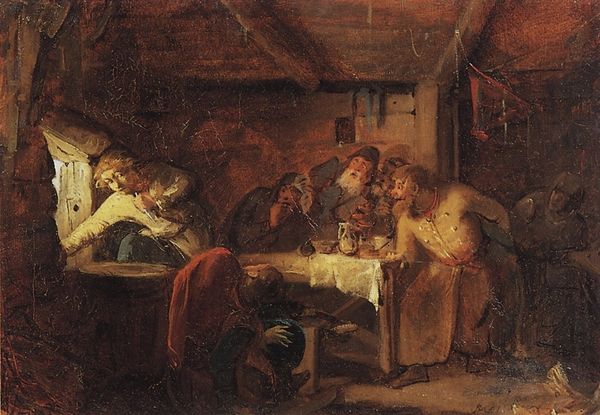
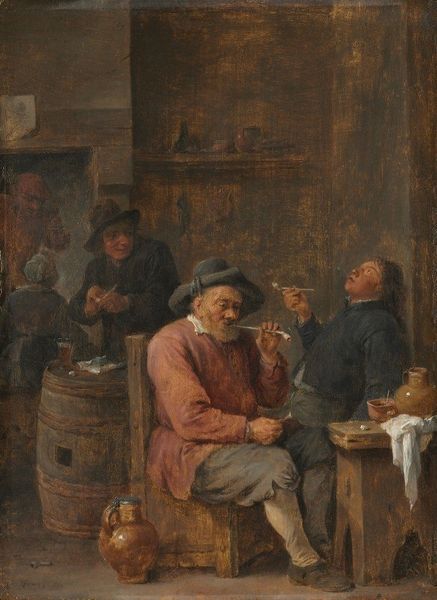
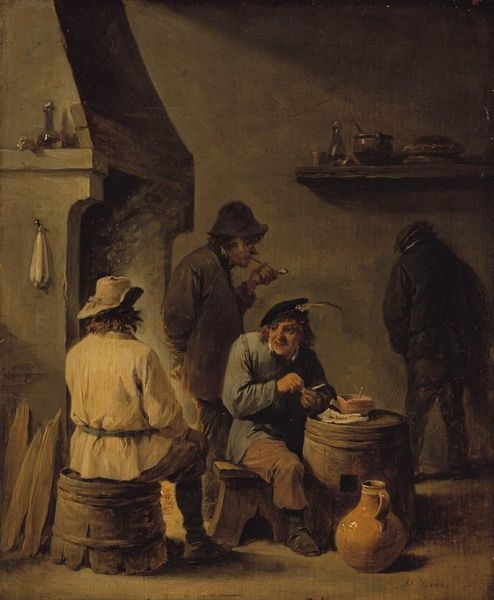
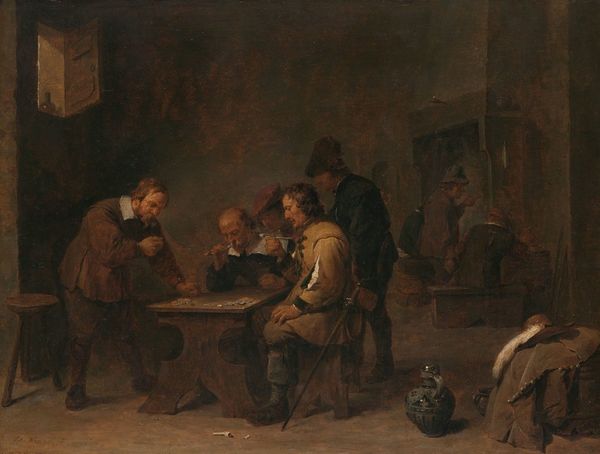
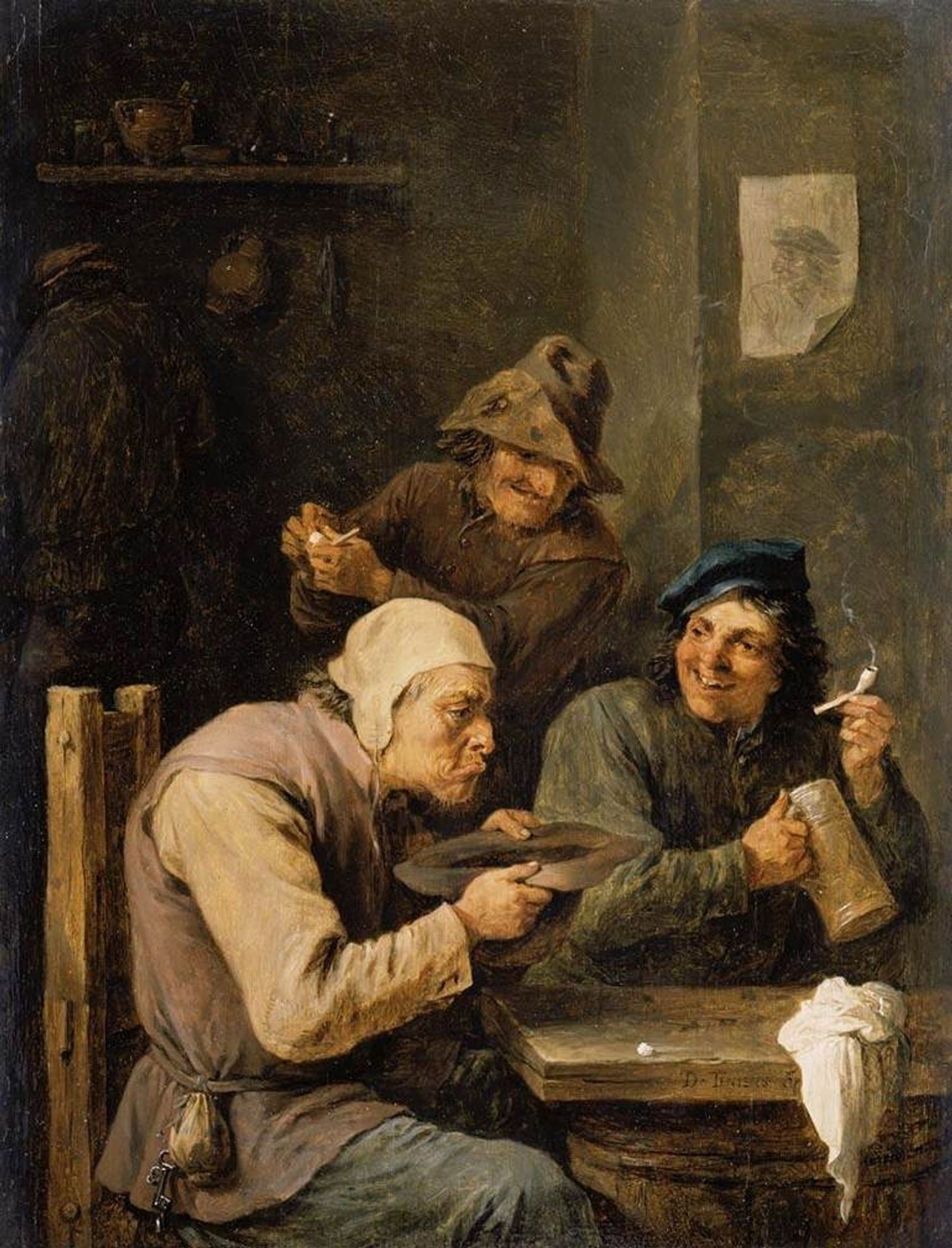
Editor: Here we have “The Hustle Cap” by David Teniers the Younger, an oil painting that appears to capture a casual moment. There’s a certain grittiness, almost a social realism to it, with these figures gathered, maybe scheming, at a table. How do you interpret this work, particularly within its historical context? Curator: This painting offers us a window into 17th-century Flemish society, a period marked by significant social stratification and economic disparities. Genre paintings like this often served as moralizing narratives, didn't they? Consider the title: "The Hustle Cap." It immediately suggests a focus on marginal figures, those navigating a world where survival demanded cunning. Editor: I see what you mean. There's a suggestion of lived experiences etched on their faces. How do we read their depiction then, beyond just a picturesque scene? Curator: Exactly. It is important to note how the art may interact and contribute with notions of poverty and labour of the era. Are these figures romanticized, or is Teniers presenting a more critical view of the socioeconomic realities? Are they celebrated as resourceful individuals, or are they cautionary figures embodying vice and moral decay? What does it say about who gets represented in art and how? Editor: That's a powerful point. It prompts us to question our own assumptions about class, and how such narratives have been historically framed and who got to do the framing, literally and figuratively. Curator: Precisely! By examining the social dynamics embedded in the scene, we can explore larger conversations about power, representation, and the construction of social identity. This wasn't just about aesthetic pleasure; it was about reinforcing, or perhaps subtly subverting, the dominant ideologies of the time. Editor: I had not thought about that aspect! It enriches our viewing experience beyond the purely visual and opens up so many points for dialogue. Curator: Indeed, and art is always at its best when it ignites dialogue and pushes us to think critically about the world around us.

Artwork details
- Medium
- oil-paint
- Dimensions
- 34 x 24 cm
- Location
- Private Collection
- Copyright
- Public domain
Tags
baroque
oil-paint
landscape
figuration
oil painting
group-portraits
genre-painting
realism
Comments
Be the first to share your thoughts about this work.
About this artwork
Editor: Here we have “The Hustle Cap” by David Teniers the Younger, an oil painting that appears to capture a casual moment. There’s a certain grittiness, almost a social realism to it, with these figures gathered, maybe scheming, at a table. How do you interpret this work, particularly within its historical context? Curator: This painting offers us a window into 17th-century Flemish society, a period marked by significant social stratification and economic disparities. Genre paintings like this often served as moralizing narratives, didn't they? Consider the title: "The Hustle Cap." It immediately suggests a focus on marginal figures, those navigating a world where survival demanded cunning. Editor: I see what you mean. There's a suggestion of lived experiences etched on their faces. How do we read their depiction then, beyond just a picturesque scene? Curator: Exactly. It is important to note how the art may interact and contribute with notions of poverty and labour of the era. Are these figures romanticized, or is Teniers presenting a more critical view of the socioeconomic realities? Are they celebrated as resourceful individuals, or are they cautionary figures embodying vice and moral decay? What does it say about who gets represented in art and how? Editor: That's a powerful point. It prompts us to question our own assumptions about class, and how such narratives have been historically framed and who got to do the framing, literally and figuratively. Curator: Precisely! By examining the social dynamics embedded in the scene, we can explore larger conversations about power, representation, and the construction of social identity. This wasn't just about aesthetic pleasure; it was about reinforcing, or perhaps subtly subverting, the dominant ideologies of the time. Editor: I had not thought about that aspect! It enriches our viewing experience beyond the purely visual and opens up so many points for dialogue. Curator: Indeed, and art is always at its best when it ignites dialogue and pushes us to think critically about the world around us.
Comments
Be the first to share your thoughts about this work.