About this artwork
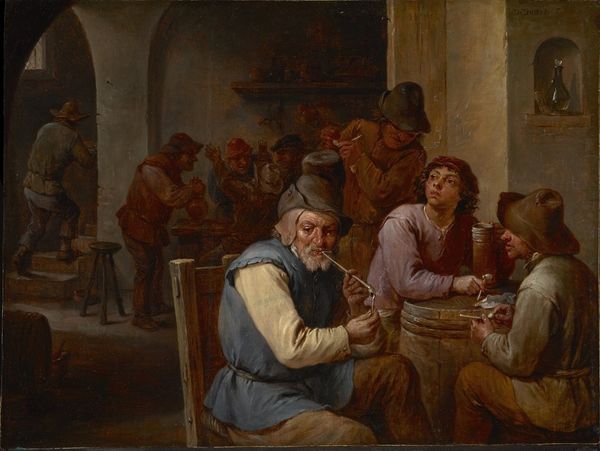
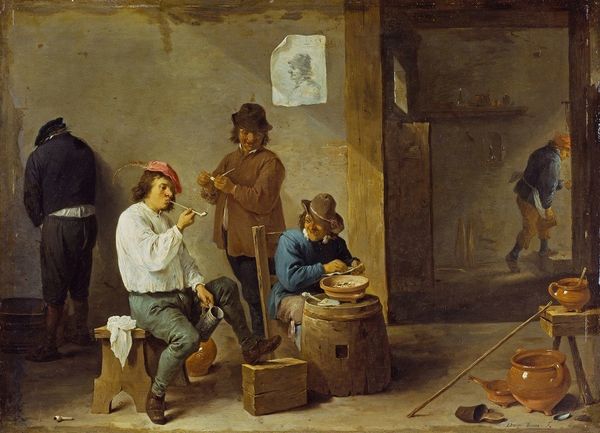
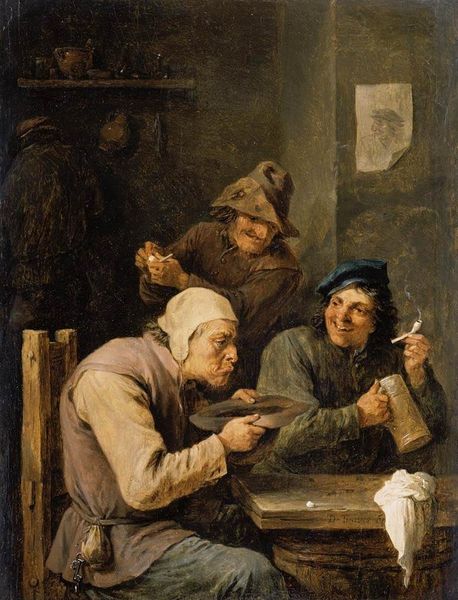
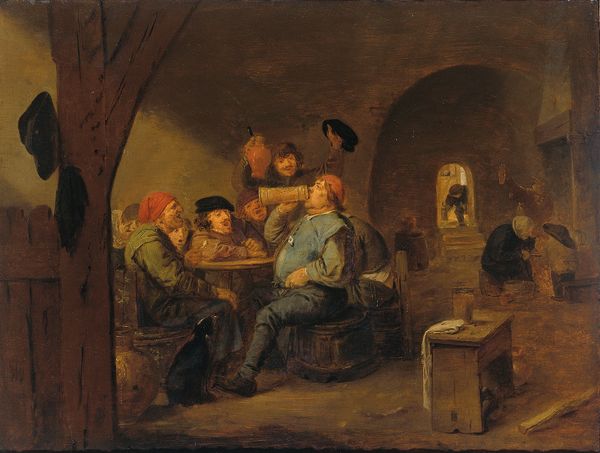
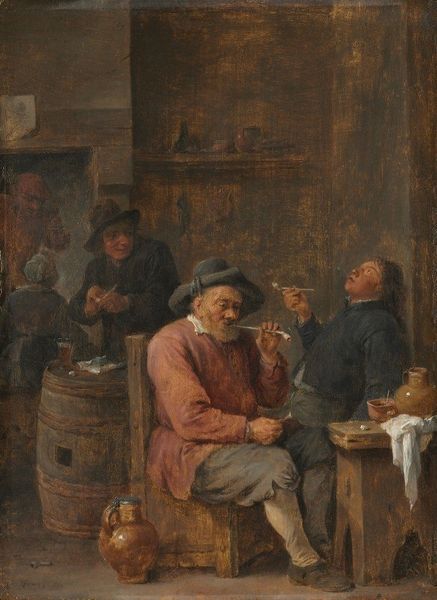
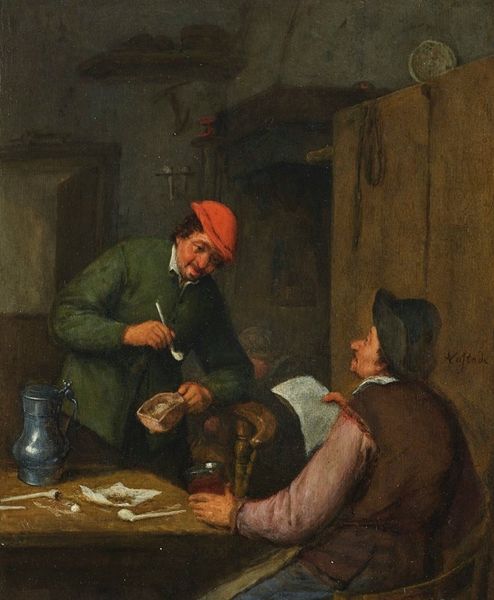
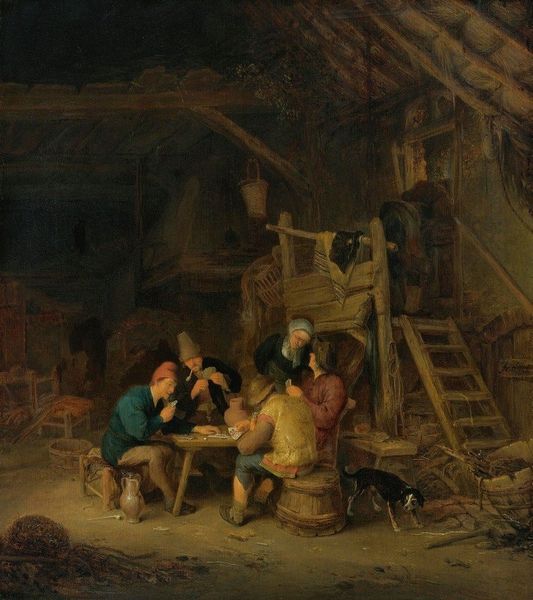
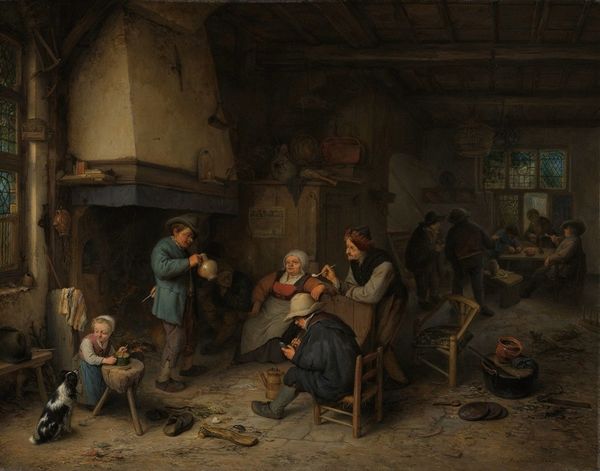
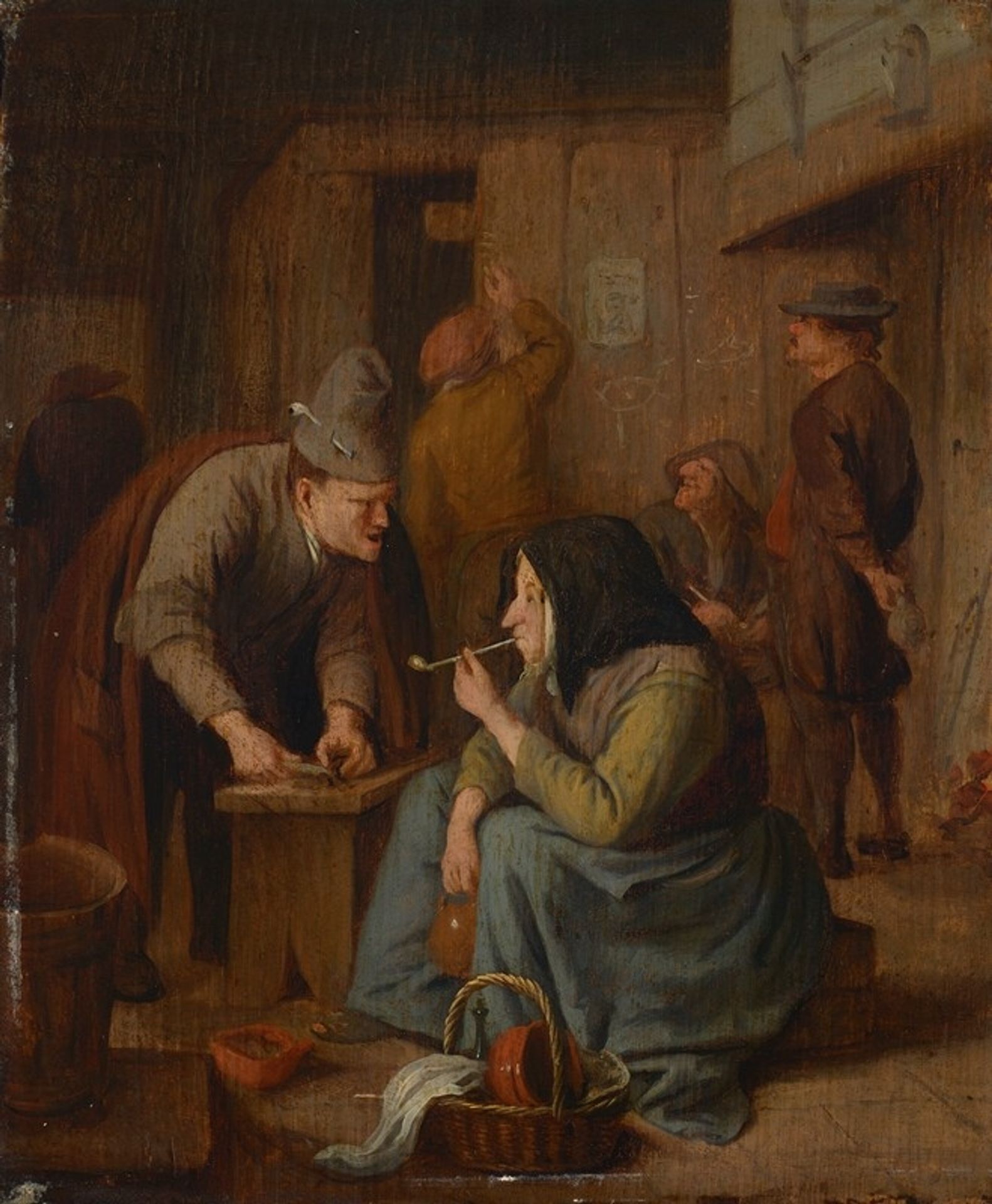
Editor: This is a scene called "A tavern interior with a woman smoking a pipe and a man cutting tobacco," by Jan Steen, made using oil paint. It definitely feels like a snapshot of everyday life, but the light and expressions are so captivating. What do you see in this piece? Curator: Steen excels at capturing the social fabric of his time. Tavern scenes were incredibly popular, offering a glimpse into leisure activities but also, implicitly, a commentary on morality. Notice how Steen stages this interior; the woman’s pipe isn’t just a prop; it connects her to broader debates around indulgence and social norms. Editor: So, you’re saying it's not just a neutral scene, but also has something to say about the perception of social behavior? Curator: Precisely. Think about who was commissioning these works. The middle class were both consumers and critics of such scenes. The imagery serves as a mirror reflecting and reinforcing social expectations, sometimes with a nudge and a wink. Consider also that the "genre painting" became a field through which painters depicted Dutch identity. Editor: It’s amazing how much context is packed into one little painting! Is it accurate to read these cues from the work? Curator: I think so! You’re engaging with the artwork and connecting its themes to wider societal anxieties. These paintings played a crucial public role in shaping the way people understood the world around them. Editor: I didn't know Jan Steen's work played a crucial public role! This has definitely shifted how I'll perceive art's reflection on the social and political environment going forward. Curator: That’s wonderful! Keep questioning and connecting, and you'll be surprised by how much art has to say about society.

Artwork details
- Medium
- oil-paint
- Copyright
- Public Domain: Artvee
Tags
Comments
Share your thoughts
About this artwork
Editor: This is a scene called "A tavern interior with a woman smoking a pipe and a man cutting tobacco," by Jan Steen, made using oil paint. It definitely feels like a snapshot of everyday life, but the light and expressions are so captivating. What do you see in this piece? Curator: Steen excels at capturing the social fabric of his time. Tavern scenes were incredibly popular, offering a glimpse into leisure activities but also, implicitly, a commentary on morality. Notice how Steen stages this interior; the woman’s pipe isn’t just a prop; it connects her to broader debates around indulgence and social norms. Editor: So, you’re saying it's not just a neutral scene, but also has something to say about the perception of social behavior? Curator: Precisely. Think about who was commissioning these works. The middle class were both consumers and critics of such scenes. The imagery serves as a mirror reflecting and reinforcing social expectations, sometimes with a nudge and a wink. Consider also that the "genre painting" became a field through which painters depicted Dutch identity. Editor: It’s amazing how much context is packed into one little painting! Is it accurate to read these cues from the work? Curator: I think so! You’re engaging with the artwork and connecting its themes to wider societal anxieties. These paintings played a crucial public role in shaping the way people understood the world around them. Editor: I didn't know Jan Steen's work played a crucial public role! This has definitely shifted how I'll perceive art's reflection on the social and political environment going forward. Curator: That’s wonderful! Keep questioning and connecting, and you'll be surprised by how much art has to say about society.
Comments
Share your thoughts