1680 - 1727
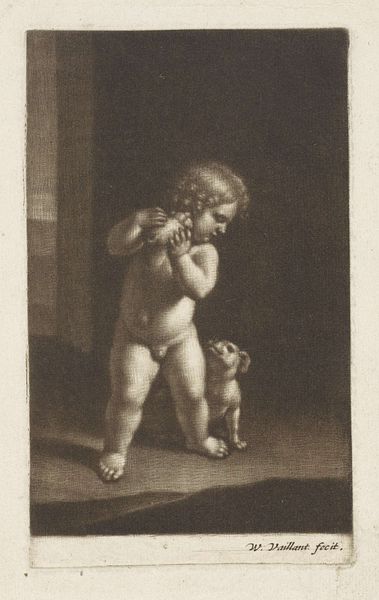
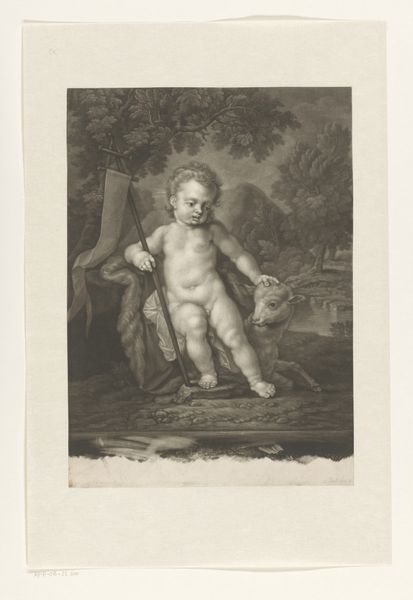
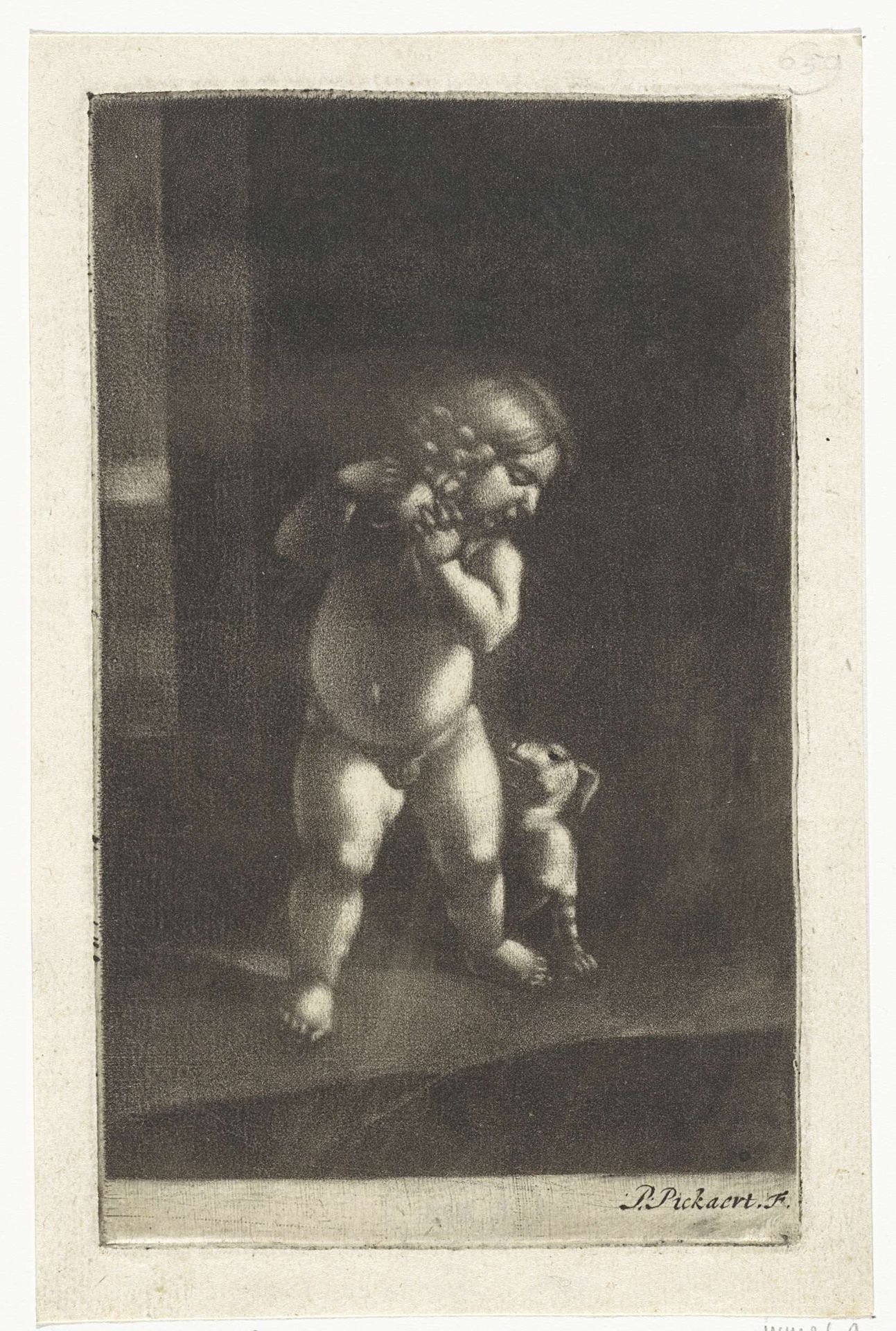
Naakt kind en een hondje

Listen to curator's interpretation
Curatorial notes
Pieter Pickaert created this print, "Naakt kind en een hondje," using etching, a printmaking technique, sometime between the late 17th and early 18th centuries. The etching process involves coating a metal plate with a waxy, acid-resistant substance. The artist then scratches an image into this coating, exposing the metal beneath. When the plate is submerged in acid, the exposed lines are eaten away, creating grooves. Ink is then applied to the plate, filling these grooves, and the surface is wiped clean. Finally, the plate is pressed onto paper, transferring the inked image. Here, Pickaert harnesses the subtle tonal variations achievable through etching to depict the soft flesh of the child and the fur of the dog. The quality of the line speaks to the labor and skill of the artist, patiently working to capture the intimate moment between the figures. This work demonstrates how prints could achieve effects similar to painting, blurring the lines between reproductive and original art forms.