1630 - 1652
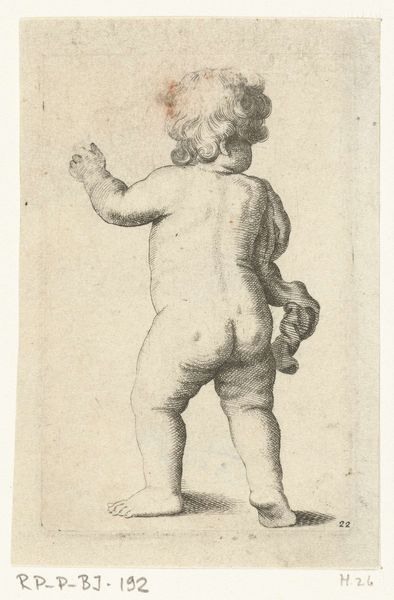
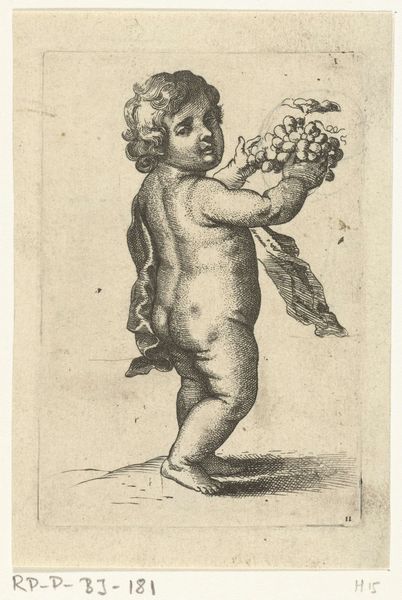
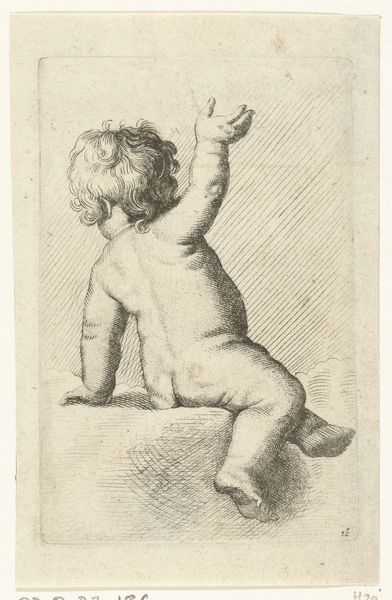
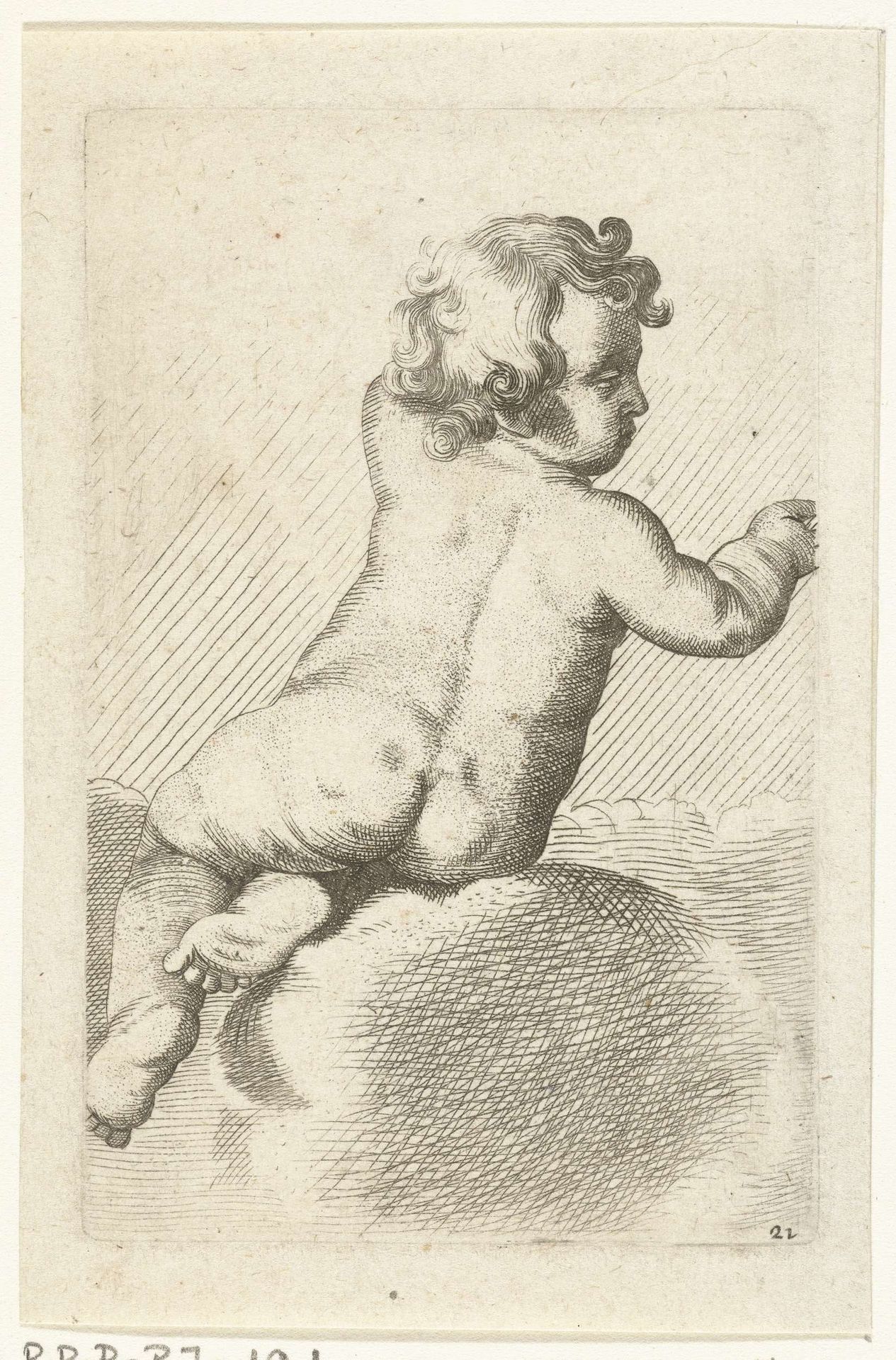
Naakt kindje van achteren

Pieter van Avont
1600 - 1652Location
RijksmuseumListen to curator's interpretation
Curatorial notes
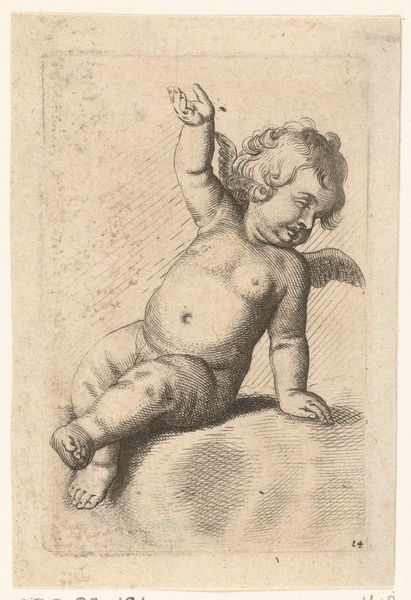
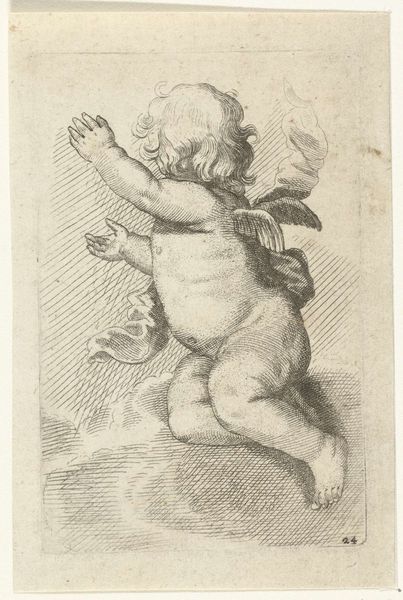
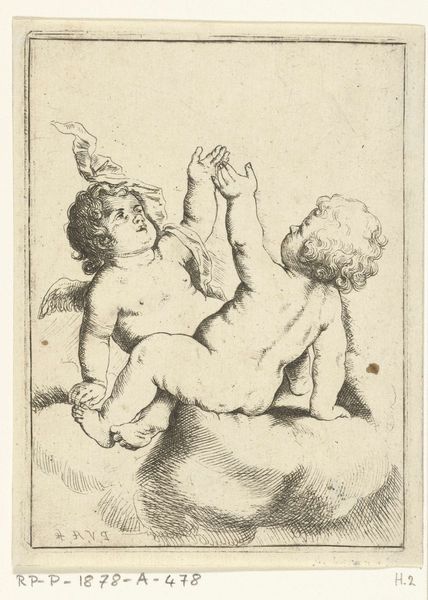
Pieter van Avont crafted this delicate etching of a nude child in the 17th century. Perched upon a cloud, the cherubic figure is reminiscent of Eros or Cupid, ancient symbols of love, desire, and affection. These winged putti, as they’re often called, carry with them echoes of classical antiquity. We see them again and again through art history, from ancient Roman frescoes to Renaissance paintings. Consider, for example, Raphael’s cherubs at the bottom of the Sistine Madonna. The motif’s persistence speaks to its potent appeal to our collective psyche. The child embodies innocence and purity, but also a primal, untamed force. This image is not static; it is constantly evolving. It serves as a reminder of the enduring power of symbols, their ability to resurface, transform, and captivate us across centuries.