About this artwork
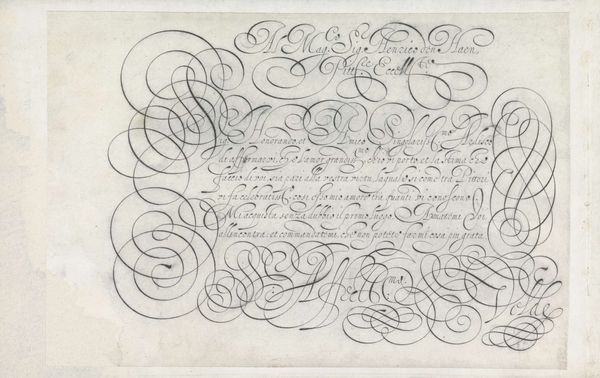
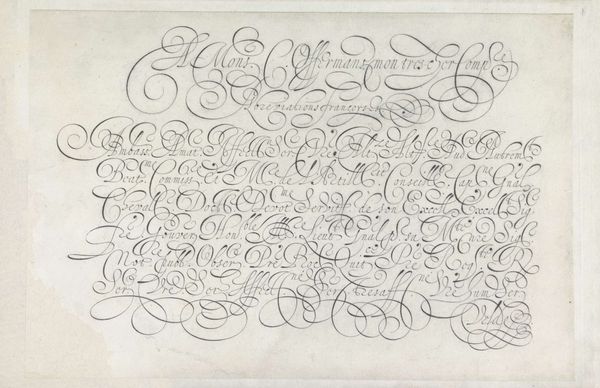
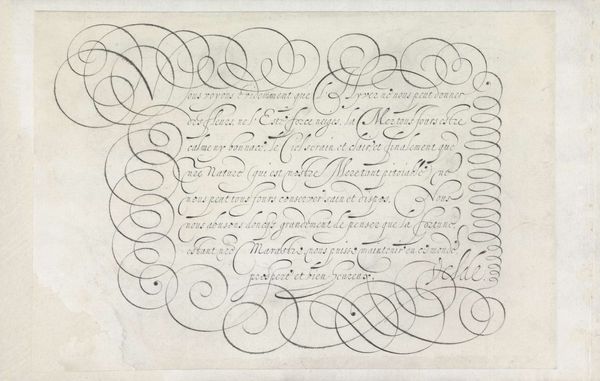
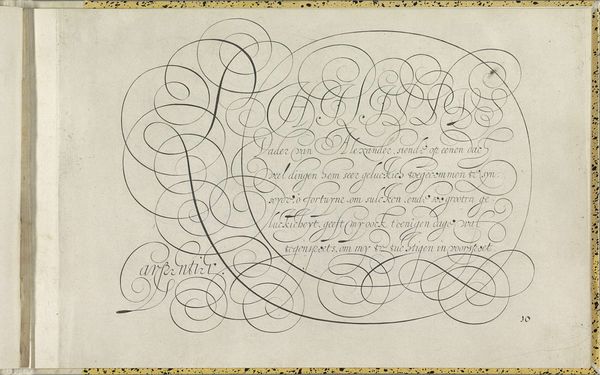
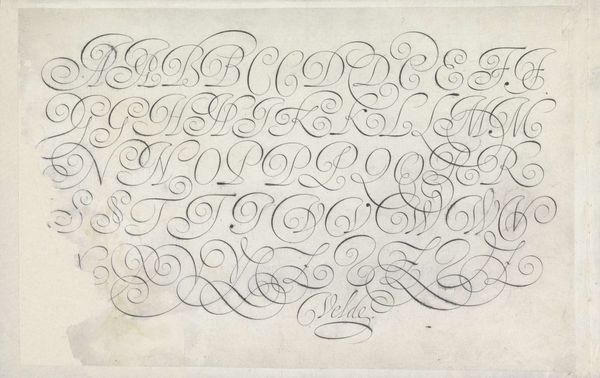
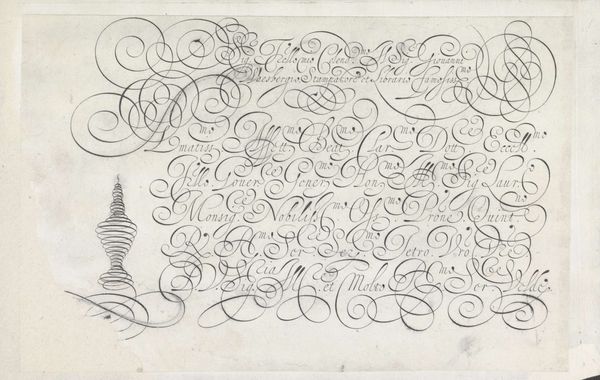
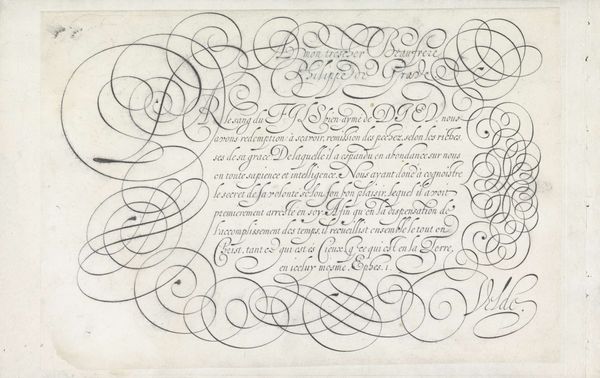
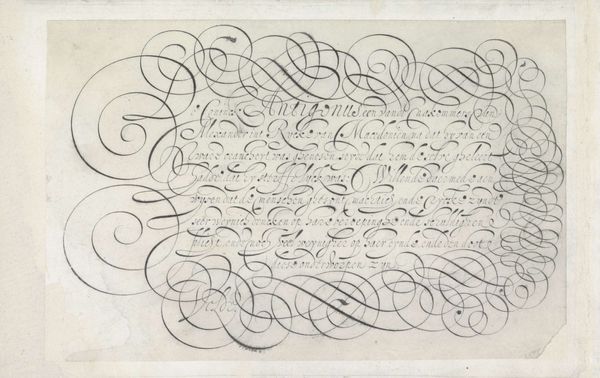
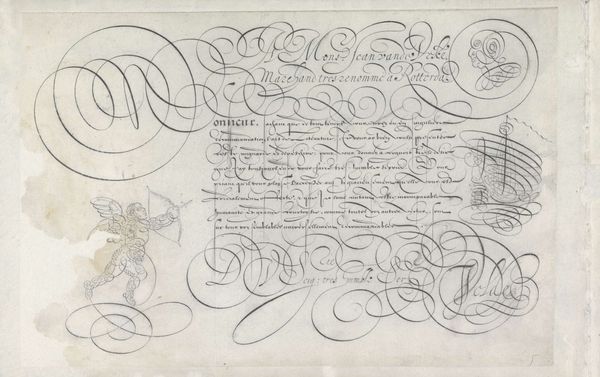
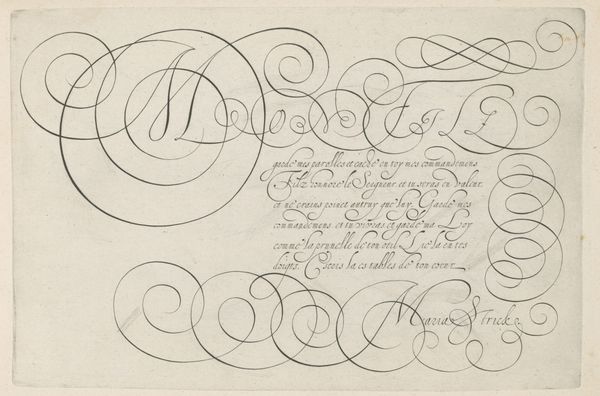
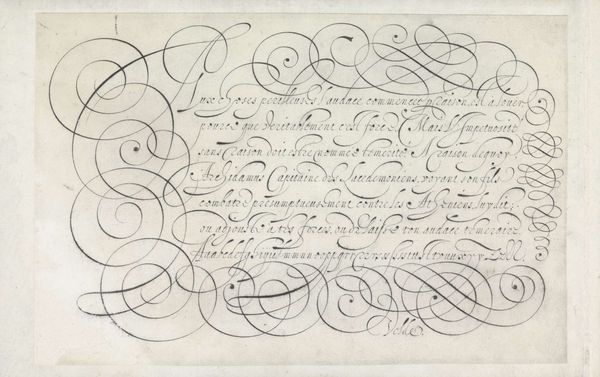
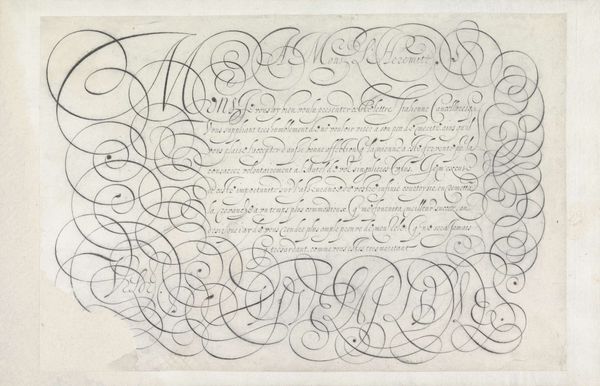
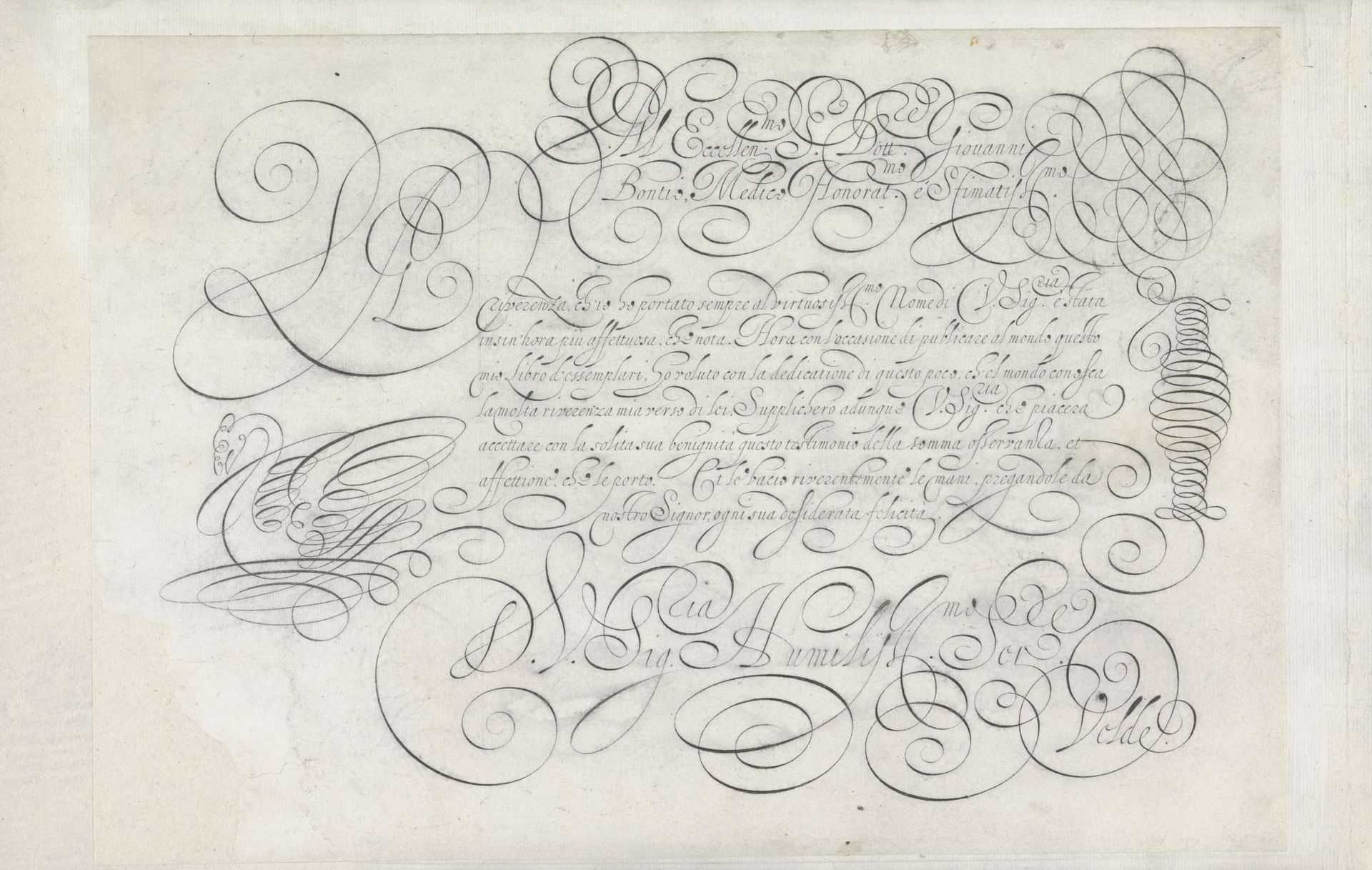
This ‘Design for a writing sample’, was made by Jan van de Velde I in the Netherlands, sometime around the early 17th Century, using etching. At this time, the Dutch Republic was a major center for trade and commerce, and handwriting was an essential skill for merchants, diplomats, and other professionals. Van de Velde's print gives us insight into the cultural values placed on literacy and education during this period. The elegant calligraphy and elaborate ornamentation suggest the importance of aesthetics and refinement in Dutch society, and the dedication to Giovanni Bontio, a doctor, hints at the patronage networks that sustained artistic production. By researching the social and economic conditions of the time, we can better understand the cultural significance of this print, recognizing that even something as seemingly mundane as a writing sample can tell us a great deal about the values, aspirations, and institutions of its time.
Ontwerp van een schrijfvoorbeeld: Al eccellen. S. dott. Giovanni Bontio (...)
1605

Jan van de Velde I
1568 - 1623Location
RijksmuseumArtwork details
- Medium
- drawing, ink, pen
- Dimensions
- height 211 mm, width 293 mm
- Location
- Rijksmuseum
- Copyright
- Rijks Museum: Open Domain
Tags
Comments
Share your thoughts
About this artwork
This ‘Design for a writing sample’, was made by Jan van de Velde I in the Netherlands, sometime around the early 17th Century, using etching. At this time, the Dutch Republic was a major center for trade and commerce, and handwriting was an essential skill for merchants, diplomats, and other professionals. Van de Velde's print gives us insight into the cultural values placed on literacy and education during this period. The elegant calligraphy and elaborate ornamentation suggest the importance of aesthetics and refinement in Dutch society, and the dedication to Giovanni Bontio, a doctor, hints at the patronage networks that sustained artistic production. By researching the social and economic conditions of the time, we can better understand the cultural significance of this print, recognizing that even something as seemingly mundane as a writing sample can tell us a great deal about the values, aspirations, and institutions of its time.
Comments
Share your thoughts