
Curatorial notes
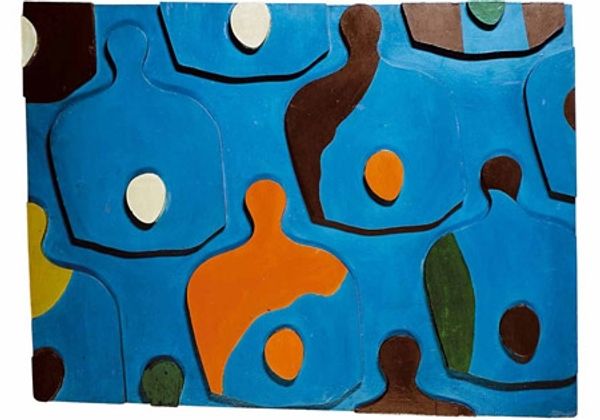
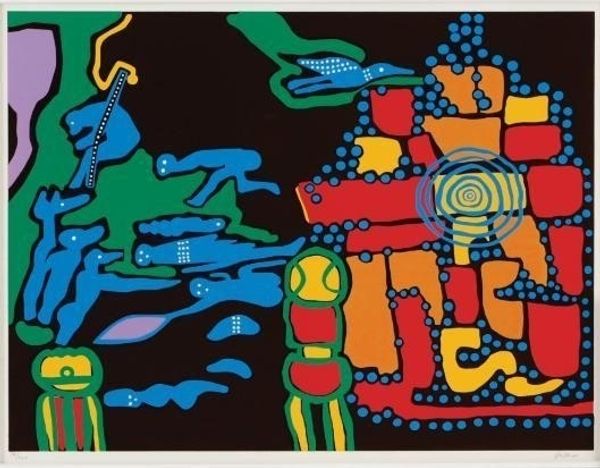
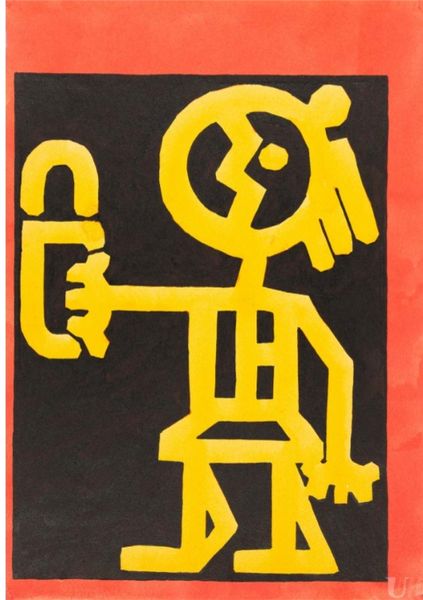
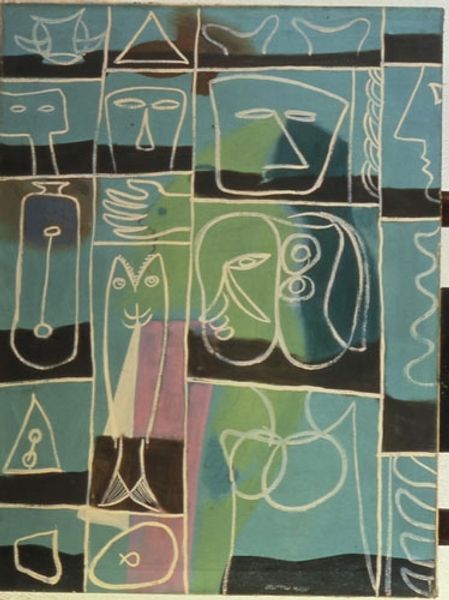
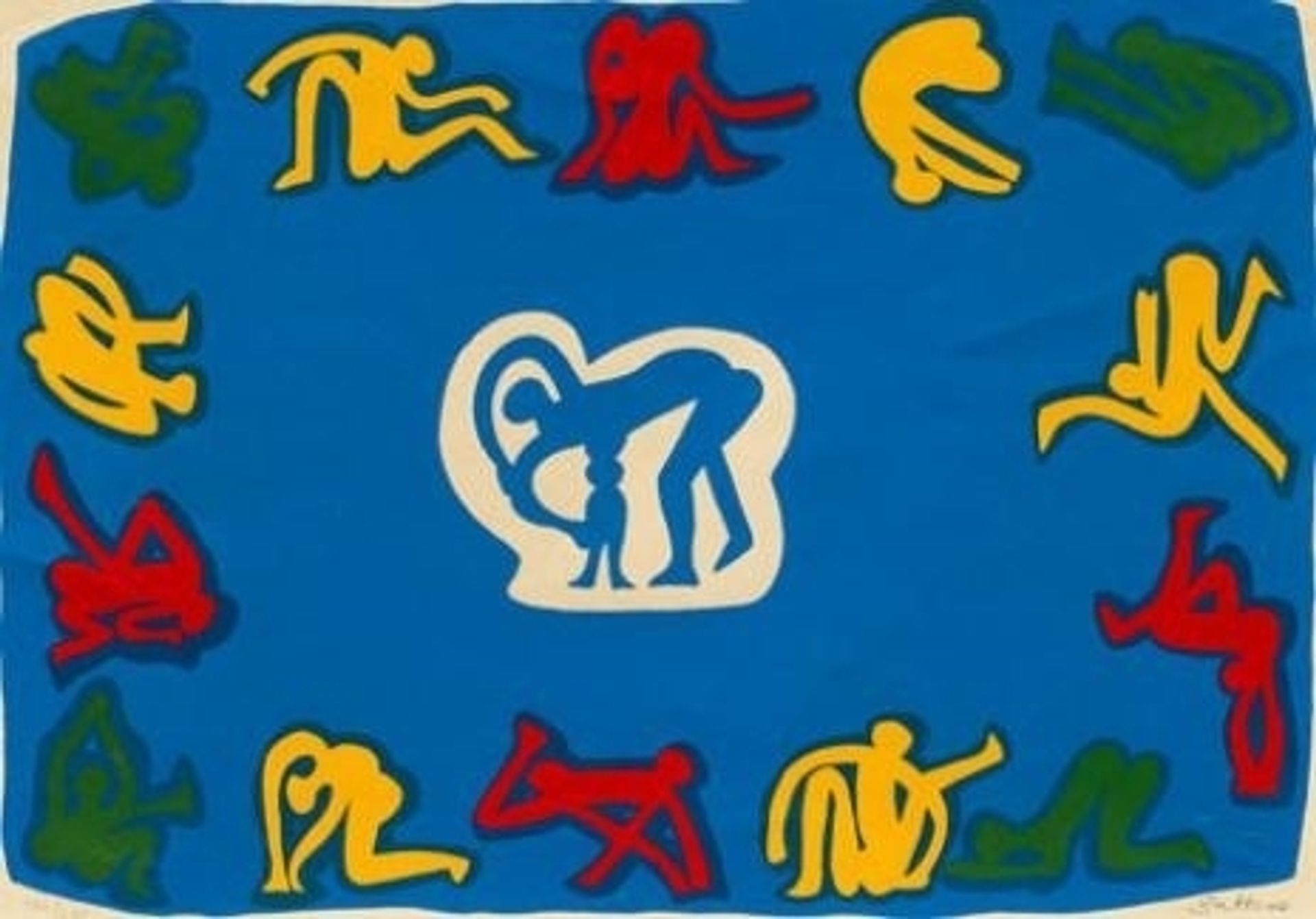
Editor: Walter Battiss' "Cave Dwellers" employs acrylic paint to depict stylized human figures. The bold colors and flattened perspective feel very contemporary, and almost playful. How do you interpret this work? Curator: As a materialist, I see a deliberate attempt to dismantle hierarchies of artmaking. The flatness, the bright colors, and the repeated motifs – they all point to mass production, almost like textile design. Look closely at the application of the acrylic. Does the artist celebrate the handmade, or does he use the material to suggest a manufactured, repeatable image? Editor: I hadn’t thought about the idea of the painting imitating a textile! So, by choosing acrylic and repeating the figures, Battiss is maybe blurring the lines between "high" art and "low" craft? Curator: Precisely! And consider the title, "Cave Dwellers". Are we meant to think about ancient art making—drawings on cave walls--or something else? Perhaps a critique of modern living reduced to primitive actions. What material conditions, what labor, produced these figures, both in Battiss' studio and, conceptually, within the 'cave'? Editor: It's interesting to think about labor here. The repetitive figures now suggest an almost industrial process. Is Battiss perhaps reflecting the move away from traditional labor towards a more automated society? Curator: It's a strong possibility. Consider how the production and consumption of images have shifted in the 20th century. The very *making* of art is tied to broader social and economic forces. This painting encourages us to examine the materials and modes of its production. Editor: Wow, I never would have considered this piece in that light. I was initially drawn to the simplicity of the shapes, but now I see so much more. Curator: Exactly, "simplicity" itself can be a deliberate choice, tied to a particular social commentary through material and technique. It certainly gives us a lot to consider about the artist’s intentions and the artwork’s cultural impact!