1821 - 1825
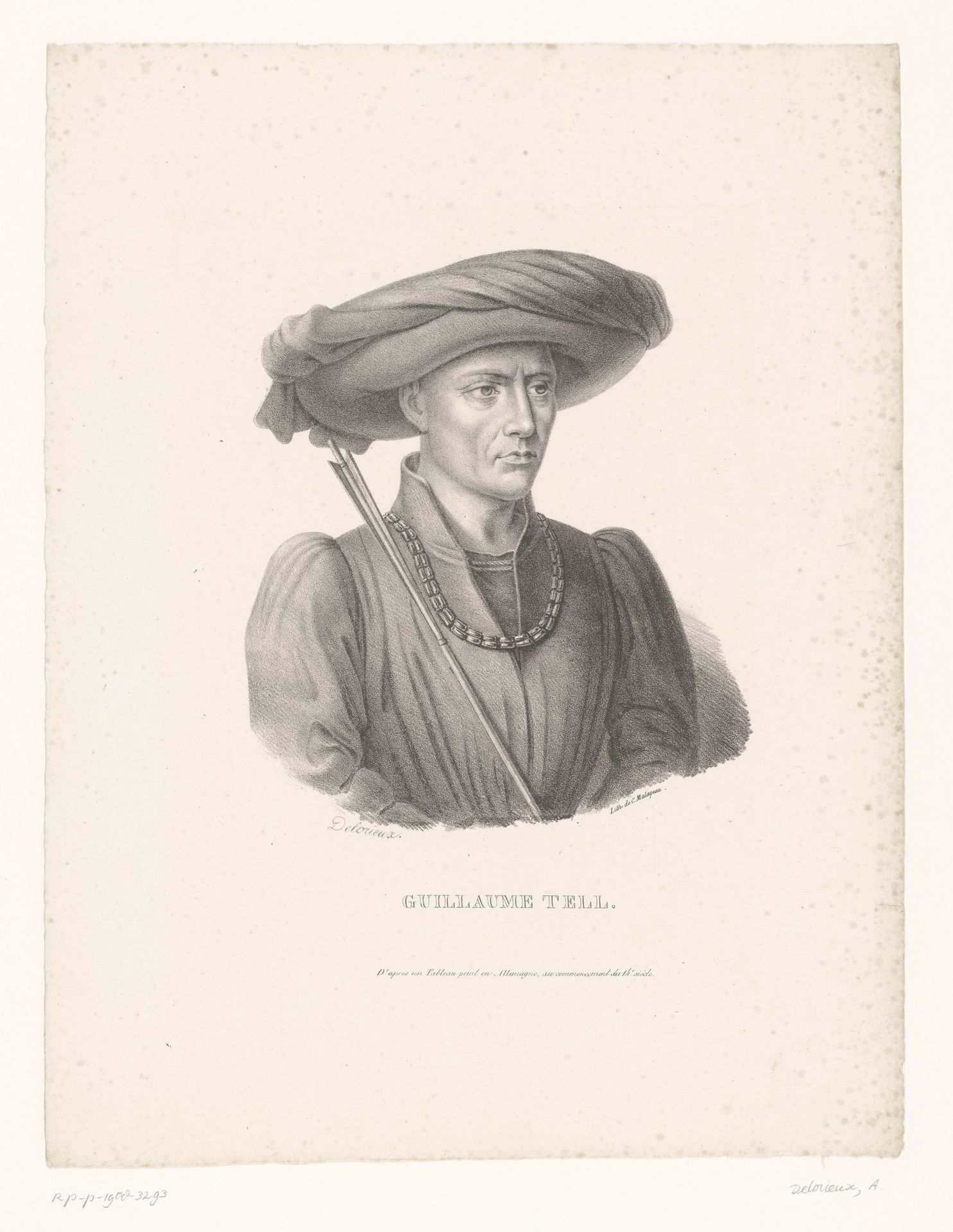
Portret van Willem Tell

Listen to curator's interpretation
Curatorial notes
Curator: Let's discuss Alfred Delorieux's "Portret van Willem Tell," a pencil drawing likely made between 1821 and 1825, placing it firmly within the Neoclassical period. What strikes you immediately about it? Editor: It's stark. The gray scale and very defined rendering, alongside the stern, determined gaze and carefully chosen garments create an austere aesthetic, doesn't it? I find myself wondering about the accessibility of art materials and this character's apparent privilege given the high quality fabrics and garment construction of his elaborate garments and headwear. Curator: Precisely! That austerity is so indicative of its time. And that speaks volumes about Delorieux's engagement with the prevailing socio-political winds. Consider the context: post-Napoleonic Europe, a return to order and ideals of republican virtue. Willem Tell as a symbol of resistance against tyranny is a powerful choice, especially during a period of restoration. How do we interpret Tell’s heroism today, through Delorieux’s lens and our own? Editor: True, but what sort of labour or manufacturing processes or specific mines extracted resources? Tell embodies heroism in that moment, but to truly examine this artwork is to remember what it would take to create in the time period, where drawing production and refinement could involve human or animal labour and limited factory outputs. What do you see of social conditions reflected within that sharp Neoclassical rendering itself? Curator: Interesting to look at it from the angle of how artistic representation relies on materials and labor conditions... Delorieux’s piece certainly isn't an innocent or isolated tribute to a historical figure. It becomes a commentary on power dynamics. It seems Delorieux is implicitly encouraging those contemporary power structures in a post-revolutionary era. What does it mean to revive the image of a rebel in an age attempting to erase such disruptive narratives? Editor: Delorieux had a deliberate hand in production, the physical act and constraints influencing the artistic decision... Thanks to these processes he managed to highlight themes relevant not just to this heroic person but our historical and environmental position overall. What might others observe? Curator: Indeed, this deep dive certainly shows that the "Portret van Willem Tell," reveals an ongoing need to look for materials and understand their history for artistic representation. Thank you for shedding more light on the means of this drawings production and history.