17 - 1796
Lady Buts


Listen to curator's interpretation
Curatorial notes
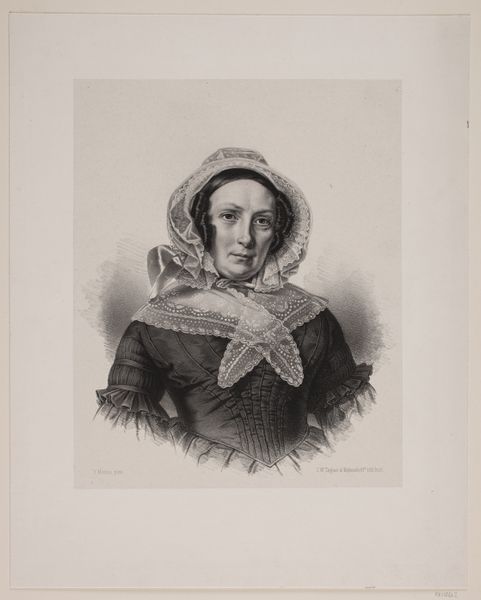
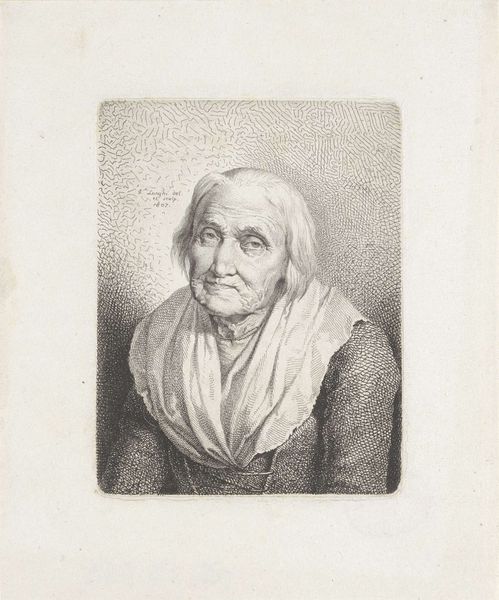
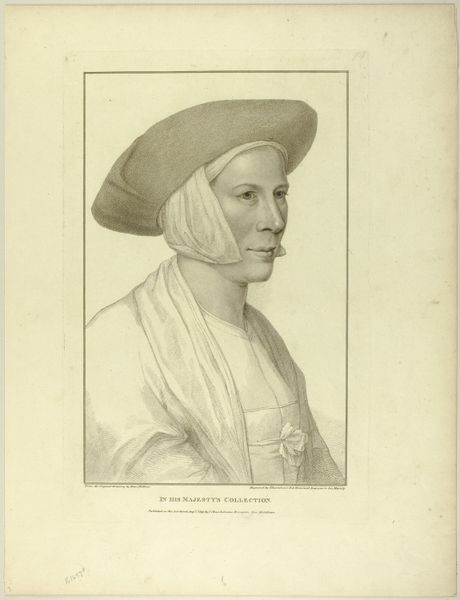
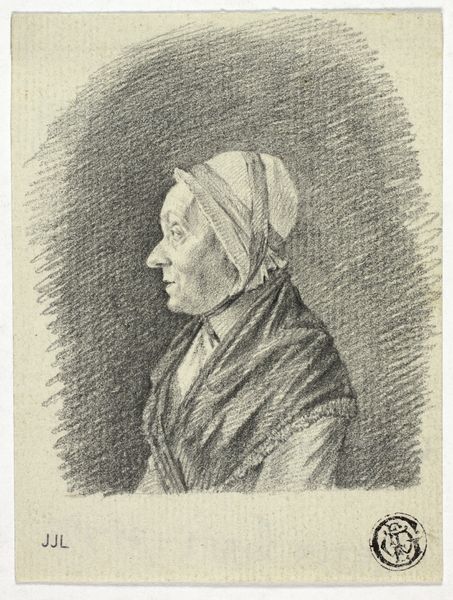
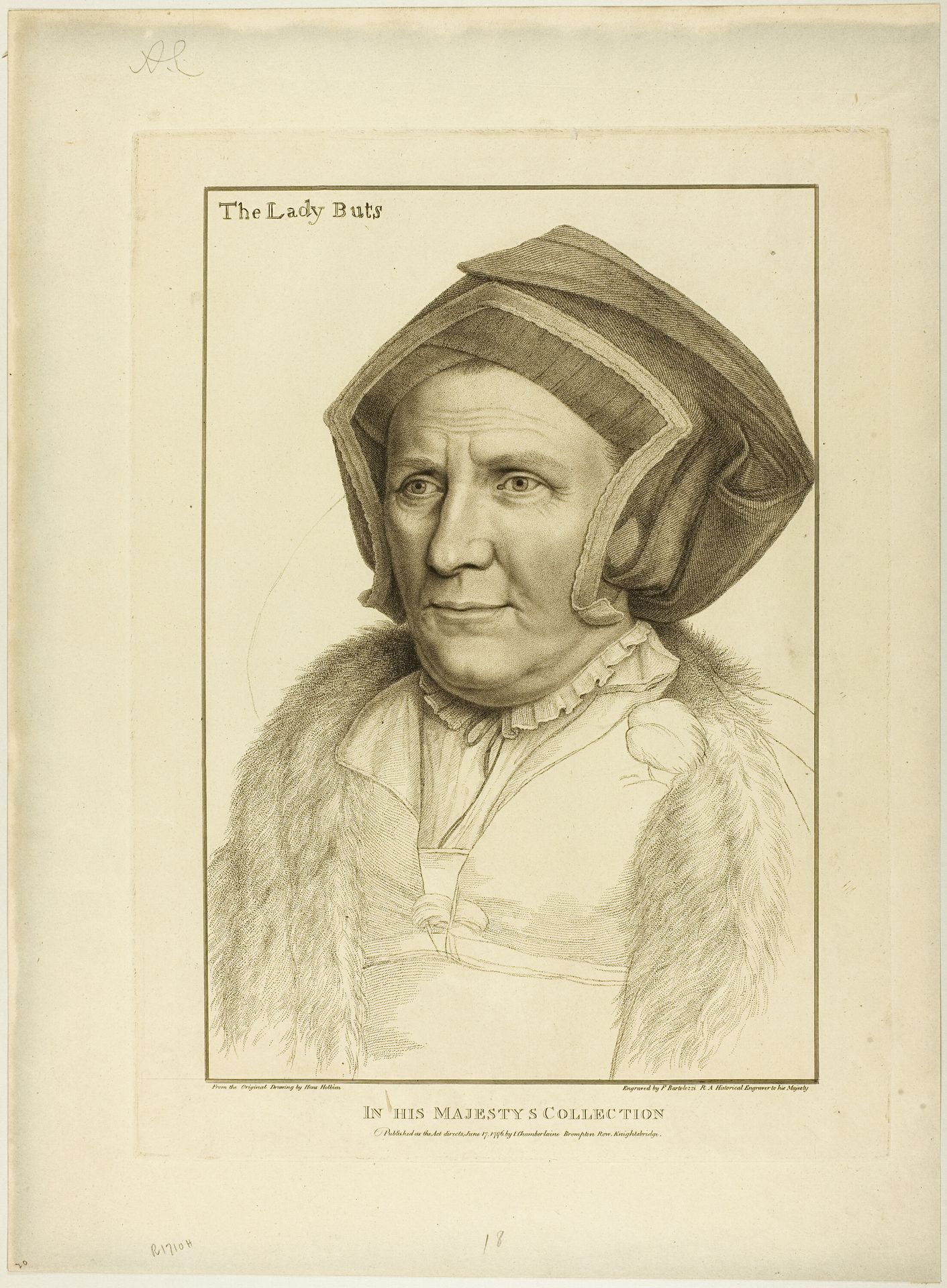
Curator: My first impression is a blend of austerity and, dare I say, slight amusement. What's your take? Editor: That’s fascinating, because for me the immediate feeling is almost stern. It's in the set of her mouth, the shadow across her face, the formidable headgear. This print, "Lady Buts," dating from around 1796 and currently residing here at the Art Institute of Chicago, captures its subject with undeniable authority. Francesco Bartolozzi worked in engraving to achieve such details. Curator: Authority is spot-on! I see echoes of the Renaissance portraits – a certain firmness combined with the period's distinct approach to conveying status. The attire, the fur stole... It all speaks volumes, a coded language if you will, reflecting social standing, taste and perhaps even political leaning. The clothing certainly indicates stature within British society at the time. Editor: Yes, precisely! Though her gaze also conveys, for me, an expression almost devoid of sentimentality. I wonder if that's intentional – a statement about feminine power outside the usual tropes of beauty? Her attire makes the statement loud and clear as well as provides a stark backdrop, like a theatrical costume designed to amplify a personality! Curator: That resistance to sentimental beauty standards, that deliberate portrayal of formidable character—absolutely resonates with trends throughout history. Bartolozzi would certainly be aware of previous symbolistic trends, being the accomplished engraver that he was! We are speaking, too, about portraiture that became intrinsically bound to ideals of nobility. "Lady Buts" can almost be read like a meditation on that interplay, wouldn’t you say? The engraver seemed to know this lady very well. Editor: A meditation… I love that! It frames it so well. Perhaps "Lady Buts" is really less a portrait, and more like a societal commentary disguised in an engraving? One that hints that strength resides in the soul, not in outward beauty. Curator: Right! And that’s the enduring power of symbols isn't it? An era or generation can fade away, and trends go with them, but visual cues that prompt discussion will carry weight across centuries. Editor: Absolutely, beautifully put. Even just encountering “Lady Buts” provokes reflection. How many stories can a single gaze tell? Curator: Indeed. It certainly prompts us to reflect on stories, on power and permanence – which I suspect, "Lady Buts," in some ways will hold forever.