1825 - 1841
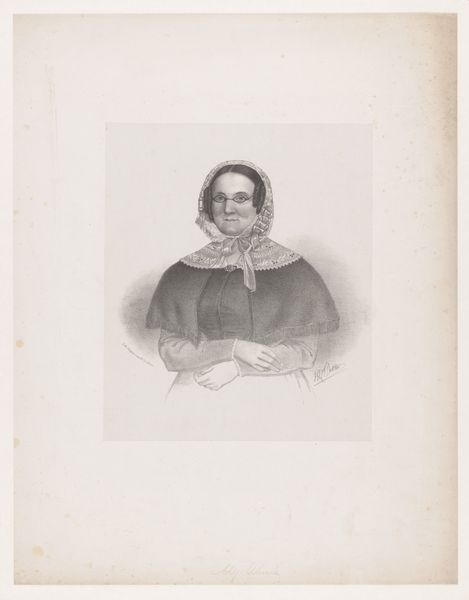
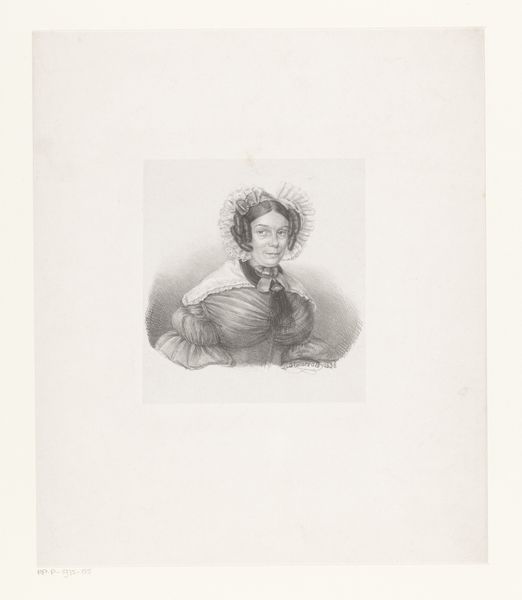
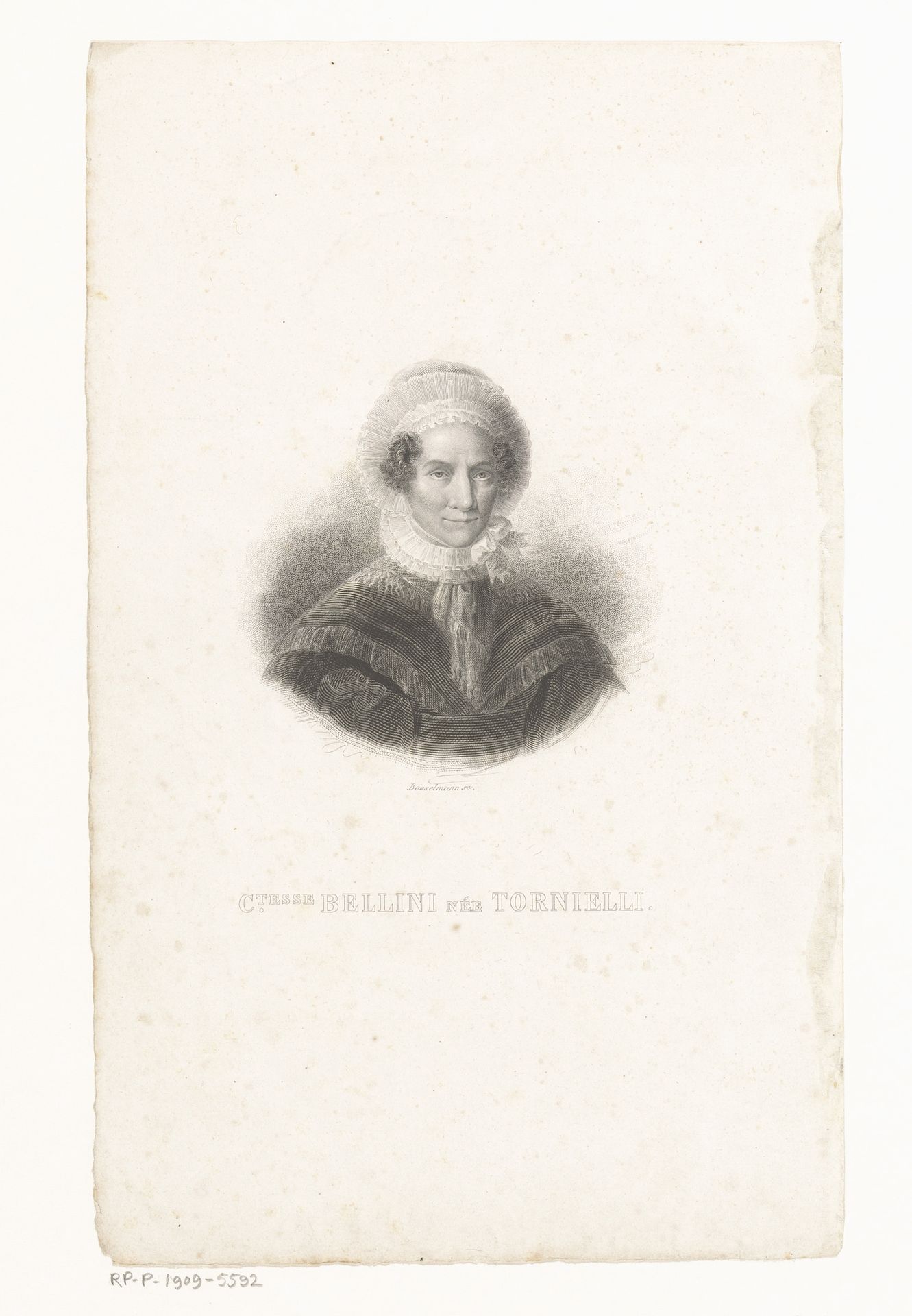
Portret van Giuseppa Tornielli Bellini

Listen to curator's interpretation
Curatorial notes
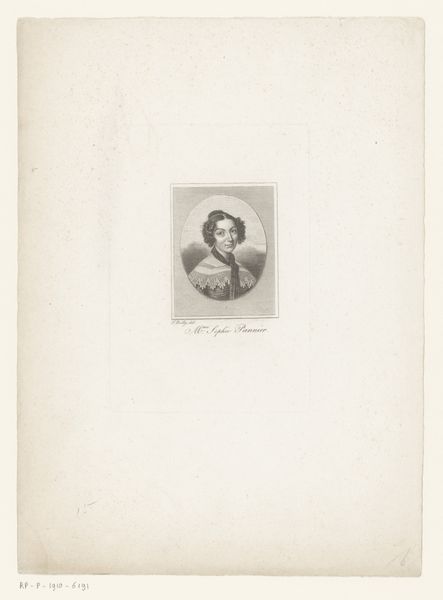
Curator: Looking at this portrait, I immediately feel transported to a different era. There's a gentle sadness, an introspective quietude about it, like a page pulled straight from a Jane Austen novel. Editor: Indeed! This is a work titled "Portret van Giuseppa Tornielli Bellini," created sometime between 1825 and 1841 by A. Bosselman. It’s rendered in graphite and engraving, and leans heavily into the neoclassical portraiture tradition while also reflecting realism. Curator: That combination is fascinating, neoclassical but very real! It’s mostly her eyes, I think—there's such life there, so much captured personality, but then the frilly bonnet and structured dress definitely hint at an established social role. Is that what realism looked like back then, through a very poised lens? Editor: In many ways, yes. It wasn't just about replication, but also idealization through careful observation. Consider how costume and setting in images of the period became shorthand for character, social station, even aspiration. Her gaze meets ours directly. It is this intense engagement, coupled with realistic detailing achieved via careful hatching and tonal gradations that gives this piece its enduring impact. Curator: It speaks to how deeply societal expectations shaped identity, and especially how women were perceived and permitted to present themselves. That slight smile; it doesn't quite reach her eyes. I wonder what stories she held inside. Editor: Perhaps she pondered similar ideas herself; the piece prompts us to question representations of women throughout art history. It highlights cultural values about beauty, class, gender and societal expectations and limitations of freedom for women in 19th-century society. This work preserves cultural memory in compelling ways. Curator: It truly is striking, the way this piece combines visual technique and complex human narratives. I find it quietly revolutionary. Editor: Indeed, each time I look at the artwork, new questions emerge regarding identity and the stories conveyed by simple portraiture choices.