About this artwork
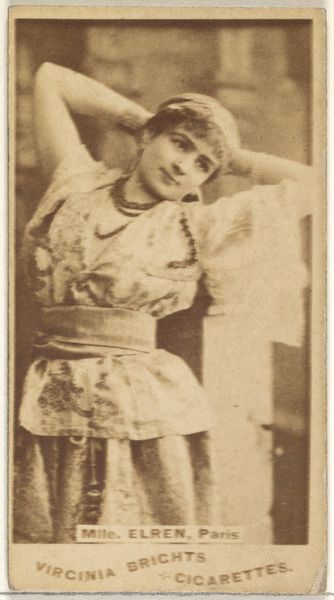
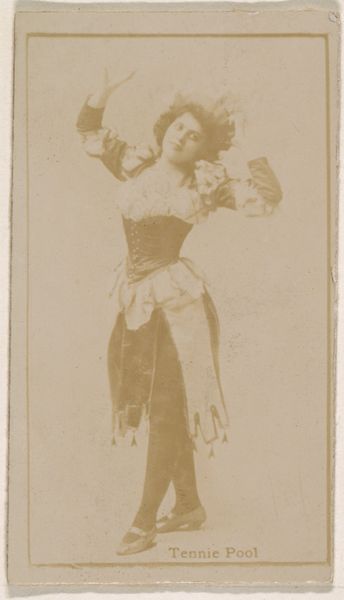
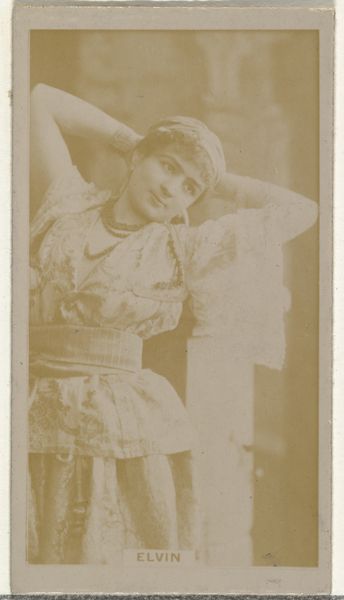
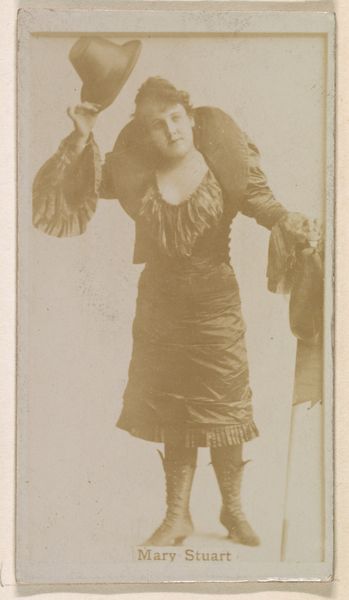
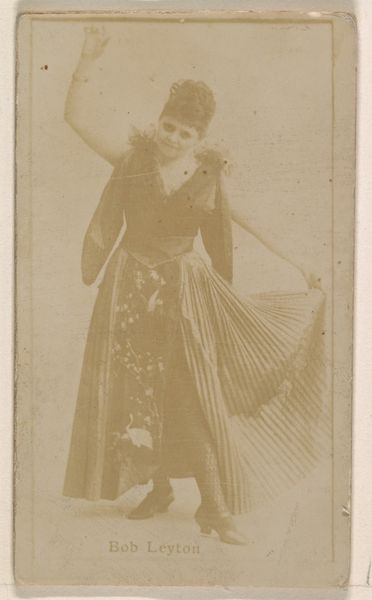
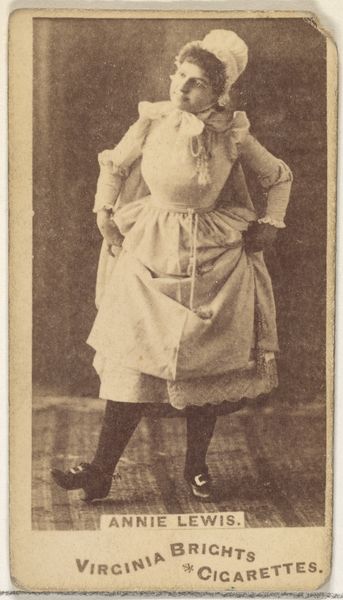
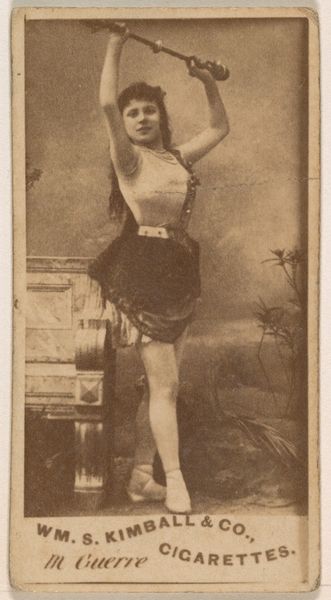
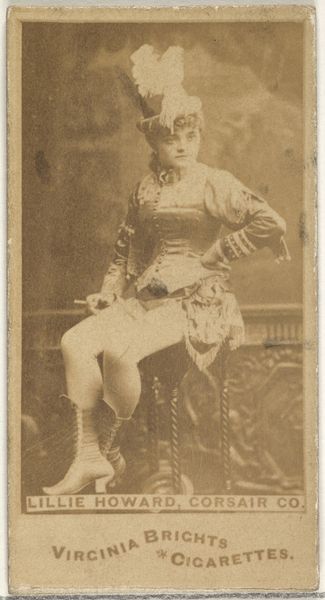
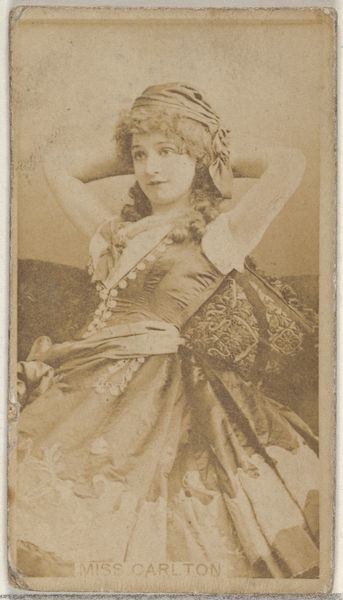
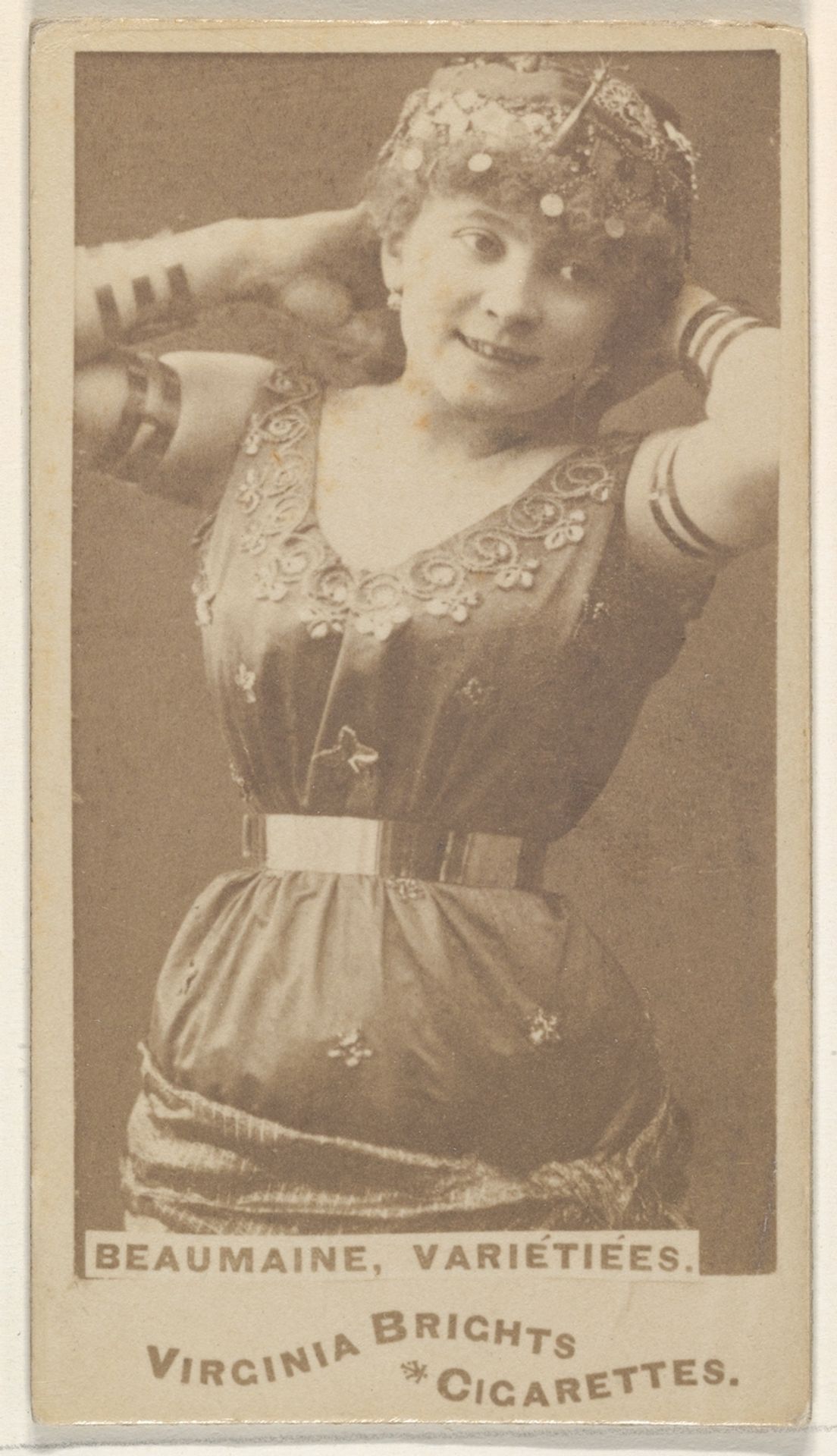
Editor: So, this is “Beaumaine, Varietiees” from the “Actors and Actresses” series, created between 1885 and 1891 by Allen & Ginter for Virginia Brights Cigarettes. It's a print, originally a photograph. The image feels like a window into a different era. What do you make of its portrayal of femininity and performance? Curator: That’s a crucial starting point. These cards, embedded within tobacco products, circulated widely, shaping and solidifying cultural ideas. It’s key to acknowledge that what we're seeing is a constructed image, produced within a specific social and economic context, intended to sell a product. Who do you think this image was targeting, and what values did it promote? Editor: It seems aimed at men, right? Possibly promoting ideals of beauty and exoticism. The actress’s pose and clothing are, I guess, considered alluring. Curator: Precisely. But let's unpack “exoticism.” This card exoticizes Beaumaine, implying a sense of otherness rooted in Orientalist fantasies popular at the time. How might we connect this to broader power dynamics in society during the late 19th century, especially considering imperialism and its influence on representations of women and different cultures? Editor: I see your point. The card's reinforcing dominant cultural narratives, turning this woman, maybe even her entire culture, into a commodity for consumption. I didn't see that initially. Curator: That's the critical lens we need to apply. These seemingly innocuous images participated in the construction of race, gender, and class hierarchies. It’s about recognizing the visual language employed and questioning its implications, even today. What lasting impact do you think such images might have? Editor: I guess it made me think about how advertising perpetuates stereotypes, shaping societal expectations and normalizing unequal power dynamics. It is still important to dismantle them today. Curator: Absolutely, recognizing the historical roots of these inequalities is a crucial first step towards critical engagement.
Beaumaine, Varietiees, from the Actors and Actresses series (N45, Type 1) for Virginia Brights Cigarettes
1885 - 1891


Artwork details
- Medium
- drawing, print, photography
- Dimensions
- Sheet: 2 3/4 x 1 3/8 in. (7 x 3.5 cm)
- Location
- Metropolitan Museum of Art, New York, NY
- Copyright
- Public Domain
Tags
Comments
Share your thoughts
About this artwork
Editor: So, this is “Beaumaine, Varietiees” from the “Actors and Actresses” series, created between 1885 and 1891 by Allen & Ginter for Virginia Brights Cigarettes. It's a print, originally a photograph. The image feels like a window into a different era. What do you make of its portrayal of femininity and performance? Curator: That’s a crucial starting point. These cards, embedded within tobacco products, circulated widely, shaping and solidifying cultural ideas. It’s key to acknowledge that what we're seeing is a constructed image, produced within a specific social and economic context, intended to sell a product. Who do you think this image was targeting, and what values did it promote? Editor: It seems aimed at men, right? Possibly promoting ideals of beauty and exoticism. The actress’s pose and clothing are, I guess, considered alluring. Curator: Precisely. But let's unpack “exoticism.” This card exoticizes Beaumaine, implying a sense of otherness rooted in Orientalist fantasies popular at the time. How might we connect this to broader power dynamics in society during the late 19th century, especially considering imperialism and its influence on representations of women and different cultures? Editor: I see your point. The card's reinforcing dominant cultural narratives, turning this woman, maybe even her entire culture, into a commodity for consumption. I didn't see that initially. Curator: That's the critical lens we need to apply. These seemingly innocuous images participated in the construction of race, gender, and class hierarchies. It’s about recognizing the visual language employed and questioning its implications, even today. What lasting impact do you think such images might have? Editor: I guess it made me think about how advertising perpetuates stereotypes, shaping societal expectations and normalizing unequal power dynamics. It is still important to dismantle them today. Curator: Absolutely, recognizing the historical roots of these inequalities is a crucial first step towards critical engagement.
Comments
Share your thoughts